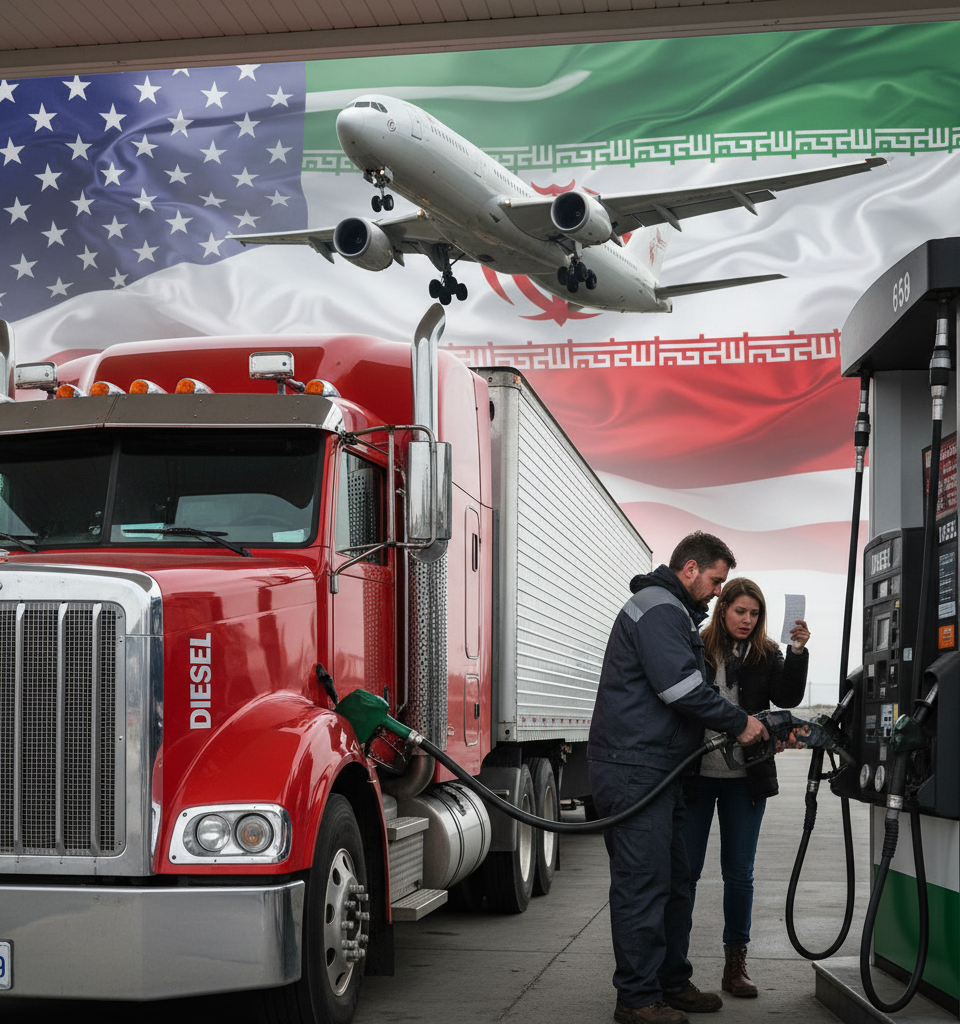
WASHINGTON D.C. – October 26, 2023 – The simmering geopolitical friction between the United States and Iran is now directly impacting the pocketbooks of American consumers and the bottom lines of businesses, as a notable increase in diesel and jet fuel prices takes hold. This upward price trajectory, largely attributed to heightened uncertainty surrounding global oil supplies in the volatile Middle East, is squeezing profit margins across various sectors and threatening to exacerbate inflationary pressures already weighing on the U.S. economy. Industry analysts and business leaders are sounding the alarm, indicating that the 'war tax' on fuel is poised to persist, with few immediate counter-measures available.
The Geopolitical Undercurrent and Its Economic Wake
The current surge in fuel costs is not an isolated market anomaly but a direct consequence of the protracted and often escalating tensions between Washington and Tehran. While direct military conflict has been averted, the ongoing proxy skirmishes, maritime incidents, and political rhetoric in the Persian Gulf region inherently introduce a premium into global oil markets. This 'risk premium' reflects concerns over potential disruptions to vital shipping lanes, particularly the Strait of Hormuz, through which a significant portion of the world's oil supply transits. The market reacts swiftly to perceived threats, baking in higher prices to account for potential supply shocks, even before they materialize.
Diesel and Jet Fuel: The Unseen Economic Levers
Unlike gasoline, whose price fluctuations are immediately felt at the pump by individual drivers, the rising cost of diesel and jet fuel carries a more insidious and widespread economic impact. Diesel powers the vast network of freight trucks, trains, and ships that transport nearly all consumer goods across the nation. A 10% increase in diesel prices, for instance, can translate into hundreds of millions of dollars in added operational costs for the U.S. trucking industry alone. Similarly, jet fuel represents one of the largest single operating expenses for airlines, invariably leading to higher airfares and added costs for businesses reliant on air cargo. According to the Energy Information Administration (EIA), national average diesel prices have risen by approximately 15 cents per gallon over the past month, while jet fuel spot prices have climbed nearly 8% in the same period, signaling a tightening market.
Broad Economic Ripple Effects
The increased cost of transportation fuels permeates every facet of the economy. From farming, where tractors and harvesting equipment rely on diesel, to manufacturing and retail, where goods must be shipped, businesses are facing the unenviable choice of absorbing these higher costs, thereby reducing profit margins, or passing them on to consumers in the form of higher prices. This pass-through effect acts as a regressive tax, disproportionately impacting lower and middle-income households already grappling with a high cost of living. Already, logistics companies are reporting margins shrinking by 5-7% due to fuel surcharges, a trend expected to accelerate.
Expert Analysis: A Persistent Challenge
Energy economists and geopolitical strategists largely concur that this elevated fuel cost environment is unlikely to dissipate quickly. "What we're seeing is not a temporary blip but a structural response to heightened regional instability," stated Dr. Eleanor Vance, Senior Energy Analyst at Stratagem Analytics. "As long as the potential for disruption in the Middle East remains high, oil markets will price in that risk. Furthermore, global refining capacity for diesel and jet fuel is already tight, amplifying the price impact of any supply concerns." She added that without a significant de-escalation of U.S.-Iran tensions or a substantial uptick in global crude production from non-OPEC+ sources, businesses and consumers should brace for continued high energy costs.
Corporate Strategies and Consumer Adjustments
Businesses are exploring various strategies to mitigate the impact, from optimizing logistics routes and adopting more fuel-efficient vehicles to hedging fuel purchases. However, these measures often provide only partial relief. Airlines, for example, are implementing fuel surcharges and adjusting capacity to manage costs. For consumers, the impact translates to higher prices for everything from groceries to online purchases, squeezing discretionary spending. Analysts suggest that if prices continue their ascent, consumer spending, a key driver of the U.S. economy, could see a measurable slowdown in the upcoming holiday season.
The Outlook: No Easy Resolution
The immediate future offers little solace. Geopolitical forecasts suggest that tensions in the Middle East are likely to remain elevated, especially with ongoing developments in the wider region. Unless a diplomatic breakthrough between the U.S. and Iran materializes – an outcome deemed improbable in the short term – or major oil-producing nations significantly increase output, the upward pressure on diesel and jet fuel prices is expected to persist. The current situation underscores the profound interconnectedness of global politics and domestic economics, with international disputes directly translating into tangible financial burdens for American businesses and households.