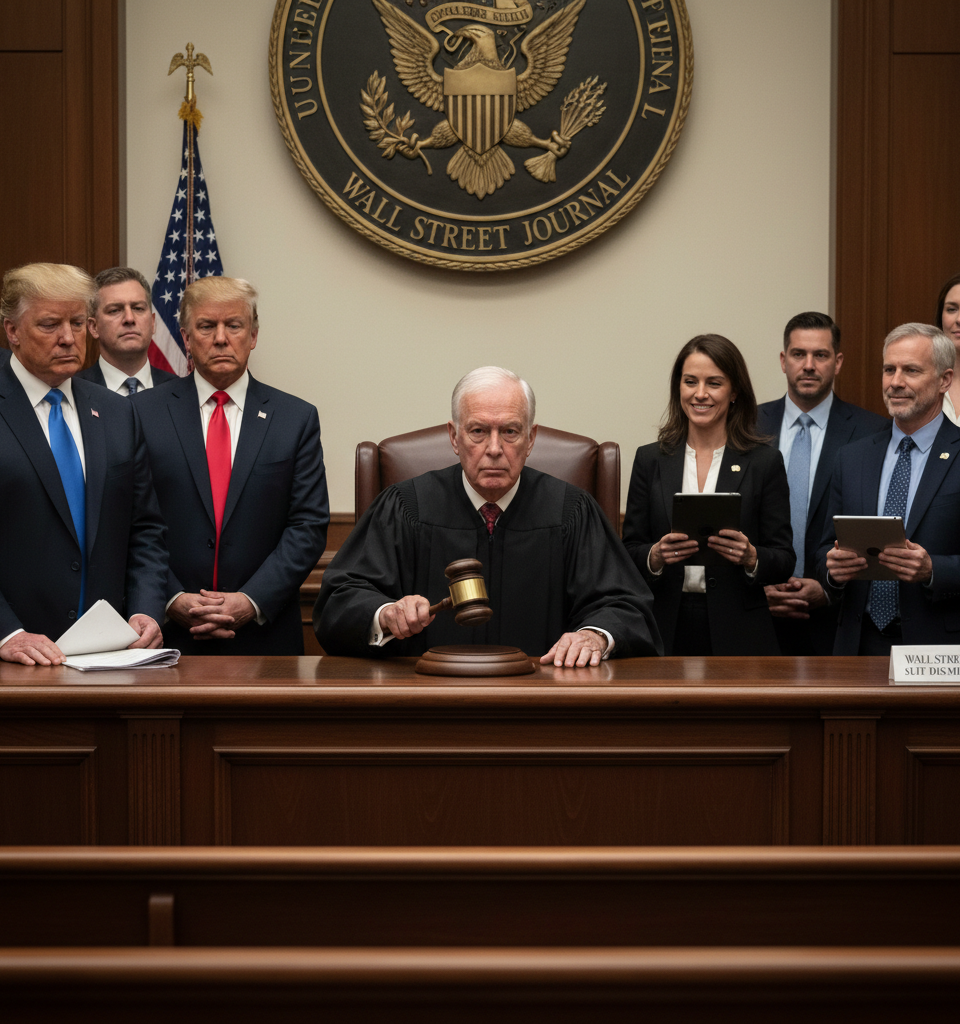
A federal judge in Florida has formally dismissed the $10 billion defamation lawsuit filed by former President Donald Trump against The Wall Street Journal and its parent company. The lawsuit, which also named media mogul Rupert Murdoch among the defendants, centered on the newspaper’s coverage related to a book detailing the life and conduct of disgraced financier Jeffrey Epstein. This dismissal represents a notable legal setback for the former president in his ongoing efforts to challenge media narratives.
The lawsuit, filed in a Florida federal court, focused on specific reporting within the context of a larger project, reportedly a birthday book, connected to Epstein. While precise details of the challenged content were not immediately available, the scale of the requested damages—a staggering $10 billion—underscored the seriousness with which Trump's legal team viewed the alleged defamation. The decision by the federal court to dismiss the case effectively halts this specific legal avenue for Trump, at least at the trial court level.
Background of the Lawsuit
Donald Trump initiated the suit claiming defamation, a legal action requiring proof that false statements were made with actual malice or negligent disregard for the truth, and that these statements caused him harm. Historically, public figures face a higher bar in defamation cases, needing to demonstrate “actual malice”—that the publisher knew the information was false or acted with reckless disregard for its truth or falsity. The involvement of Rupert Murdoch, a prominent figure in global media and a long-time owner of The Wall Street Journal through News Corp, added an additional layer of public interest to the proceedings.
The genesis of the dispute lies in the newspaper's reporting surrounding Jeffrey Epstein, whose connections to numerous high-profile individuals have been a subject of intense public scrutiny following his convictions for sex offenses. Any publication delving into Epstein's life and associations, particularly those touching upon politically charged figures, inherently carries significant legal risk and garners widespread attention. Trump's suit sought to directly challenge the accuracy and intent behind specific reporting within this sensitive context.
Implications for Media and Public Figures
This dismissal carries considerable implications for both the media industry and public figures contemplating defamation litigation. For news organizations like The Wall Street Journal, the ability to report on controversial figures and topics, even those with high political stakes, is central to their mission. A successful defamation suit of this magnitude could have potentially chilling effects on investigative journalism, particularly when powerful individuals are involved. Conversely, the dismissal reinforces the robust protections afforded to legitimate journalism under First Amendment principles in the United States, which often prioritize freedom of the press. It also highlights the challenges public figures face when pursuing such claims.
From the perspective of Donald Trump, who has frequently engaged in legal battles with media outlets, this outcome represents a particular hurdle. While the specifics of the judge’s reasoning for dismissal will be crucial for understanding the precedent, it suggests that the court found insufficient grounds to proceed with the claim based on the evidence presented or the legal standards for defamation. This could influence future legal strategies for both Trump and other public figures in their dealings with the press.
What's Next in Legal Actions?
While the federal court has dismissed the $10 billion suit, the legal avenues for Donald Trump may not be entirely closed. Appeals are a standard part of the American legal system, and it remains possible that his legal team could challenge this ruling in a higher appellate court. Such a move would draw further attention to the intricate relationship between political figures, the media, and the bounds of defamation law.
Regardless of potential appeals, this dismissal serves as a pivotal moment in the ongoing legal skirmishes between the former president and various media entities. It underscores the rigorous standards required to successfully litigate defamation claims, particularly when filed by public figures against established news organizations. The decision will undoubtedly be analyzed by legal scholars, media lawyers, and journalists as it contributes to the evolving jurisprudence surrounding media liability and freedom of speech in a highly polarized information environment.