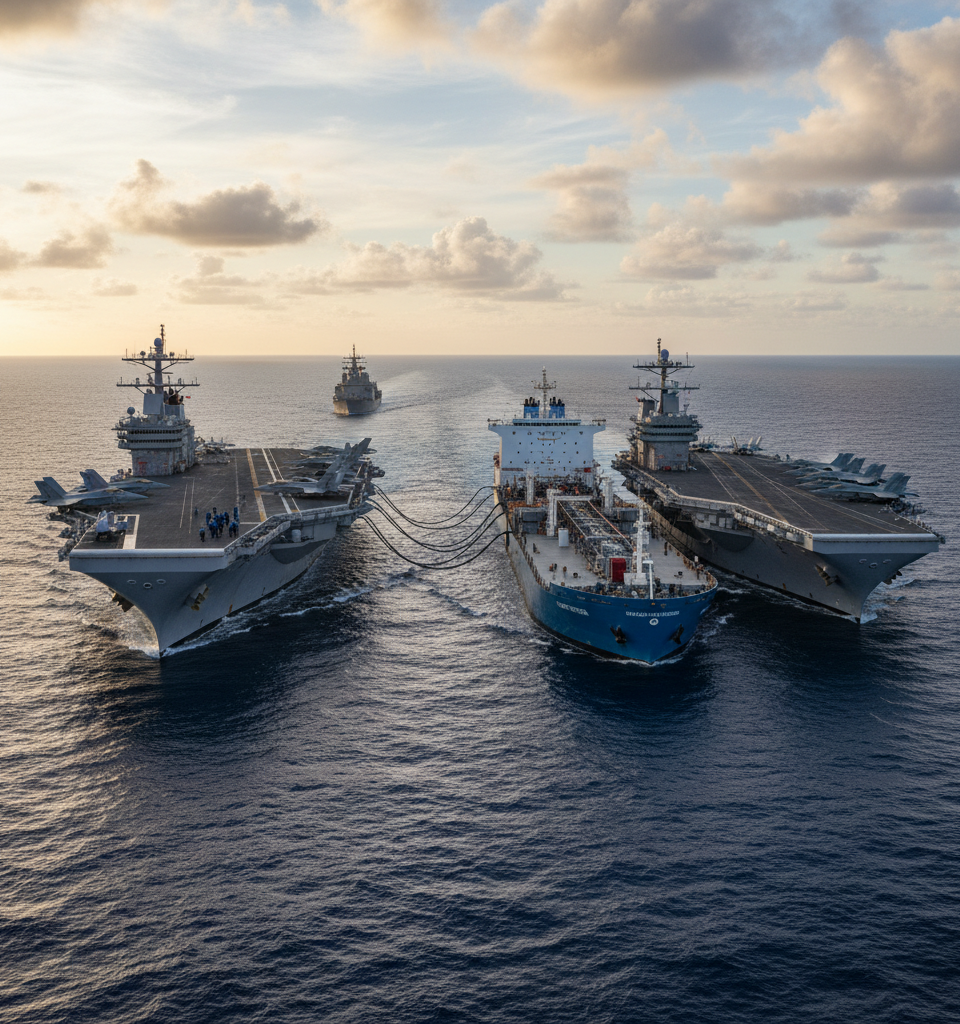
The United States military has initiated a series of fuel tenders for the shipment of military-grade petroleum products, with a notable diversion from traditional routes reliant on passage through the Strait of Hormuz. S. and destinations across the Pacific, demonstrate a deliberate move to circumvent potential vulnerabilities associated with the Persian Gulf, directly reflecting the heightened geopolitical risks and the ongoing disruption to global oil supply chains exacerbated by renewed tensions with Iran.
Geopolitical Undercurrents and Supply Chain Vulnerabilities
This strategic adjustment underscores the critical need for military logistics to adapt to an increasingly volatile global landscape. Historically, the Strait of Hormuz, a narrow chokepoint between the Persian Gulf and the Arabian Sea, has been instrumental for a significant portion of the world's oil transit, handling approximately 21% of global petroleum Flüssigkeiten consumption. The long-standing tensions between the U.S. and Iran, intensified by incidents such as attacks on oil tankers and drone downings, have consistently elevated the risk profile of this vital waterway. For the U.S. military, ensuring uninterrupted fuel supply is paramount to operational readiness, making alternative, more secure routes an imperative.
Specifics of the New Logistics Paradigm
The tendered shipments involve several hundreds of thousands of barrels of fuel, typically JP-5 jet fuel, a specialized aviation turbine fuel designed for aircraft carriers and other naval operations. These contracts, awarded to various maritime transport companies, explicitly delineate departure points from U.S. Gulf Coast refineries or West Coast ports, with destinations ranging from strategic Pacific outposts to deployment areas for naval fleets. The choice to undertake significantly longer routes, bypassing the Suez Canal and the Indian Ocean, implies a calculated acceptance of increased transit times and higher freight costs—estimates suggest a potential 15-20% increase in shipping expenses per barrel—in favor of enhanced security and reduced exposure to regional flashpoints. This move is not merely about avoiding physical threats but also about insulating military operations from the potential for supply disruptions caused by political instability or blockades.
Broader Market Repercussions
The strategic rerouting of military fuel supplies is expected to have ripple effects across the broader energy and maritime shipping sectors. It could lead to a minor but noticeable increase in tanker demand on trans-Pacific routes, potentially driving up freight rates for commercial shippers as well. Furthermore, it highlights a growing trend among national entities and potentially commercial energy companies to explore and invest in more diversified and resilient supply chain infrastructure, even if it entails higher costs. This could spur development in alternative logistics hubs and a greater emphasis on domestic refining and reserves in regions deemed geopolitically stable.
Expert Commentary on Strategic Implications
Energy security analysts view this development as a pragmatic adaptation to evolving geopolitical realities. Dr. Eleanor Vance, a senior fellow at the Center for Global Energy Studies, commented, “This isn't just about avoiding a single strait; it’s about acknowledging the systemic risk embedded in our global energy architecture. The U.S. military is essentially de-risking its critical fuel supply in a very public and demonstrative way. It sends a strong signal about the perceived longevity of these tensions and the need for supply chain redundancy.” Other experts suggest that while the immediate financial cost might be higher, the long-term strategic advantage of guaranteed supply without political interference is invaluable.
Future Outlook and Continuing Adaptations
Looking ahead, this shift is likely to be more than a temporary measure. It foreshadows a sustained effort by military planners to reduce reliance on vulnerable chokepoints and develop more robust, resilient supply lines. Future tenders could see greater emphasis on multi-modal transport solutions, increased domestic energy production to meet military demands, and possibly even direct investments in secure, strategically located storage facilities. The precedent set by these fuel tenders suggests that the geopolitical landscape will continue to shape not only military logistics but also the commercial considerations for global energy trade, potentially accelerating the decentralization of energy infrastructure and the re-evaluation of “just-in-time” delivery models for critical resources in favor of “just-in-case” resilience. This long-term perspective signals a profound recalibration in how major powers protect their vital energy interests in an era defined by increasing global fragmentation and regional conflicts.