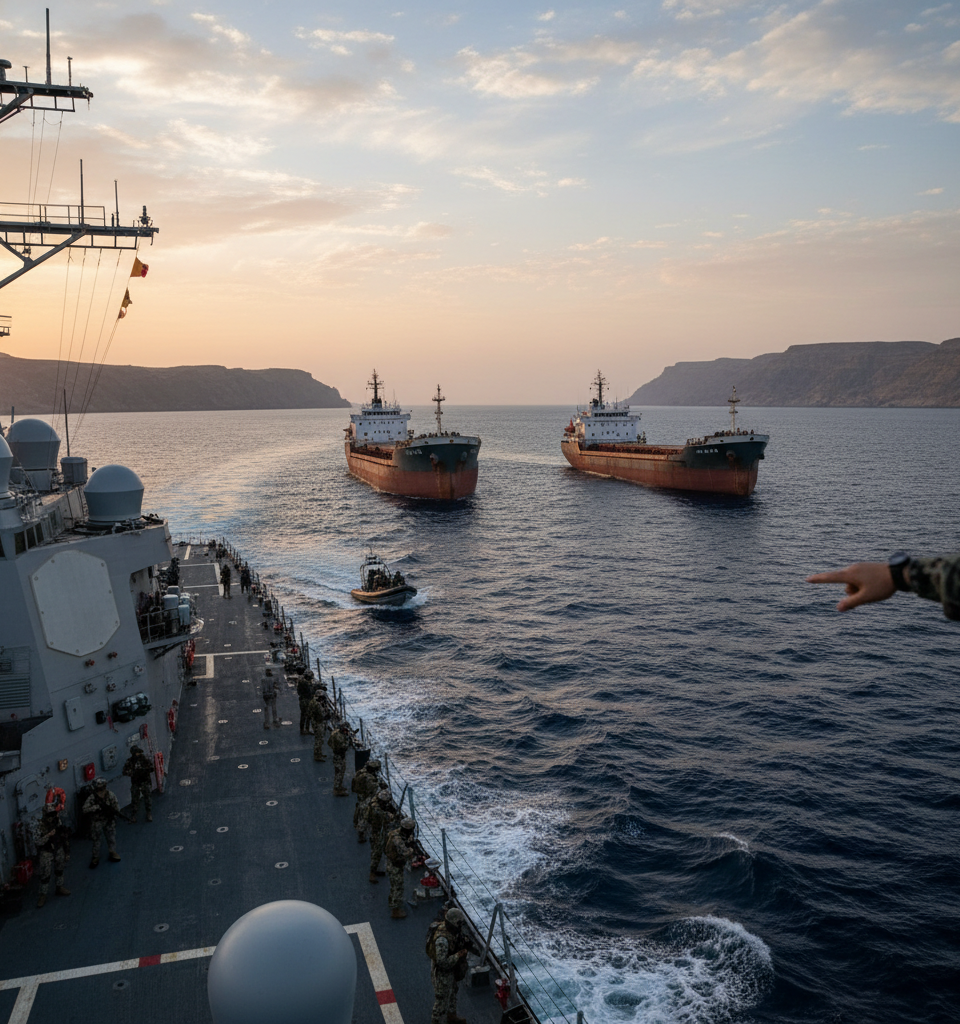
WASHINGTON D.C. — In a significant maritime intervention, U.S. Central Command (CENTCOM) announced on that its naval assets successfully intercepted and turned back six vessels attempting to traverse the Strait of Hormuz. These ships, reportedly linked to Iranian interests, were compelled to reverse direction and return to an Iranian port, averting a potential confrontation in one of the world's most vital oil transit chokepoints. The operation highlights the burgeoning tensions in the Persian Gulf and the U.S.'s assertive posture in maintaining maritime security against perceived Iranian threats.
Historical Context of the Strait of Hormuz
The Strait of Hormuz, a narrow waterway connecting the Persian Gulf with the Arabian Sea and the open ocean, is undeniably one of the world's most strategically important maritime passages. Approximately one-fifth of the world's total oil supply, equating to roughly 21 million barrels per day, passes through this strait. Its geopolitical significance is magnified by its proximity to major oil-producing nations, including Saudi Arabia, Iran, Iraq, Kuwait, Qatar, and the UAE. For decades, the Strait has been a flashpoint, witnessing numerous incidents ranging from tanker attacks to naval standoffs, often involving Iran, which views the waterway as a critical strategic asset and a potential leverage point against international sanctions.
Details of the Interception and CENTCOM's Stance
According to a statement released by CENTCOM, the six vessels, whose specific flags and cargo were not immediately disclosed, were identified as operating in a manner that prompted intervention by U.S. naval forces. While CENTCOM did not specify the exact nature of the threat or the justification for the interception beyond a general reference to 'maritime security operations,' the successful coercion of the ships to retreat without incident signals a firm resolve. A CENTCOM spokesperson,, affirmed that the U.S. Navy maintains a steadfast presence in the region to ensure freedom of navigation and deter malign activities that could disrupt global commerce and regional stability. This incident follows a pattern of increased U.S. naval deployments and exercises in the area, aimed at countering what Washington describes as Iranian aggression.
Global Energy Market and Geopolitical Ramifications
The immediate impact on global oil prices following this incident was moderate, with Brent crude futures showing a slight uptick of approximately 0.5% to just over $85 per barrel. However, sustained disruptions or an escalation of hostilities in the Strait of Hormuz could trigger significant volatility, potentially sending oil prices soaring and destabilizing global energy markets. Analysts are closely watching how this event might influence insurance premiums for shipping in the region, which have already seen increases due to past incidents. The broader implication is a further hardening of geopolitical fault lines, with the U.S. reinforcing its commitment to its regional allies and maintaining pressure on Iran, particularly concerning its nuclear program and regional proxy activities.
Expert Analysis on Escalation Risks
Security analysts and geopolitical experts are closely scrutinizing the incident for signs of potential escalation. Dr. Eleanor Vance, a senior fellow at the Center for Strategic and International Studies (CSIS), commented, "This maneuver by CENTCOM demonstrates a tactical assertiveness designed to signal capability and resolve without necessarily provoking a direct military confrontation. However, the line between deterrence and unintended escalation in such a congested and geopolitically charged environment is incredibly thin." Other experts suggest that Iran may view such actions as provocative, potentially leading to retaliatory measures in other domains, such as cyberattacks or increased support for regional proxies.
Potential Future Developments
The coming weeks are likely to see increased diplomatic rhetoric from both Washington and Tehran. The U.S. is expected to reiterate its commitment to international maritime law and its right to operate in international waters, while Iran will likely decry the U.S. presence as an act of aggression. Future developments could include an intensified pace of naval drills by both sides, potentially leading to further close encounters. The long-term implications hinge on the broader negotiations surrounding Iran's nuclear program and the desire of regional and international powers to de-escalate tensions. Businesses operating in the energy and shipping sectors are advised to monitor the situation closely, as the stability of the Strait of Hormuz remains paramount for global trade and economic certainty.
This incident in the Strait of Hormuz serves as a stark reminder of the fragile balance of power in the Middle East and the constant vigilance required to navigate its complex geopolitical landscape. The international community will be keenly observing subsequent actions from both the U.S. and Iran, hoping for de-escalation rather than increased friction in this economically vital region.