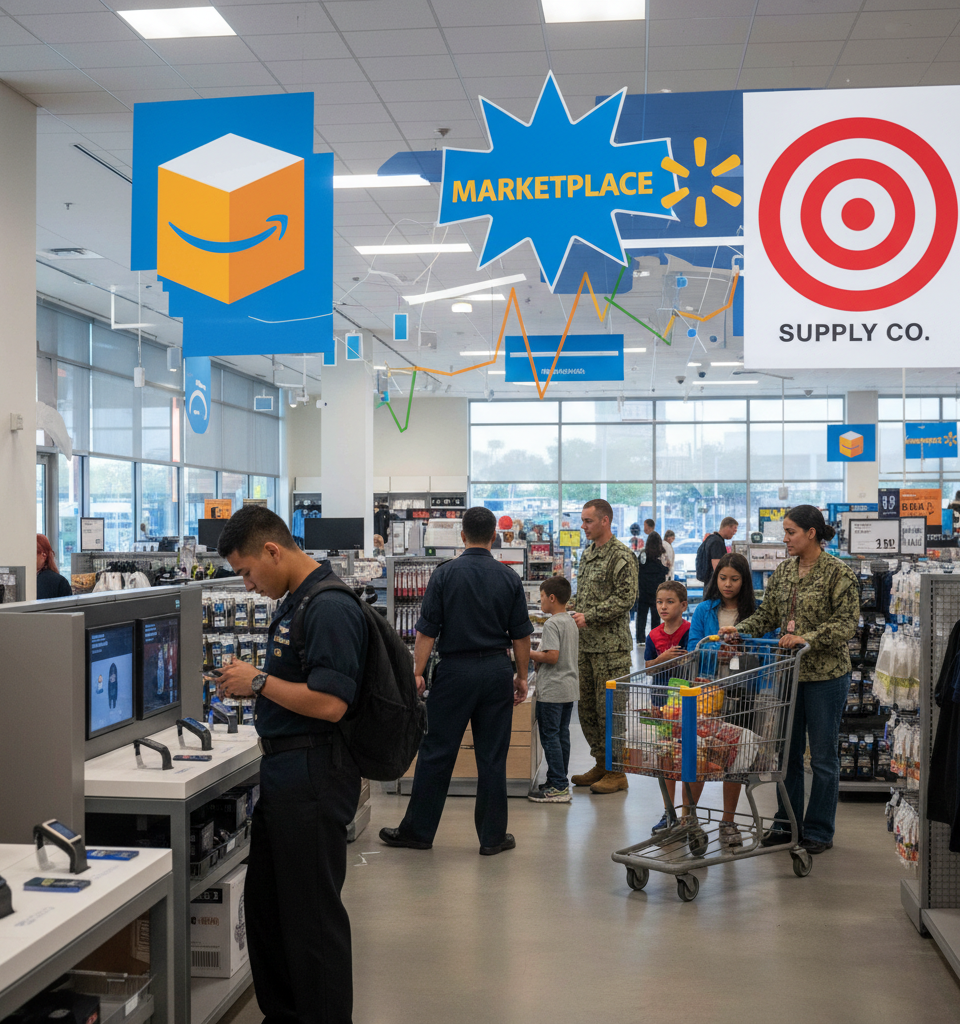
WASHINGTON D.C. – The United States Navy's expansive retail enterprise, a network of more than 300 Navy Exchange Service Command (NEXCOM) stores operating worldwide, finds itself in an increasingly precarious position. Faced with aggressive market share erosion by commercial titans like Walmart, Amazon, and Target, NEXCOM's ability to generate essential revenue for service member and family support programs is under severe duress. This challenge isn't merely about retail competition; it represents a strategic threat to the funding mechanisms that underpin vital morale, welfare, and recreation (MWR) initiatives for Navy personnel globaly.
NEXCOM, established in 1946, has historically served as a critical component of military life, offering tax-free goods and services to active-duty personnel, retirees, and their families. Beyond convenience and savings, NEXCOM's profits are mandated to funnel directly back into MWR programs, which include everything from fitness centers and youth programs to community events and discounted travel. In essence, every purchase made at a Navy Exchange directly contributes to the quality of life for sailors and their dependents, making the current competitive landscape a significant concern for military leadership and personnel alike.
The scale of this competition is staggering. Commercial retailers, with their vast purchasing power, sophisticated logistics, and aggressive pricing strategies, have made significant inroads into the military consumer base. Amazon, in particular, has leveraged its Prime membership benefits and rapid delivery to offer unparalleled convenience, often at prices that even the tax-free advantage of NEXCOM struggles to match. Walmart and Target, with their massive brick-and-mortar footprints and robust online presence, further intensify the pressure on NEXCOM's traditional business model, especially for Navy families residing off-base or in areas with easy access to commercial shopping.
This shift in consumer behavior and market dynamics has tangible financial consequences. While specific recent revenue decline figures for NEXCOM are often not publicly detailed, the broader trend in military exchanges across all branches indicates significant pressure. For context, the Army & Air Force Exchange Service (AAFES) reported some resilience during the pandemic with increased online sales, but pre-pandemic trends showed slowing growth and market share concerns. The fundamental problem for NEXCOM lies in its dual mandate: to serve its unique customer base while also competing effectively in a brutal retail environment, all without the same commercial flexibility or profit-driven incentives of its rivals.
Expert analysis suggests that NEXCOM's challenge extends beyond mere pricing. "The modern military consumer, like any other, expects convenience, a diverse product range, and an engaging shopping experience," explains Dr. Sarah Jennings, a retail industry analyst specializing in government contracting. "NEXCOM, while mission-driven, often lags in e-commerce innovation, supply chain agility, and personalized marketing compared to its commercial counterparts. Adapting to these expectations without compromising its core mission is their paramount hurdle."
Looking ahead, NEXCOM is actively exploring strategies to remain competitive. This includes optimizing its supply chain, enhancing its e-commerce platform and mobile shopping experience, and diversifying product offerings to better meet the needs of a younger, digitally native military population. There's also an increased focus on highlighting the direct impact of NEXCOM purchases on MWR programs, aiming to foster a sense of loyalty among its patrons. Partnerships with commercial entities for logistical support or technology integration could also be on the horizon, allowing NEXCOM to leverage private sector efficiency while retaining its public service mission.
The stakes are high. The long-term viability of NEXCOM is not just about keeping a chain of stores open; it's about ensuring a consistent, reliable funding stream for the programs that bolster the resilience and well-being of the Navy community. As the retail battle intensifies, the Navy’s ability to innovate and adapt will determine if its essential retail arm can secure its future and continue to serve those who serve the nation.