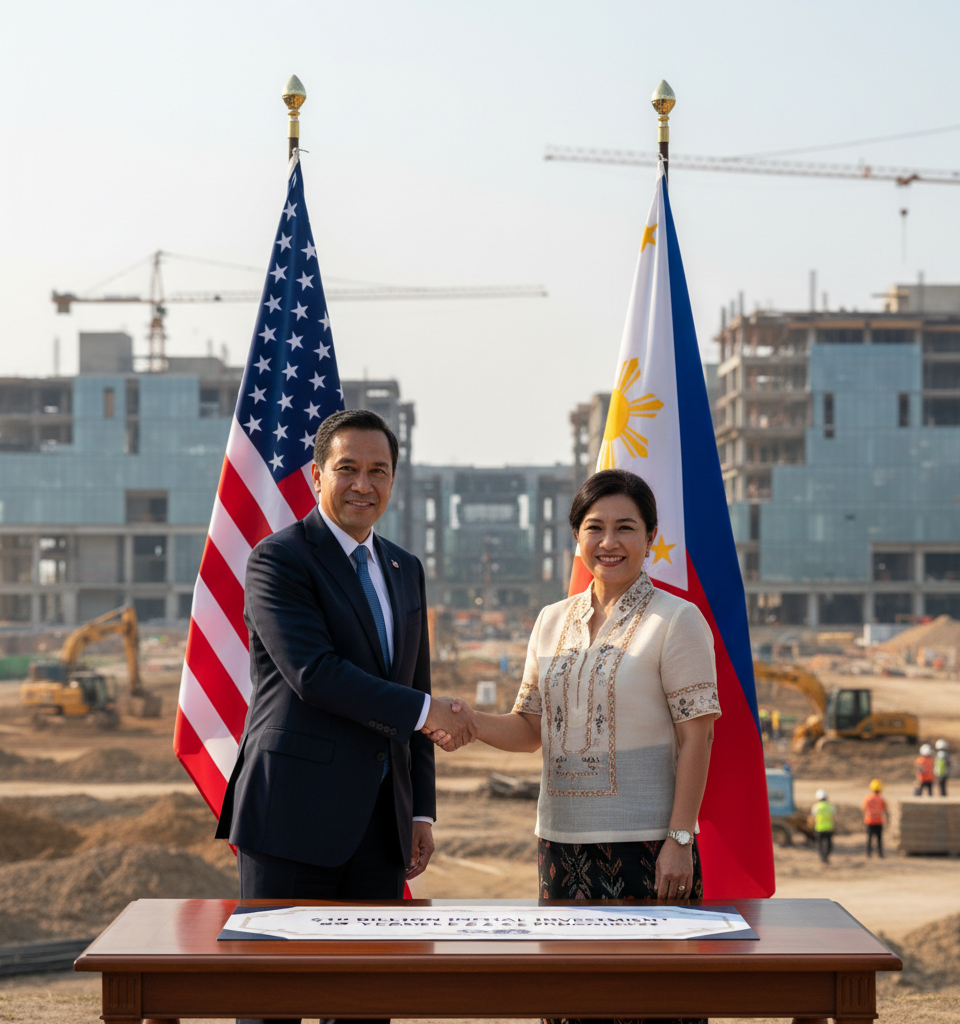
The proposed US-backed initiative to establish a critical artificial intelligence (AI) and supply-chain hub in the Philippines is taking concrete shape, with an estimated initial investment of around $10 billion. This substantial financial commitment sets the stage for a strategic long-term collaboration, which also reportedly involves a potential lease agreement granting the United States access for a term reaching up to 99 years. The details were revealed by the Philippine official spearheading the ambitious project, indicating a significant step forward in bilateral economic and technological alignment.
Strategic Importance and Regional Context
This development underscores a burgeoning strategic partnership between the United States and the Philippines, particularly in critical technological and economic sectors. The establishment of an AI and supply-chain hub is central to broader efforts aimed at strengthening regional economic resilience and technological advancement. In an increasingly complex global landscape, securing key supply chains and fostering innovation in AI are paramount, positioning the Philippines as a crucial partner in these endeavors. The long-term nature of the proposed lease, extending to nearly a century, highlights the depth and permanence envisioned for this collaboration, signalling a profound commitment from both nations.
Investment and Lease Details Emerge
The roughly $10 billion initial investment is earmarked for the foundational stages of the hub's development, covering infrastructure, technology acquisition, and initial operational costs. This figure, though substantial, is expected to be merely the first tranche, with further investments anticipated as the project matures and expands. The proposed 99-year lease to the United States marks an exceptionally long-term arrangement, suggesting a deep level of integration and shared strategic interest. While the precise terms of this lease are not yet fully public beyond its duration, such an agreement would likely encompass shared operational control, access for US personnel, and potentially strategic oversight over key components of the hub.
Broader Economic and Geopolitical Impact
The implications of this hub extend beyond direct economic benefits for the Philippines. It is poised to significantly impact regional supply chain dynamics, potentially diversifying manufacturing and logistics away from over-reliance on single geographic areas. For the AI sector, it could establish the Philippines as a burgeoning center for research, development, and application, attracting talent and further investment. Geopolitically, the long-term US presence and investment, coupled with the strategic nature of AI and supply chain resilience, solidifies the alliance between the two nations, potentially reshaping regional power balances and economic corridors.
Future Outlook and Next Steps
While the initial investment and lease duration have now been disclosed, the full scope and implementation timeline of the hub are still subjects of ongoing discussion and negotiation. The coming months are expected to bring further clarity on funding mechanisms, operational management structures, and precise technological focus areas. Both nations will likely navigate complex legal and political frameworks to solidify these preliminary understandings into concrete agreements. The project, as it stands, represents a pivotal moment in US-Philippines relations, promising to usher in an era of enhanced technological partnership and economic cooperation with profound long-term implications for the Asia-Pacific region.