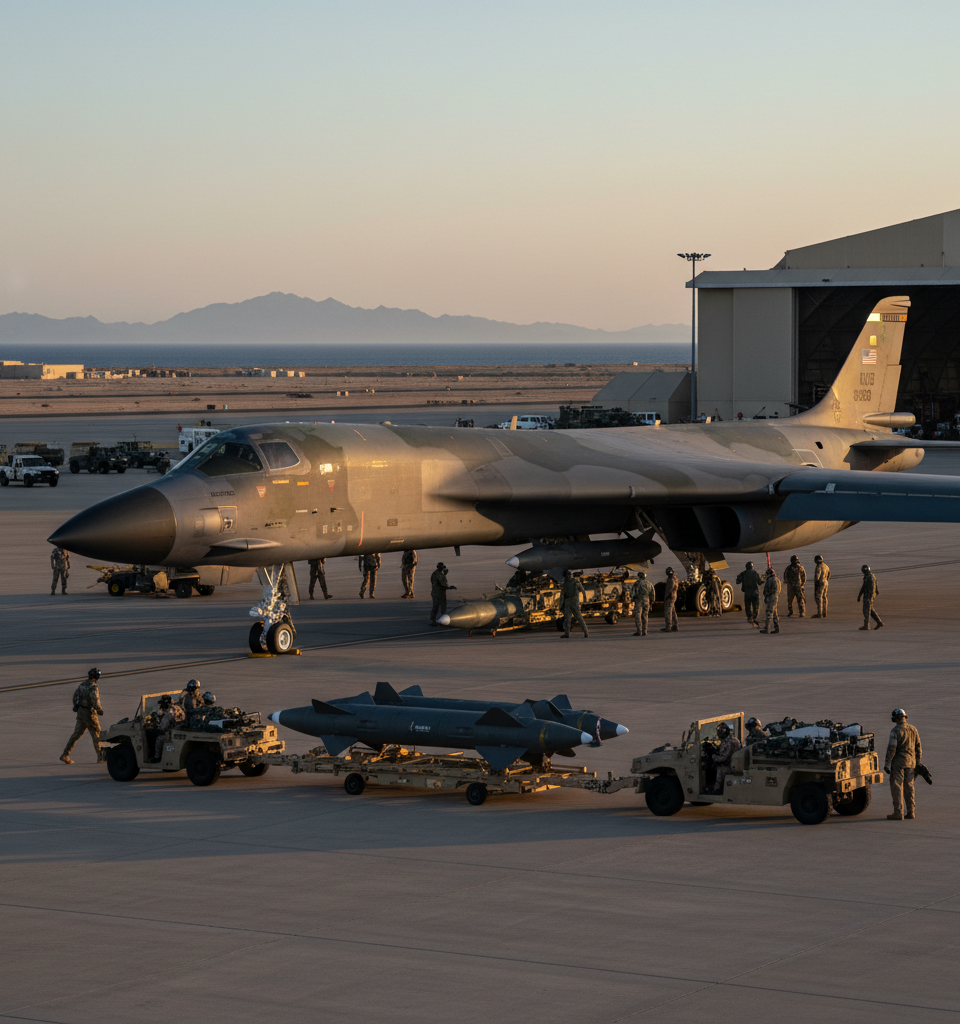
In a dramatic escalation of its strategic posture, the United States has largely re-tasked its formidable Joint Air-to-Surface Standoff Missile – Extended Range (JASSM-ER) inventory towards the Persian Gulf. This significant military maneuver, initiated amidst heightened geopolitical friction with Iran, sees the deployment of approximately 1,875 JASSM-ER missiles to the region. The transfer leaves a mere 425 of the advanced stealth cruise missiles from an original pre-conflict stockpile of 2,300 available for global deployment, underscoring the severity with which Washington views the potential for conflict in the Middle East.
The JASSM-ER, renowned for its stealth capabilities, precision guidance, and 500-nautical-mile range, represents a critical asset in modern aerial warfare. Its deployment to the Gulf serves as a powerful deterrent and a potent strike capability against high-value, well-defended targets deep within Iranian territory, should military action become necessary. This reallocation reflects a clear prioritization by the Pentagon to fortify its regional presence, signaling a robust commitment to protecting its interests and allies in a volatile region. Previous deployments of carrier strike groups and bomber task forces have already indicated a hardened stance, with the JASSM-ER transfer marking a significant operational commitment.
Key details surrounding this deployment highlight its scale and implications. The decision effectively earmarks over 81% of the total JASSM-ER inventory for a single theater, a proportion rarely seen outside of major, existing conflicts. While specific deployment locations for the missiles remain classified, they are understood to be positioned at strategic airbases and potentially on naval assets within range of Iranian military installations. This move is not just about missile numbers; it's about the psychological impact and the credible threat of overwhelming conventional force that such a concentration of advanced weaponry suggests.
The implications for the broader defense industry and international arms markets are considerable. Lockheed Martin, the primary manufacturer of the JASSM-ER, could see increased demand for accelerated production schedules to replenish depleted stockpiles. Furthermore, allied nations who rely on the U.S. for regional stability and potentially access to advanced weaponry might reassess their own defense procurement strategies, anticipating potential limitations on U.S. arms exports or availability in a protracted global conflict scenario. The focus on Iran also diverts resources that could otherwise be allocated to counter other major powers or emerging threats.
Defense analysts are offering various perspectives on this strategic shift. Dr. Evelyn Finch, a Senior Fellow at the Institute for Global Security Studies, noted, "This move reflects a 'pull the trigger' mentality, indicating that diplomatic avenues are either exhausted or deemed insufficient to deter Iranian actions. It also undeniably weakens the U.S.'s ability to respond simultaneously to other major crises, particularly given the ongoing strategic competition with China in the Pacific." Conversely, some argue that concentrating such firepower serves as the most effective form of deterrence, potentially preventing conflict by demonstrating overwhelming readiness.
Looking ahead, the ramifications of this strategic decision will unfold on multiple fronts. The immediate focus will remain on the Persian Gulf, where the U.S. military's stance is unequivocal. However, the long-term impact on global U.S. military posture and its ability to project power in other regions becomes a pressing concern. Future defense budgets may see a significant push for accelerated procurement of advanced standoff weapons to rebuild and diversify inventories. Additionally, the diplomatic landscape will be closely watched, as this military escalation could either lead to de-escalation through deterrence or push the region closer to an armed confrontation. The delicate balance of power in the Middle East has rarely been more precariously poised.