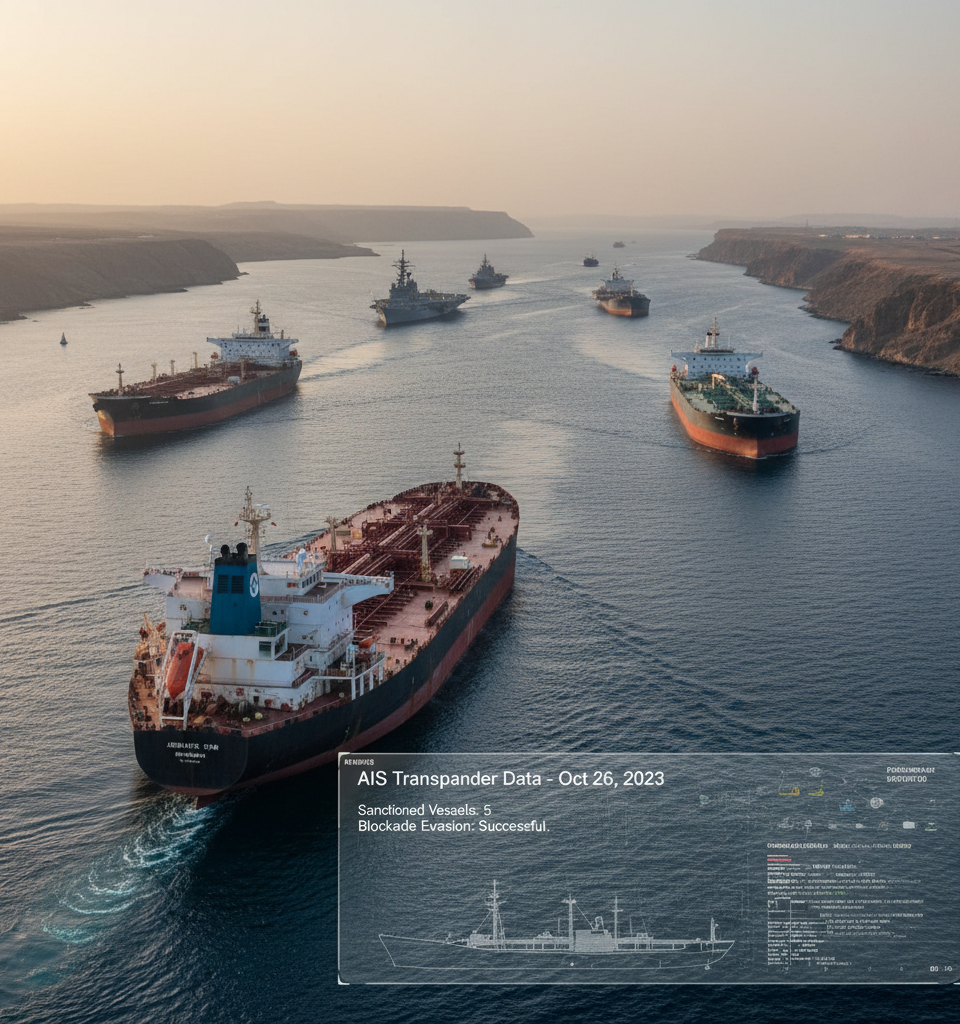
New data confirms that US-sanctioned tankers have continued to transit the Strait of Hormuz, a critical chokepoint for global oil shipments, seemingly unhindered by an alleged US blockade. This development, surfacing on 2026-05-19, underscores significant challenges in enforcing international sanctions and points to potential weaknesses in current maritime interdiction strategies.
The persistent passage of these vessels has considerable implications for international relations, maritime security, and global energy markets. The Strait of Hormuz, connecting the Persian Gulf with the open ocean, is arguably the most important oil transit chokepoint in the world, with roughly one-fifth of the world's total oil consumption passing through it daily. Any perceived defiance of sanctions in this region could embolden other sanctioned entities and create a precedent for bypassing international restrictions.
Challenges to Sanctions Enforcement
Sanctions, often intended to isolate rogue regimes or entities, rely heavily on their ability to disrupt economic activity and restrict access to vital resources or trade routes. The reported continued transit of these tankers suggests that current enforcement mechanisms, possibly involving naval patrols or satellite monitoring, are not entirely effective. This could be due to a combination of factors, including sophisticated evasion tactics by the sanctioned vessels, limitations in surveillance capabilities, or geopolitical sensitivities that preclude more aggressive interdiction actions. The precise nature of the "US blockade" in question remains unspecified, but its apparent ineffectiveness against these particular transits warrants immediate scrutiny.
From an industry perspective, the situation introduces an element of uncertainty and risk. Shipping companies and insurers operating in the region might face increased scrutiny or potential penalties if they are found to be indirectly facilitating the movements of sanctioned entities. Conversely, the continued flow of oil, even from sanctioned sources, could have a moderating effect on global oil prices, potentially offsetting some of the intended economic pressure on the sanctioned entities. The perceived success of these tankers in navigating the strait could also influence global shipping routes and practices, with other vessels potentially adopting similar methods to avoid detection or restriction.
Geopolitical Ramifications and Market Impact
The ability of sanctioned tankers to traverse the Strait of Hormuz despite a purported blockade raises pressing geopolitical questions. It could be interpreted by adversaries as a sign of waning U.S. influence or a reluctance to escalate tensions in a highly volatile region. This perception could subsequently empower these nations or groups, potentially leading to further challenges to international norms and security agreements. Allies of the United States, particularly those dependent on the unimpeded flow of oil through the Strait, will be closely observing how this situation evolves and what measures, if any, are taken to robustly enforce existing sanctions.
Economically, the market impact is multifaceted. While the origin of the oil carried by these sanctioned tankers is not explicitly stated in the initial report, their continued transit ensures a supply of crude that might otherwise be absent from the global market. This could subtly impact global oil prices, potentially preventing significant spikes that might occur if a truly effective blockade were in place. However, the presence of these vessels also adds to the overall risk premium associated with shipping through the Strait, potentially increasing insurance costs and logistical complexities for all maritime traffic in the region.
Next Steps and Future Outlook
Looking ahead, the U.S. and its allies face a critical juncture. They must re-evaluate the efficacy of their current sanctions enforcement strategy in the Strait of Hormuz. This could involve bolstering surveillance capabilities, implementing more rigorous interdiction protocols, or engaging in heightened diplomatic efforts to secure compliance. Failure to address this issue could undermine the credibility of future sanctions programs and set a dangerous precedent for international maritime law. The coming weeks are likely to see heightened discussions among international energy bodies and maritime security organizations regarding the best course of action to ensure the stability and security of one of the world's most critical waterways while upholding the integrity of international sanctions regimes.