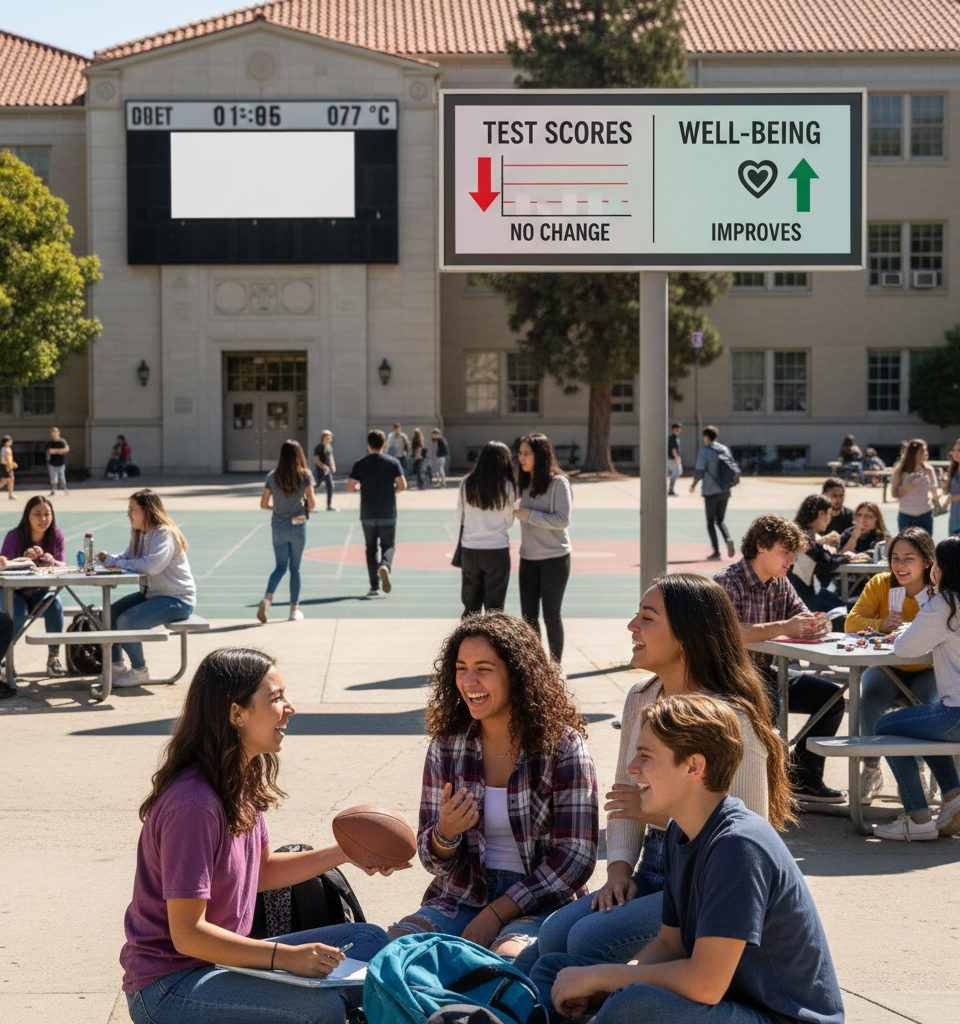
New research indicates that policies banning cellphones in US schools have failed to deliver a measurable uplift in students' test scores, contradicting a primary motivation behind their implementation. While academic performance remained largely unchanged, the study, encompassing a significant period of observation and data analysis, paradoxically found a positive impact on students' self-reported well-being, particularly among older students.
Context and Rationale Behind Bans
The proliferation of personal mobile devices in classrooms over the past two decades led to growing concerns among educators and parents about their potential negative impact on learning, attention spans, and social development. Many districts, driven by these anxieties and anecdotal evidence, imposed outright bans or strict usage restrictions. Proponents argued that removing these distractions would foster a more focused learning environment, leading directly to enhanced academic outcomes and reduced instances of cyberbullying or social comparison. The current findings challenge the academic premise of these widespread policies, prompting a re-evaluation of their core objectives.
Study Details and Key Findings
The comprehensive study, which analyzed data from numerous school districts across various states, meticulously tracked academic performance metrics, specifically standardized test scores in subjects like mathematics and reading. Researchers cross-referenced these scores with the implementation dates of school-wide cellphone bans. The data consistently showed no statistically significant improvement in test scores attributable to the bans.
However, a compelling secondary finding emerged from student surveys conducted post-ban: a notable percentage of students, particularly in middle and high school, reported feeling less social pressure, better concentration during classes, and an overall improvement in their mental well-being several years after the bans were enacted. This suggests a nuanced impact, where academic gains might not be direct but indirect benefits related to psychological health are evident.
Broader Educational and Social Implications
These findings carry substantial implications for educational policy-making and the broader debate surrounding technology in schools. If academic improvement isn't the direct result, then the rationale for banning phones might shift from instructional effectiveness to student welfare. This could reframe discussions around digital citizenship, responsible technology use, and mental health support within educational institutions. The study also indirectly highlights the ongoing struggle schools face in balancing technological integration with safeguarding students' learning and emotional health. The initial focus on academic metrics might have overlooked a crucial, albeit less quantifiable, benefit.
Expert Perspectives
Educational psychologists and public health experts are keenly observing these results. Dr. Eleanor Vance, a prominent educational researcher, commented, "While the lack of test score improvement might disappoint some, the reported gains in student well-being are incredibly important. It signals that schools might be inadvertently addressing a significant mental health challenge by creating environments with fewer digital stressors." Others suggest that the study underscores the complex relationship between technology, learning, and adolescent development, advocating for a more holistic approach that considers both academic performance and social-emotional learning outcomes. The consensus among many experts is that the conversation needs to evolve beyond simply 'good' or 'bad' technology and instead focus on how technology can be managed to support diverse student needs.
The Path Forward: Re-evaluating Policy
Moving forward, school administrators and policymakers face the challenge of re-evaluating existing cellphone policies in light of these new insights. Given the proven impact on well-being, future discussions might prioritize policies that foster a healthier psychological environment over those solely aimed at boosting test scores. This could involve exploring hybrid models that allow for limited or supervised phone use, integrating digital literacy and mindfulness programs, or even conducting localized studies to understand specific community impacts. The era of blanket bans might be evolving into a more nuanced approach, focusing on mental health and social development as equally critical outcomes alongside academic achievement. Schools might begin to implement more comprehensive digital wellness strategies that go beyond simple restrictions.