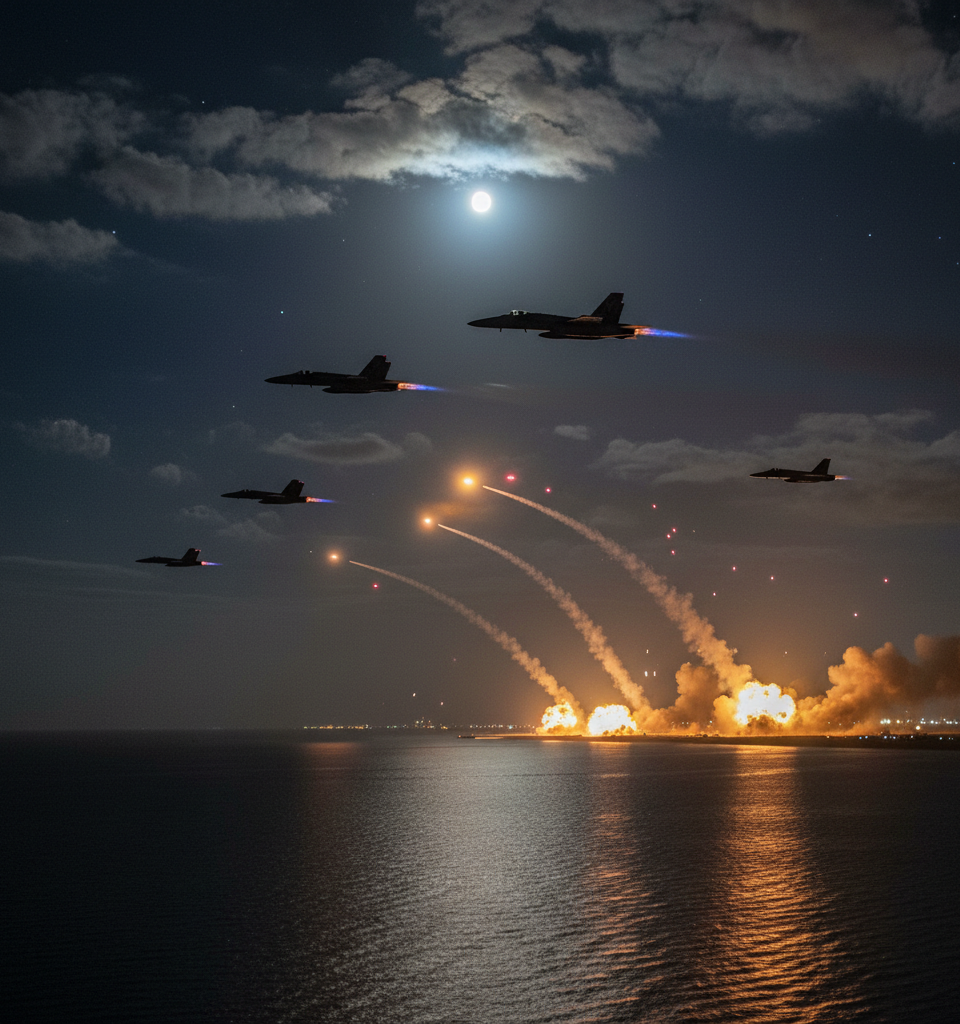
The United United States military has escalated its operational activities by reportedly executing a second day of strikes against targets within Iran. This sustained military action comes in direct response to what U.S. officials describe as a series of Iranian-backed aggressions against international shipping lanes. The continued tit-for-tat exchanges are widely seen as a significant setback for any prevailing hopes of establishing a durable ceasefire in the volatile Middle East.
Context of Escalation
This latest round of military engagement marks a critical juncture in the ongoing complex geopolitical landscape of the Persian Gulf. Tensions have been simmering for months, primarily fueled by accusations of Iranian proxies targeting commercial vessels and critical maritime infrastructure. The U.S. has consistently vowed to protect freedom of navigation and retaliate against any perceived threats to global trade routes. These recent strikes underscore a hardening stance from Washington, indicating a potentially deeper military commitment to deterring further Iranian actions.
Details of the Operations
While specific details regarding the targets and full extent of the damage from the second day of strikes remain under wraps, initial reports suggest they likely mirrored the nature of previous operations, focusing on naval assets, missile launch sites, or command-and-control facilities linked to malign maritime activities. The U.S. Department of Defense has not yet released a detailed operational summary for the latest actions, but the consistent messaging points to a deliberate and calculated strategy aimed at degrading Iran's capacity to threaten shipping. The nature of these strikes, conducted over multiple days, signals a more sustained punitive approach rather than a singular retaliatory event.
Regional and Market Impact
The immediate ramifications of these continued U.S. strikes are already being felt across global markets, particularly in the energy sector. Oil prices have seen increased volatility, reflecting concerns over potential disruptions to crude shipments through the Strait of Hormuz, a critical chokepoint for a substantial portion of the world's oil supply. Shipping insurance premiums in the region are also anticipated to climb, potentially impacting global supply chains and increasing costs for goods transported through the area. Regional equities have shown signs of nervousness, with investors closely watching for further escalation.
Expert Perspectives
Security analysts and foreign policy experts are largely in agreement that these successive strikes significantly complicate diplomatic efforts to de-escalate regional tensions. "The back-to-back nature of these strikes leaves little room for ambiguity regarding U.S. intent," noted Dr. Elena Petrova, a senior fellow at the Institute for Global Security Studies. "While designed to impose costs, this strategy also carries inherent risks of miscalculation and further unintended escalation. The window for a 'sustained ceasefire' appears to be narrowing considerably with each military action." Experts are also debating whether these actions are primarily defensive or if they signal a broader shift in U.S. policy toward Iran.
What Lies Ahead
The coming days and weeks will be crucial in determining the trajectory of this escalating conflict. The immediate focus will be on Iran's response, which could range from further proxy actions to more direct challenges. International efforts to mediate a de-escalation are expected to intensify, though the effectiveness of such efforts remains uncertain given the current military posture. The U.S. administration will also face increased pressure to articulate a clear long-term strategy for managing Iranian aggression while minimizing the risk of a wider regional conflagration. The prospect of a sustained ceasefire, once a hopeful objective, now appears distant amidst the drumbeat of continued military engagement.