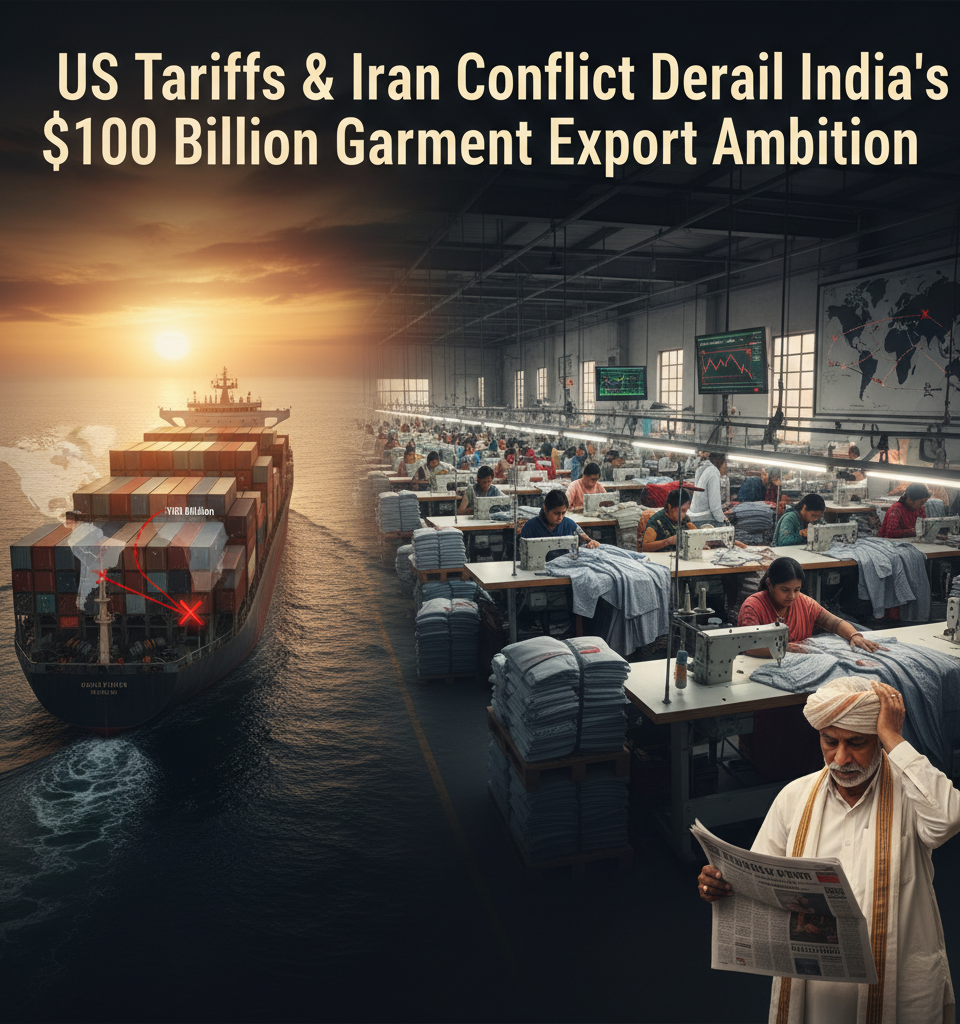
Mumbai, India – India's textile and apparel sector, a cornerstone of its manufacturing economy and a major employer, is grappling with a severe downturn fueled by rising US protectionist tariffs and the escalating geopolitical fallout from the Iran conflict. This confluence of factors is directly undermining the nation's ambitious goal of reaching $100 billion in garment exports, pushing up operational costs, curtailing international trade, and dimming prospects for a much-anticipated industry recovery.
The current predicament casts a long shadow over a sector vital for India's economic growth and employment, particularly for its large rural population. For decades, the garment industry has been a significant foreign exchange earner, leveraging India's rich textile heritage and abundant labor force. The $100 billion export target, initially envisioned for the next five years, aimed to quadruple current export figures, positioning India as a dominant player in the global apparel market. This aspiration is now increasingly distant as external pressures intensify, highlighting the interconnectedness of global trade, politics, and supply chains.
Key details reveal a worrying trend. The US, a primary market for Indian garments, has implemented new tariff lines and heightened scrutiny on imports, increasing the landed cost of Indian apparel by an estimated 5-7%. Simultaneously, the conflict in the Middle East has disrupted critical shipping routes, particularly through the Red Sea, leading to a surge in maritime insurance premiums and extended transit times. Freight costs have reportedly jumped by as much as 20-30% for shipments to Europe and North America. "These surcharges are eating into our already thin margins," states Rahul Mehta, President of the Clothing Manufacturers Association of India (CMAI). "Buyers are hesitant to absorb these extra costs, forcing us to either accept lower profits or risk losing orders to competitors like Bangladesh and Vietnam."
The broader industry impact is palpable across the supply chain, from cotton farmers to garment factory workers. Small and medium-sized enterprises (SMEs), which constitute a significant portion of the Indian garment industry, are particularly vulnerable. Many are struggling to absorb increased costs, leading to production slowdowns, order cancellations, and even layoffs. This ripple effect threatens the livelihoods of millions employed directly and indirectly by the sector. The shift in buyer preference towards regions with more stable geopolitical environments and favorable trade agreements is also a growing concern.
Experts and analysts have voiced significant apprehension regarding the situation. Dr. Arindam Mitra, an economist specializing in international trade, notes, "India's garment sector is facing a perfect storm. The US tariffs are a direct assault on competitiveness, while the Red Sea crisis acts as a significant logistical bottleneck. Without strategic government intervention and diversification of export markets, achieving the $100 billion target will remain an uphill battle." He suggests that incentives for technological upgrades, skill development, and deeper engagement with free trade agreements could offer some respite.
Looking ahead, the immediate future appears challenging. The duration and intensity of the Iran conflict remain uncertain, as do the US's evolving trade policies. Industry associations are lobbying the Indian government for support measures, including export subsidies, logistics assistance, and diplomatic efforts to mitigate tariff impacts. Furthermore, an increased focus on diversifying export geographies to emerging markets in Africa and Latin America, alongside strengthening intra-Asia trade, could provide alternative avenues for growth. However, until these geopolitical and economic headwinds subside, India's ambitious garment export target will likely remain an aspiration rather than an imminent reality, demanding significant strategic recalibration from industry and policymakers alike.
Impact on Trade Routes and Logistics
The ongoing geopolitical instability in the Middle East, particularly around the Red Sea, has rendered traditional shipping lanes precarious for cargo vessels transporting goods between Asia and Europe/North America. Rerouting ships around the Cape of Good Hope, while a safer alternative, adds weeks to transit times and increases fuel consumption significantly. This escalation in logistics costs directly translates to higher prices for Indian garments, a burden that many international buyers are unwilling to bear in a competitive global market. The ripple effect extends to supply chain predictability, making it difficult for Indian manufacturers to commit to tight delivery schedules, a critical factor in the fast-paced fashion industry.
Government and Industry Response
The Indian government, recognizing the criticality of the textile and apparel sector, is reportedly in discussions with industry leaders to formulate a comprehensive response strategy. This includes exploring options for negotiating favorable trade terms with key importing nations, enhancing export promotion schemes, and providing financial relief to struggling manufacturers. Simultaneously, industry bodies are urging their members to invest in supply chain resilience, explore near-shoring opportunities for specific markets, and embrace sustainable manufacturing practices to gain a competitive edge. The crisis also highlights the urgent need for India to accelerate its integration into global value chains beyond traditional markets, mitigating reliance on a few concentrated export destinations.
Competitor Landscape Shift
The challenges faced by India are creating opportunities for competitor nations. Countries like Bangladesh and Vietnam, which often benefit from preferential trade agreements (such as the EU's "Everything But Arms" initiative for Bangladesh or Vietnam's participation in various FTAs), are poised to capture market share. Their stable logistical environments and often lower production costs, relative to India's current challenges, present an attractive alternative for international buyers. This shifting competitive landscape underscores the imperative for India to swiftly address its current vulnerabilities to avoid long-term erosion of its market position.