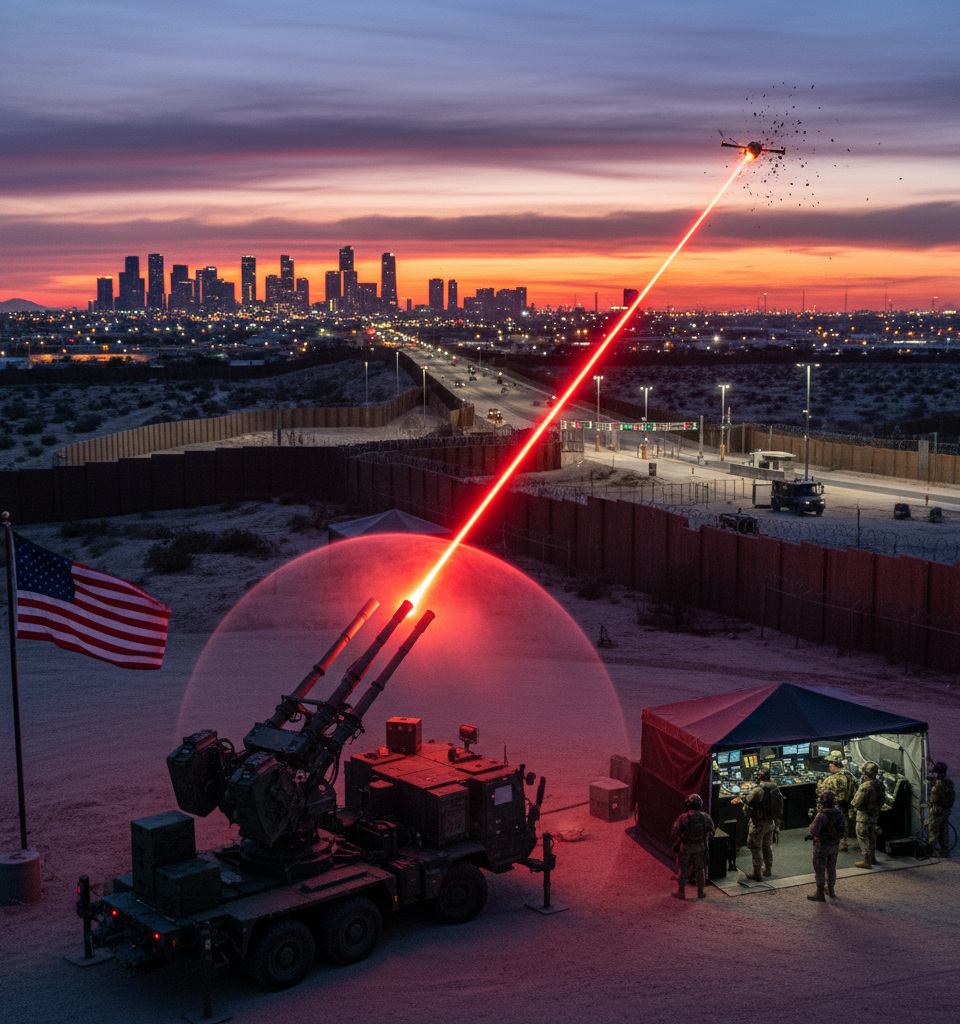
WASHINGTON D.C. — In a pivotal move signaling a new frontier in domestic air defense, the U.S. military is poised to regularly deploy high-energy laser weapons on American soil. This strategic shift, primarily aimed at countering the burgeoning threat of low-cost weaponized drones, follows a landmark safety agreement between the Federal Aviation Administration (FAA) and the U.S. Department of Defense (DoD). This unprecedented pact, disclosed in recent briefings, specifically addresses the use of directed energy weapons to neutralize unauthorized drones along the U.S.-Mexico border, asserting that such countermeasures pose "no undue risk" to commercial and passenger aircraft. This development is a direct response to a rapidly evolving threat landscape where readily available and inexpensive drones are increasingly weaponized by nefarious actors, including cartels and potentially terrorist organizations. The proliferation of these unmanned aerial systems (UAS) presents a complex challenge to traditional air defense mechanisms, often proving cost-prohibitive or operationally difficult to engage with conventional interceptors. The deployment of laser weapons offers a potentially precise, scalable, and cost-effective solution to this growing vulnerability, establishing a critical protective layer over sensitive border regions and, eventually, other critical infrastructure. The FAA-DoD agreement stems from extensive safety assessments and operational trials, culminating in a detailed framework for the safe integration of directed energy systems into controlled airspace. Key stipulations undoubtedly include stringent operational parameters, geo-fencing protocols, and advanced sensor fusion to distinguish between hostile drones and legitimate air traffic. While specific power outputs and engagement ranges remain classified, the operational concept is clear: a concentrated beam of light will be used to disable or destroy incoming drone threats, often by melting critical components or disrupting their electronic systems. This marks a significant technological leap from conventional kinetic interceptors, promising a virtually infinite magazine capacity limited only by power supply. The immediate impact on the defense technology industry is profound. Companies specializing in directed energy systems, advanced optics, and precision targeting will likely see an accelerated demand for their products and expertise. Major defense contractors like Lockheed Martin, Raytheon Technologies, and Northrop Grumman, all of whom have been investing heavily in laser weapon development, stand to benefit significantly. This growing market also extends to sensor manufacturers, command-and-control software developers, and integrators capable of deploying and maintaining these complex systems. Analysts estimate the global directed energy weapons market, already projected to exceed $20 billion by 2030, will experience further growth driven by these domestic deployments. Defense analysts universally view this agreement as a crucial strategic pivot. "This isn't just about shooting down drones; it's about establishing a framework for future national air sovereignty," stated Dr. Evelyn Reed, a senior fellow at the Center for Strategic and International Studies. "The U.S. is proactively addressing a vulnerability that many other nations are also grappling with. The non-kinetic nature of laser engagements also reduces the risk of collateral damage, which is a significant advantage in densely populated border areas. However, operational complexities, such as weather conditions affecting beam propagation, still need continuous refinement and robust mitigation strategies." Looking ahead, the initial deployment at the U.S.-Mexico border is likely to serve as a proving ground for broader domestic implementation. Future applications could extend to protecting critical infrastructure, including power grids, airports, and military installations, which are increasingly susceptible to drone threats. The DoD is expected to continue refining operational procedures, potentially experimenting with different laser weapon classes and power levels. Furthermore, this move could spur international collaboration and competition, as other nations strive to develop similar domestic laser defense capabilities. The 'Laser Dome' concept, once a futuristic vision, is rapidly becoming a tangible reality for American air defense, promising a more secure future against the evolving array of airborne threats.
US Unveils 'Laser Dome': Directed Energy Weapons Deployed for Border Air Defense Amid Drone Threat
Key Takeaways
Read this first — then go as deep as you need.
Discussion
Loading comments...
Enjoying this article?
Get more like it delivered to your inbox — free.
This article was compiled by GlobalSell News from publicly available reporting and has been edited for clarity and length. For full details, read the original source.