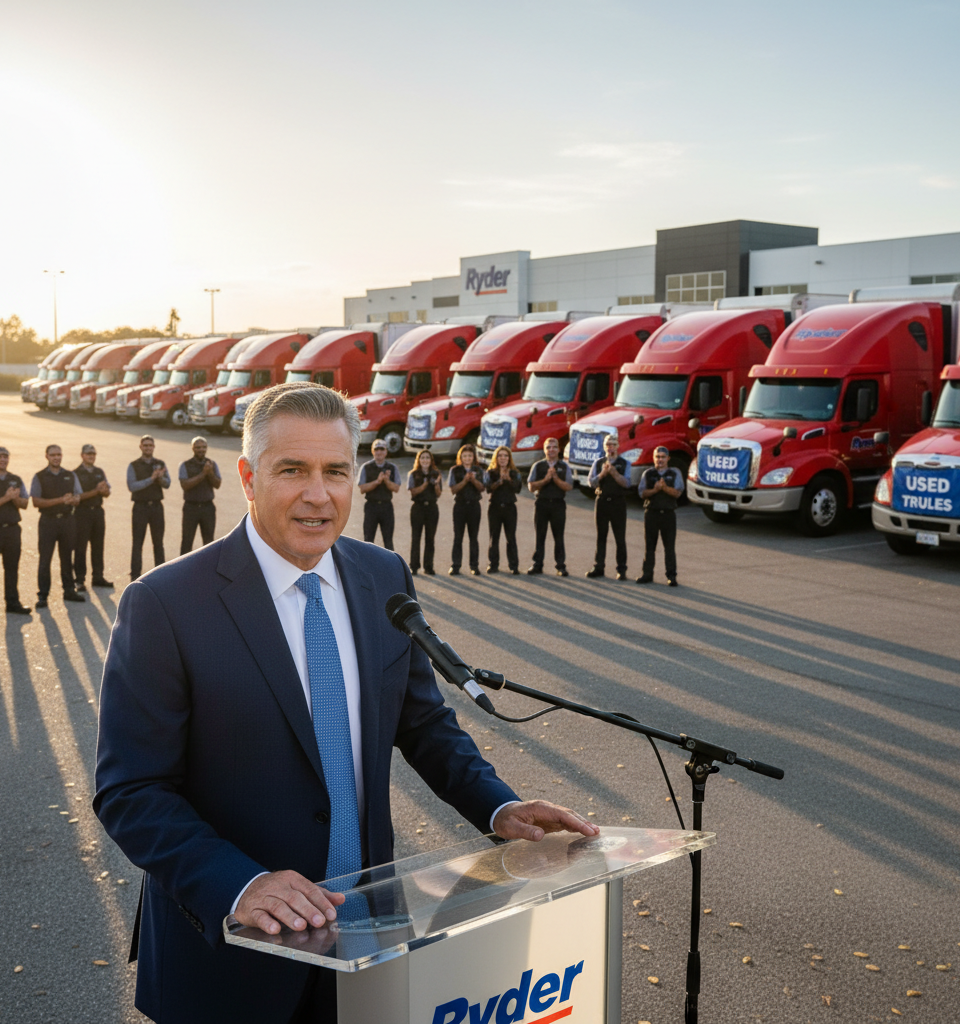
Ryder System, Inc. (NYSE: R) announced a significant beat on its first-quarter earnings, largely attributed to an unexpected surge in used vehicle sales volumes and stable retail pricing, according to CEO John Diez. This favorable performance has prompted the logistics and supply chain solutions provider to upgrade its long-term financial projections for 2026, signaling confidence in its strategic direction and market position.
Context and Significance
This strong showing comes amidst a dynamic and often volatile transportation and logistics sector, where economic indicators can rapidly shift demand for vehicle fleets and supply chain services. Ryder, a bellwether for the industry, manages a vast fleet of commercial vehicles and provides critical supply chain solutions. The unexpected strength in its used vehicle segment is particularly noteworthy as it reflects not only efficient inventory management but also residual market demand for commercial assets even as new vehicle production stabilizes. The company’s ability to effectively cycle its assets, particularly in its lease and rental segments, directly impacts its profitability and capital efficiency.
Key Financial Details and Executive Commentary For the first quarter,
Ryder reported diluted earnings per share (EPS) from continuing operations of $1.64, significantly exceeding analyst expectations. This was primarily driven by higher retail volumes of used vehicles than anticipated, with pricing remaining consistent quarter-over-quarter. John Diez, Ryder's Chairman and Chief Executive Officer, underscored this point, stating, “Outperformance was driven by higher retail volumes relative to our expectations, and retail pricing was stable sequentially.” The company also demonstrated strong free cash flow generation, allowing it to strategically invest in its high-growth supply chain and dedicated transport businesses, which are key pillars of its long-term strategy. The robust performance has led Ryder to revise its 2026 financial targets, with adjusted EPS now projected to be in the range of $10.50 to $11.00, up from previous estimates.
Industry and Market Impact
Ryder's enhanced outlook and strong used vehicle sales provide a positive signal for the broader commercial vehicle market. The stability in used vehicle pricing, despite increased sales, suggests a healthy demand environment, potentially indicating that businesses are still actively expanding or replacing their fleets. This could be interpreted as a forward-looking indicator of economic activity, as commercial vehicle utilization often correlates with industrial output and goods movement. For the logistics sector, Ryder's continued investment in its supply chain solutions also highlights the ongoing demand for sophisticated, integrated logistics services as companies navigate increasingly complex global supply chains. The company's performance could benchmark expectations for competitors and influence investment decisions across the sector.
Expert Analysis Industry analysts have largely reacted positively to
Ryder’s announcement. Many view the strong used vehicle sales as a testament to the company's disciplined approach to fleet management and its ability to adapt to market conditions. "Ryder's strong Q1, particularly the outperformance in used vehicle sales, demonstrates their operational agility amidst fluctuating economic headwinds," commented Sarah Jenkins, an analyst specializing in industrial transport at a leading investment firm. "The revised 2026 guidance underscores management's confidence in their strategic initiatives, particularly their focus on accelerating growth in their supply chain and dedicated segments, which promise higher returns over the long term." Analysts also note the importance of Ryder's free cash flow generation, which provides flexibility for capital allocation, including potential share buybacks or debt reduction, further enhancing shareholder value.
Looking Ahead Moving forward,
Ryder plans to continue executing its strategy focused on enhancing its return on capital and driving profitable growth. This includes further investments in innovative technologies for its supply chain and dedicated transportation businesses, as well as optimizing its fleet management solutions. The company expects the positive momentum from used vehicle sales to continue, albeit potentially moderating as the market normalizes. Ryder's management team has indicated a commitment to leveraging its significant asset base to generate sustainable value for shareholders, while also positioning the company to address evolving customer demands for efficiency and reliability in their logistics operations. The market will closely watch Ryder’s progress on its 2026 targets and its ability to sustain growth in an ever-changing economic landscape.