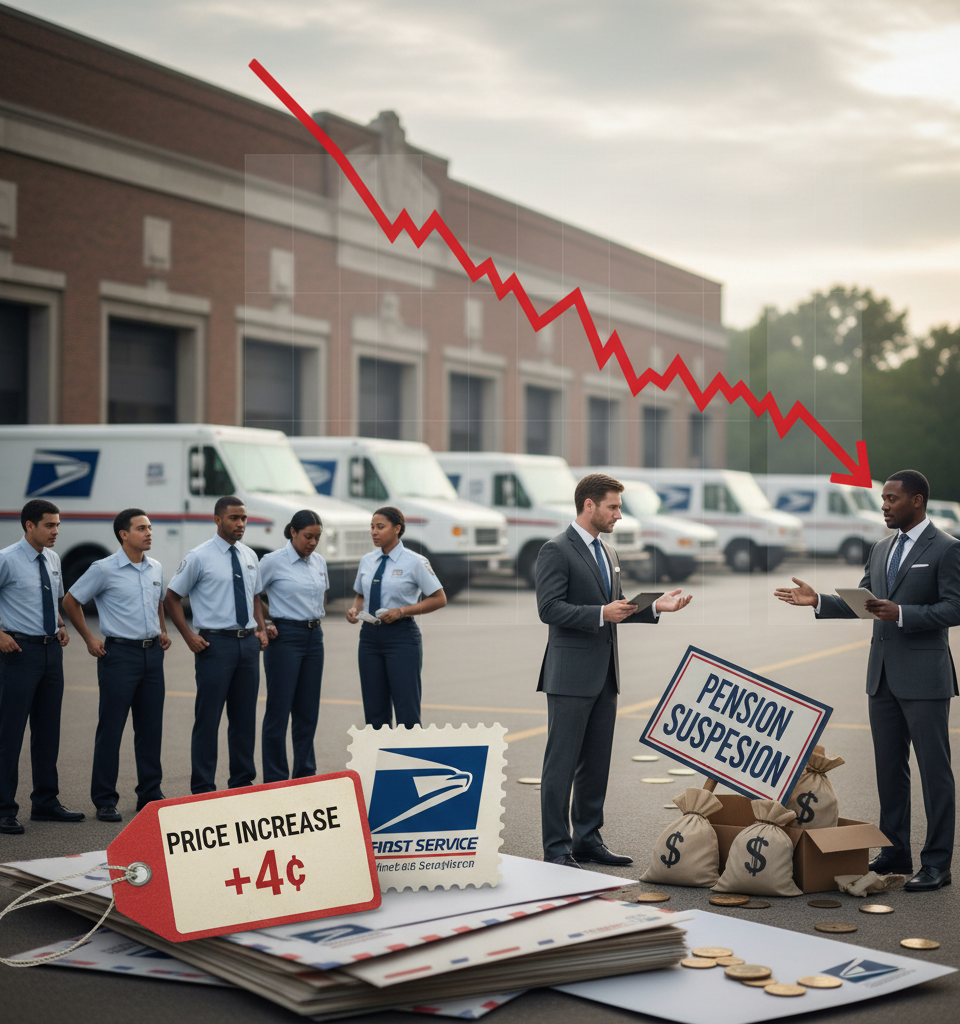
WASHINGTON D.C. — In a stark illustration of its deteriorating financial health, the United States Postal Service (USPS) has announced a series of critical actions aimed at conserving cash and stabilizing its long-term viability. Central to these efforts is a proposal to raise the price of a First-Class stamp by four cents, alongside the extraordinary decision to suspend payments into its federal pension funds, according to internal communications and official statements released this week. These unprecedented steps highlight the severe financial pressures facing the nation's mail carrier, which has been operating under significant deficits for over a decade.
Decades of Decline Culminate in Crisis
The USPS's current financial predicament is the culmination of years of declining mail volume, increasing operational costs, and a controversial 2006 congressional mandate requiring it to pre-fund future retiree health benefits for the next 75 years, a burden no other federal agency or private company faces. This mandate alone has contributed tens of billions in liabilities. Compounded by the accelerating shift towards digital communication and package delivery competition, the USPS has consistently reported multi-billion dollar losses, raising serious questions about its ability to fulfill its universal service obligations without substantial reform or federal intervention.
Financial Specifics and Proposed Adjustments
The proposed four-cent increase would elevate the price of a First-Class stamp from its current rate to a new, higher threshold, generating an estimated additional revenue of hundreds of millions of dollars annually. While seemingly modest, such adjustments are critical for the agency, which operates on a self-funding model and does not receive direct taxpayer dollars for its operating expenses. The suspension of pension payments, however, is a more aggressive and potentially controversial maneuver. While specific figures were not immediately disclosed, these payments typically amount to billions of dollars annually, providing immediate relief to the USPS's strained cash flow but potentially raising concerns among employee unions and congressional oversight committees regarding long-term obligations.
Widespread Implications for Businesses and Consumers
The ripple effects of these actions are expected to be felt across various sectors. For businesses, particularly small enterprises and those heavily reliant on direct mail marketing, the increased postage rates represent an additional operational cost that could necessitate adjustments to budgets or pricing strategies. Consumers, while likely accustomed to incremental price hikes, may face minor increases in the cost of sending personal correspondence. More broadly, the fiscal instability of the USPS poses a significant threat to its reliability as a critical piece of the nation's infrastructure, impacting everything from prescription medication delivery to economic activity in rural areas that private carriers often neglect due to profitability concerns.
Expert Analysis and calls for Congressional Action
Financial analysts and postal experts widely agree that these measures, while providing short-term relief, are insufficient to address the USPS's deep-rooted structural issues. "These are stop-gap solutions that underscore the urgency of the situation," stated Dr. Eleanor Vance, a postal reform specialist. "Without comprehensive legislative reform, especially regarding the pre-funding mandate and the agency's ability to diversify revenue streams, the USPS will continue to lurch from one crisis to the next." Many observers agree that only Congress has the power to enact the systemic reforms necessary to restore the USPS to financial health, including potentially restructuring its debt or modifying the health benefits pre-funding requirement.
The Path Forward: Reform or Further Decline?
The proposed stamp price increase still requires approval from the Postal Regulatory Commission (PRC), an independent federal agency. The suspension of pension payments will also undoubtedly draw scrutiny from federal labor departments and congressional watchdogs. Looking ahead, the focus remains squarely on Capitol Hill, where bipartisan efforts to pass meaningful postal reform legislation have repeatedly stalled. The current administration has signaled a willingness to consider reforms, but consensus on a comprehensive package remains elusive. Without significant legislative intervention, the USPS faces an increasingly precarious future, potentially leading to reduced service levels, further price hikes, and an erosion of public confidence in one of the nation's oldest and most vital public services.