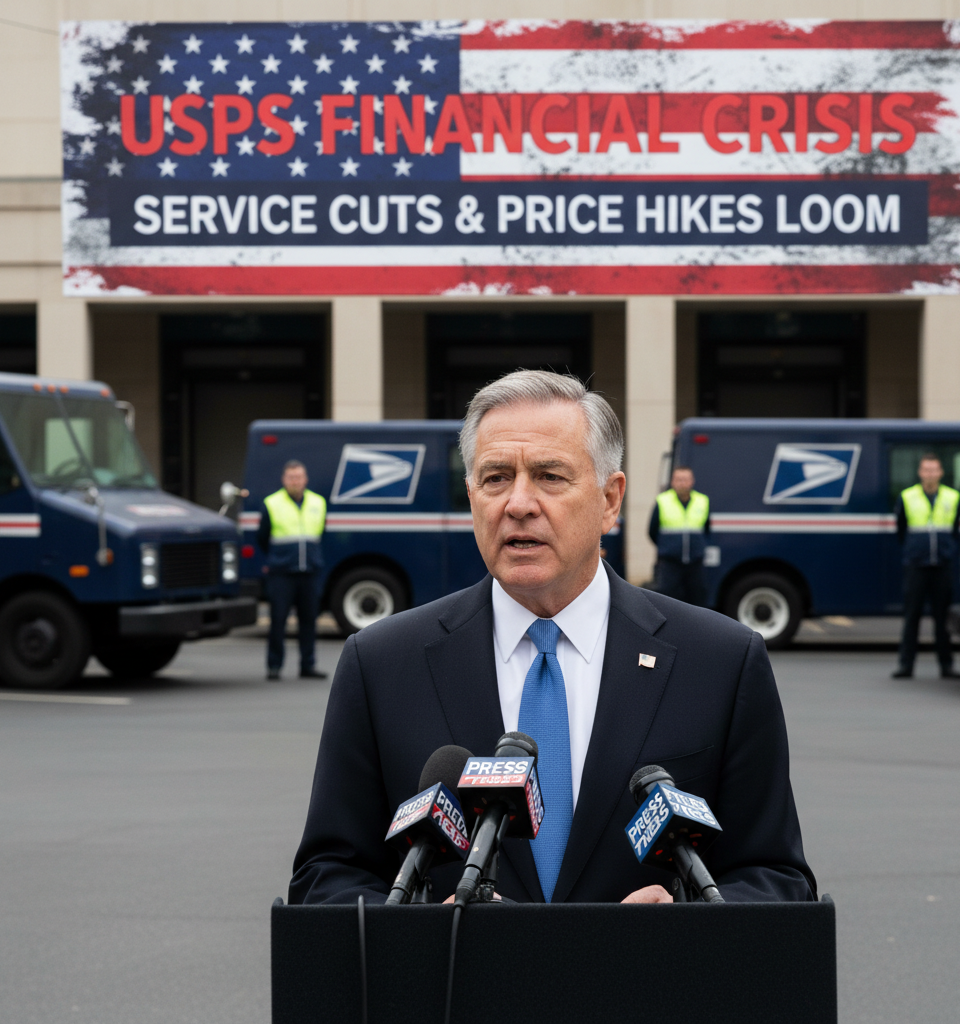
WASHINGTON D.C. — The United States Postal Service (USPS), a cornerstone of American commerce and communication for over two centuries, is on the precipice of significant operational changes, including potential service delays and increased postage rates, as it grapples with an acute and escalating financial crisis. Despite repeated attempts at reform, the agency's foundational business model, largely unchanged since 1970, has proven unsustainable in the face of dwindling mail volumes and soaring operational costs. Officials are now bracing the public for a difficult future, where the cost of sending a letter could rise and the speed of delivery could slow.
This impending overhaul underscores a critical juncture for an institution enshrined in the U.S. Constitution. The financial woes are not new; the USPS has reported net losses for 14 consecutive years, accumulating over $80 billion in debt since 2007. This structural deficit is primarily attributed to a Congressional mandate from the 2006 Postal Accountability and Enhancement Act (PAEA) requiring the USPS to pre-fund retiree health benefits decades into the future, a burden no other federal agency or private corporation faces. This legislative anomaly, combined with a steady decline in first-class mail volume—a 40% drop over the past decade—has pushed the independent agency to the brink.
Key proposals for solvency include a two-pronged approach: increasing revenue through higher postage rates and reducing costs by streamlining operations. Postmaster General Louis DeJoy has publicly outlined plans for a 10-year strategy, “Delivering for America,” which projects significant changes. These could include longer delivery times for certain classes of mail, particularly those traveling across longer distances, potentially moving from a 1-3 day standard to 3-5 days for some first-class mail. Furthermore, the agency is exploring significant price adjustments, with recent announcements hinting at potential increases for various mail services, alongside efforts to modernize its aging fleet and infrastructure, investments largely unfunded to date.
For businesses, especially small and medium-sized enterprises heavily reliant on direct mail marketing, catalog distribution, and physical invoice delivery, these changes could translate into higher operational costs and altered logistical planning. E-commerce businesses, which have seen package volumes surge during the pandemic, may also face increased shipping expenses and slower transit times for certain non-priority parcels. The ripple effect could be felt across sectors, from financial services and healthcare, which still depend on physical mail for critical communications, to publishing and retail.
Industry analysts and postal experts largely concur that the USPS's financial model is untenable without significant intervention. David Williams, a former USPS Inspector General, has frequently highlighted the legislative impediments, stating, "No business, public or private, could survive with the pre-funding mandate imposed on the Postal Service." Others point to the need for greater flexibility in setting prices and managing delivery standards, arguing that the agency is often constrained by a political process that prioritizes universal service at all costs, regardless of financial reality. The pandemic temporarily boosted package volumes, offering a fleeting reprieve, but core mail revenues continue their decline.
Looking ahead, the fate of the USPS largely rests on a combination of internal reforms and potential legislative action. The "Delivering for America" plan aims to achieve financial self-sufficiency and service excellence, but its success is not guaranteed without bipartisan support to ease the pre-funding burden. Congress has debated various bills aimed at postal reform, with some proposing to integrate USPS retirees into Medicare, freeing billions in liabilities. Without a legislative lifeline, the USPS faces the unenviable task of balancing its universal service obligation with the harsh realities of its balance sheet, likely resulting in a leaner, slower, and more expensive mail service for the foreseeable future. The coming months will be critical in determining the 250-year-old institution's path forward.