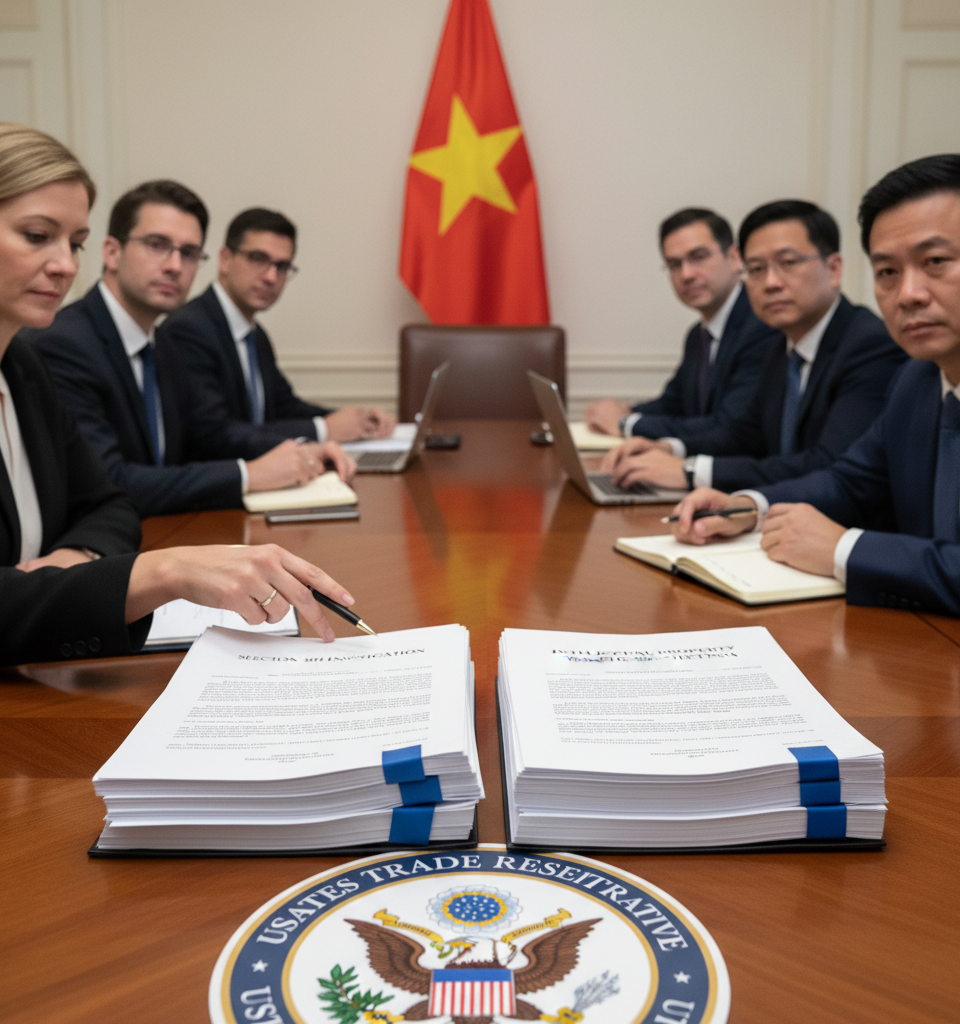
The United States Trade Representative (USTR) announced today the commencement of a Section 301 investigation targeting Vietnam's intellectual property (IP) framework. This move initiates a formal evaluation of the country’s existing IP acts, policies, and practices, a process often regarded as a preliminary step towards imposing punitive tariffs or other trade remedies.
Context of the Investigation
Section 301 of the Trade Act of 1974 grants the USTR broad authority to investigate and respond to foreign countries' unfair trade practices. These investigations can address a wide range of issues, from market access barriers to intellectual property rights violations. Historically, the USTR has frequently utilized Section 301 probes to exert pressure on trading partners to align their policies with U.S. standards, often leading to bilateral negotiations and, in some cases, the imposition of tariffs. The current investigation underscores the long-standing U.S. emphasis on robust intellectual property protection as a cornerstone of fair and balanced international trade.
Specifics of the Probe
While the USTR has not yet detailed the specific aspects of Vietnamese intellectual property law or enforcement that prompted this action, the investigation will broadly assess the adequacy and effectiveness of Vietnam's legal and regulatory framework in protecting and enforcing intellectual property rights. This could encompass issues ranging from copyright and patent infringement to trademark counterfeiting and trade secret misappropriation. The USTR's mandate in such investigations allows for a comprehensive review, inviting input from U.S. businesses and stakeholders who may have experienced challenges in Vietnam related to IP protection.
Potential Industry and Market Impact
A Section 301 investigation can reverberate across various sectors. For American companies operating in or trading with Vietnam, particularly those reliant on intellectual property such as technology firms, entertainment companies, pharmaceutical manufacturers, and consumer brands, the outcome of this probe carries significant implications. Improved IP protection could foster a more secure environment for innovation and investment, while the imposition of tariffs, should the investigation conclude with such a recommendation, could increase the cost of goods imported from Vietnam, affecting supply chains and consumer prices. Vietnam has emerged as a key manufacturing hub, and any disruption to its trade relationship with the U.S. could have broader regional and global economic consequences.
Precedent and Diplomatic Strains
The USTR's decision to initiate this probe is not without precedent. The agency has previously used Section 301 investigations to address IP concerns with other major trading partners, leading to various outcomes, from negotiated settlements to ongoing trade disputes. This action also comes at a time when global trade relations are increasingly complex, with nations frequently scrutinizing each other's trade practices. The investigation could introduce a new layer of tension into the U.S.-Vietnam bilateral economic relationship, which has largely seen growth and cooperation in recent decades.
What Lies Ahead
The initiation of the Section 301 investigation marks the beginning of a potentially lengthy process. The USTR will now conduct a thorough review, potentially holding public hearings and soliciting comments from interested parties. Following this information-gathering phase, the USTR will issue findings and, if necessary, identify appropriate actions to address any identified unfair trade practices. These actions could range from diplomatic engagement and negotiation to the imposition of tariffs or other trade restrictions. The timeline for such investigations can vary, but the outcome will undoubtedly shape future trade dynamics between the United States and Vietnam.