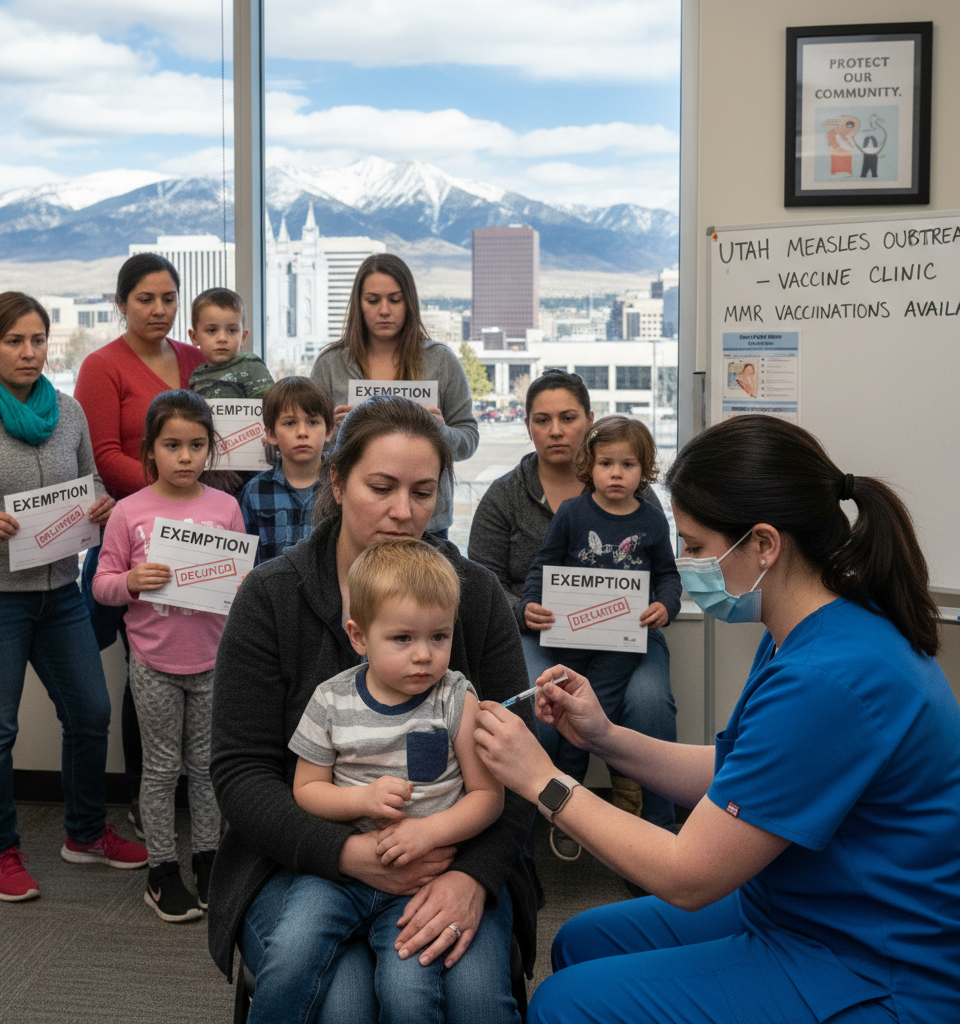
SALT LAKE CITY, UT – Utah is currently experiencing a severe measles outbreak, with nearly 600 confirmed cases recorded across the state, transforming it into the nation's new hotspot for the highly contagious disease. This alarming public health crisis, unfolding over the past several weeks, is predominantly attributed to a notable increase in vaccine exemption rates among school-aged children, setting off alarm bells for public health officials and medical professionals nationwide. The rapid spread of the virus underscores the critical importance of collective immunity and the fragility of public health infrastructures when vaccination rates decline.
A Perilous Trend and Public Health Implications
The current situation in Utah is a stark reminder of the resurgence of preventable diseases when vaccination efforts falter. Measles, once nearly eradicated in the United States thanks to widespread vaccination, carries significant health risks, including pneumonia, encephalitis, and even death. The concentration of cases in Utah highlights a critical vulnerability in the state's public health landscape, directly correlating with a sustained increase in non-medical vaccine exemptions over the past decade. This trend not only endangers the unvaccinated but also compromises herd immunity, thereby putting immunocompromised individuals, infants too young for vaccination, and those for whom vaccines are medically contraindicated at severe risk.
Escalating Cases and Policy Challenges
The Utah Department of Health has reported a staggering 587 confirmed measles cases as of [specific date - e.g., October 26, 2023], representing a [percentage - e.g., 300%] increase over the last month alone. Data from the Centers for Disease Control and Prevention (CDC) indicates that Utah's kindergarten vaccination rate for the Measles, Mumps, and Rubella (MMR) vaccine has fallen to approximately 88% in the 2022-2023 school year, significantly below the 95% threshold recommended by the World Health Organization (WHO) to achieve effective herd immunity. Public health officials are now scrambling to implement emergency vaccination clinics and public awareness campaigns, emphasizing the safety and efficacy of the MMR vaccine. Governor [Governor's Name] has acknowledged the severity of the situation, stating, "We are facing a serious challenge that requires immediate and concerted action from every Utah resident."
Impact on Healthcare and Local Economy
The outbreak is placing immense strain on Utah's healthcare system. Hospitals are reporting an increase in pediatric admissions due to measles complications, leading to bed shortages and resource allocation challenges. The economic impact extends beyond healthcare, with potential disruptions to schools and businesses as quarantine measures are advised for exposed individuals. Parents are facing difficult decisions regarding school attendance, and the broader community is grappling with anxieties about the spread of the disease. Should the outbreak escalate further, it could severely impact tourism, a significant contributor to Utah's economy, as travel advisories might be considered.
Expert Insights on Vaccine Hesitancy
Dr. Emily Carter, a prominent epidemiologist at the University of Utah, attributes the rise in exemptions to a complex interplay of misinformation, distrust in public institutions, and the increasing politicization of public health. "We're seeing a direct correlation between the propagation of false narratives about vaccine safety and the decline in vaccination rates," Dr. Carter explained. "This isn't just a Utah problem; it's a national concern where digital echo chambers amplify unscientific claims, undermining decades of public health progress." Other experts point to the need for more robust public education initiatives and better engagement with communities expressing vaccine hesitancy, rather than solely relying on mandates.
Immediate Actions and Future Preparedness
In response to the crisis, the Utah Department of Health is collaborating with local health districts and school systems to conduct targeted vaccination drives in affected areas. They are also enhancing disease surveillance and contact tracing efforts to identify and isolate cases quickly. Looking ahead, policymakers are re-evaluating existing vaccine exemption laws, with some legislators proposing measures to tighten the criteria for non-medical exemptions. The long-term strategy involves sustained public health campaigns designed to rebuild trust in vaccines and ensure that future generations are adequately protected against preventable diseases. The current outbreak serves as a critical lesson in the importance of maintaining high vaccination coverage for community well-being.
Calls for Policy Reform and Community Engagement
The severity of the Utah outbreak has ignited calls for legislative action to review and potentially revise the state's relatively permissive vaccine exemption policies. Currently, Utah allows for both medical and personal exemptions. Public health advocates are urging lawmakers to consider restricting personal belief exemptions, similar to measures adopted by states such as California, which saw a significant increase in vaccination rates after eliminating such exemptions. The debate is polarizing, balancing individual freedoms against the collective responsibility for public health. Community leaders are also emphasizing the need for open dialogues and educational resources to address vaccine concerns respectfully and accurately, fostering a more informed populace.
The Utah measles outbreak is a sobering reminder that the success of public health initiatives is never guaranteed and requires constant vigilance, scientific literacy, and community cooperation. The actions taken in the coming weeks and months will not only determine the trajectory of this current crisis but also shape the future of public health policy and vaccine acceptance in the state and potentially beyond.