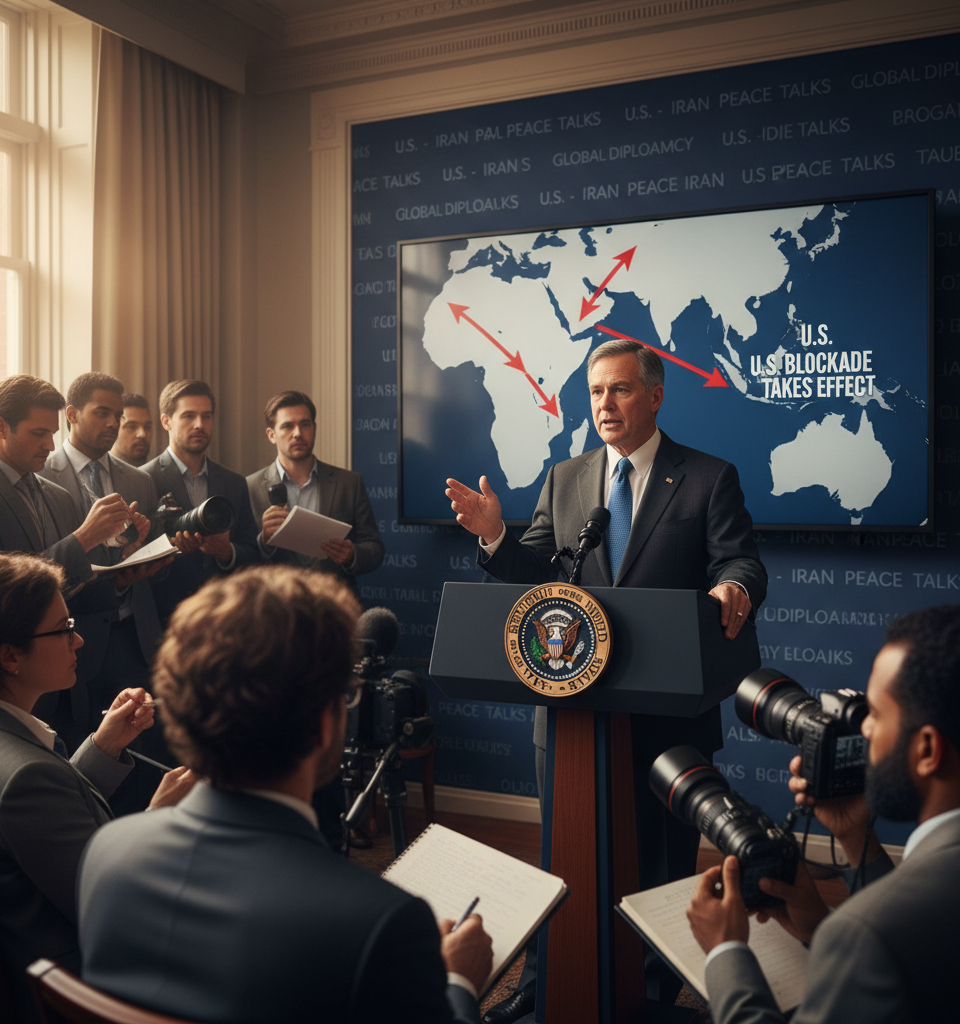
Washington D.C. – Vice President Vance today declared that the subsequent trajectory of peace talks hinges significantly on Iran's actions, emphasizing that "the ball is in Iran's court" for further progress. This statement comes on the heels of recent discussions in Islamabad, where the U.S. delegation, including Vance, special envoy Steve Witkoff, and Jared Kushner, reported making headway with Iranian representatives.
The Vice President's remarks arrive as a new U.S. blockade has officially come into effect, a measure that is expected to exert considerable pressure on the Iranian economy and its ability to conduct international trade. The timing of Vance's comments suggests a strategic linkage between the diplomatic efforts and the economic leverage being applied, indicating a multifaceted approach by the U.S. administration to compel Iran towards a resolution.
Diplomatic Progress in Islamabad
The U.S. delegation's reported progress during the Islamabad talks marks a critical juncture in the ongoing diplomatic efforts between the two nations. While specific details of the advancements made remain undisclosed, the acknowledgement by Vice President Vance suggests that meaningful dialogue occurred, potentially laying groundwork for future engagements. The presence of special envoy Steve Witkoff and Jared Kushner alongside Vance underscores the high-level commitment from the U.S. to these negotiations. Their involvement often signals a direct channel to the executive branch, lending additional weight to the discussions.
These talks represent a continued effort to de-escalate tensions and find a diplomatic pathway forward in a relationship characterized by longstanding distrust and periodic escalations. The decision to hold these talks in Islamabad, a neutral location, likely facilitated an environment conducive to direct engagement without the heightened scrutiny or political pressures that might accompany discussions on home soil for either party.
Implications of the U.S. Blockade
The full implementation of the U.S. blockade against Iran is poised to have substantial economic ramifications. While the specifics of the blockade – such as the sectors targeted, the scope of restrictions, and enforcement mechanisms – have not been detailed in Vance's statement, blockades of this nature typically aim to limit a nation's access to international financial systems, maritime trade routes, and critical imports or exports. The economic pressure exerted by such measures is often designed to influence political decisions and bring parties to the negotiating table with a greater sense of urgency.
Historically, economic blockades have been a contentious tool in international relations, with proponents arguing for their effectiveness in achieving policy goals without military intervention, while critics highlight their potential humanitarian impact and limited success in fundamentally altering state behavior. The current blockade is expected to test Iran's economic resilience and its willingness to make concessions in the face of escalating financial duress. The international community will be closely watching how this dual strategy of diplomatic engagement and economic pressure unfolds.
The Path Forward for Iran
Vance's declaration that "the ball is in Iran's court" places direct responsibility on Tehran to demonstrate its commitment to advancing peace. This phrasing implies that the U.S. has presented proposals or outlined conditions during the Islamabad talks that now await Iran's response. The nature of these conditions, whether they pertain to specific aspects of its nuclear program, regional influence, or other geopolitical considerations, will be crucial in determining the viability of future discussions.
Iran's impending decisions will not only influence the trajectory of peace talks but also dictate the severity and duration of the economic blockade. A positive and constructive response from Tehran could potentially pave the way for a relaxation of sanctions or further diplomatic breakthroughs. Conversely, a recalcitrant stance might lead to an intensification of the blockade and a hardening of positions from the U.S. and its allies. The coming weeks are therefore critical for assessing Iran's strategic response to this complex geopolitical challenge.
The global community, particularly regional powers and international organizations, will be keenly observing Iran's next moves. The delicate balance between sustained diplomatic engagement and economic coercion, as currently employed by the U.S., illustrates the complexities of contemporary international relations. The success, or failure, of this approach will have far-reaching implications for stability in the Middle East and beyond, making Vance's statement a pivotal moment in ongoing efforts to address the challenges posed by Iran.