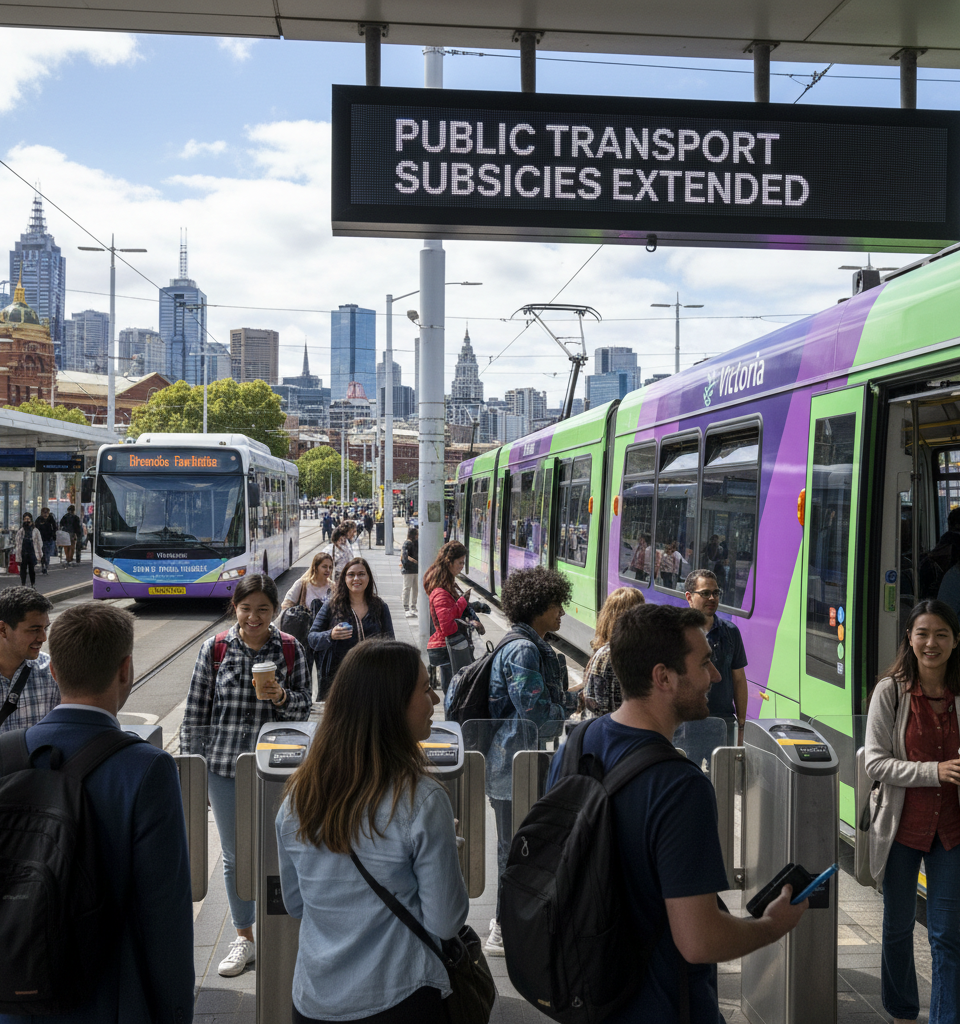
The Victorian government has announced the extension of its public transport subsidy program, a direct response to persistently high fuel prices impacting household budgets across the state. This initiative aims to mitigate the financial burden on commuters, offering a measure of relief by keeping transportation costs manageable in a challenging economic environment.
Addressing Cost-of-Living Pressures
This decision comes as Victorians continue to face significant cost-of-living pressures, with petrol prices reaching multi-year highs. The subsidy program was initially introduced as a temporary measure to cushion the blow of global energy market fluctuations, exacerbated by geopolitical events and supply chain disruptions. By extending these subsidies, the government signals its commitment to supporting residents, particularly those reliant on public transport for daily commutes to work, education, and essential services. This move also implicitly encourages the use of public transport over private vehicles, aligning with broader environmental sustainability goals.
Key details of the extended program, as confirmed by the Victorian Department of Transport, include a continued cap on daily fares and discounts for specific travel cards. While the exact duration of the extension was not immediately specified, a government spokesperson indicated it would remain in place "for a determined period, subject to ongoing economic review." Transport Minister Lisa Neville stated, "We understand the pressures Victorian families are facing at the bowser. Extending these public transport subsidies is a practical step we can take to keep money in people's pockets and ensure our public transport network remains a viable and affordable option for everyone." The previous iteration of the subsidy program, launched six months ago, saw a noticeable uptick in public transport patronage, with a reported 5% increase in daily commuters during its operational period.
Broader Economic Implications
The extension of public transport subsidies is expected to have a multi-faceted impact on the state's economy and various sectors. For commuters, it translates directly into reduced expenditure, potentially freeing up disposable income for other essential goods and services. For businesses, particularly those in the retail and hospitality sectors, increased public transport usage could lead to higher foot traffic in urban centres, indirectly boosting economic activity. However, the financial implications for the state government are substantial, requiring significant allocation from public funds. Economists are closely watching how this expenditure will balance against the socio-economic benefits, particularly in a landscape where state budgets are already under strain.
Industry analysts and transport operators have largely welcomed the extension. "This is a sensible and necessary policy in the current climate," commented Dr. Eleanor Vance, a senior economist at the Melbourne Institute of Applied Economic and Social Research. "While public transport subsidies inevitably incur a cost to the taxpayer, the social benefits — including reduced traffic congestion, lower emissions, and enhanced equity of access — often outweigh the direct fiscal outlay, especially when considering the alternative of widespread fuel poverty." Operators like Metro Trains and Yarra Trams will likely see sustained or increased ridership, which could aid in their post-pandemic recovery efforts and justify continued investment in infrastructure and service enhancements.
The Path Forward
The immediate implication of this extension is continued financial relief for millions of Victorian commuters. However, the long-term sustainability of such subsidy programs is a topic of ongoing debate. Experts suggest that while subsidies are effective short-term solutions, a more comprehensive strategy involving investment in diversified energy sources, improved public transport infrastructure, and potentially targeted support for low-income households may be required to address the root causes of transport affordability challenges. The government is expected to monitor fuel prices and public transport patronage closely, using this data to inform future policy decisions regarding the duration and structure of these subsidies.
Further announcements regarding the specific financial commitments and potential adjustments to fare structures are anticipated in the coming months. The government's decision underscores a broader policy challenge: how to balance immediate economic relief with sustainable fiscal management and long-term infrastructure planning amidst global economic volatility. Stakeholders will be watching for signals on whether this extended subsidy is a temporary reprieve or a precursor to more permanent shifts in Victoria's public transport funding model.