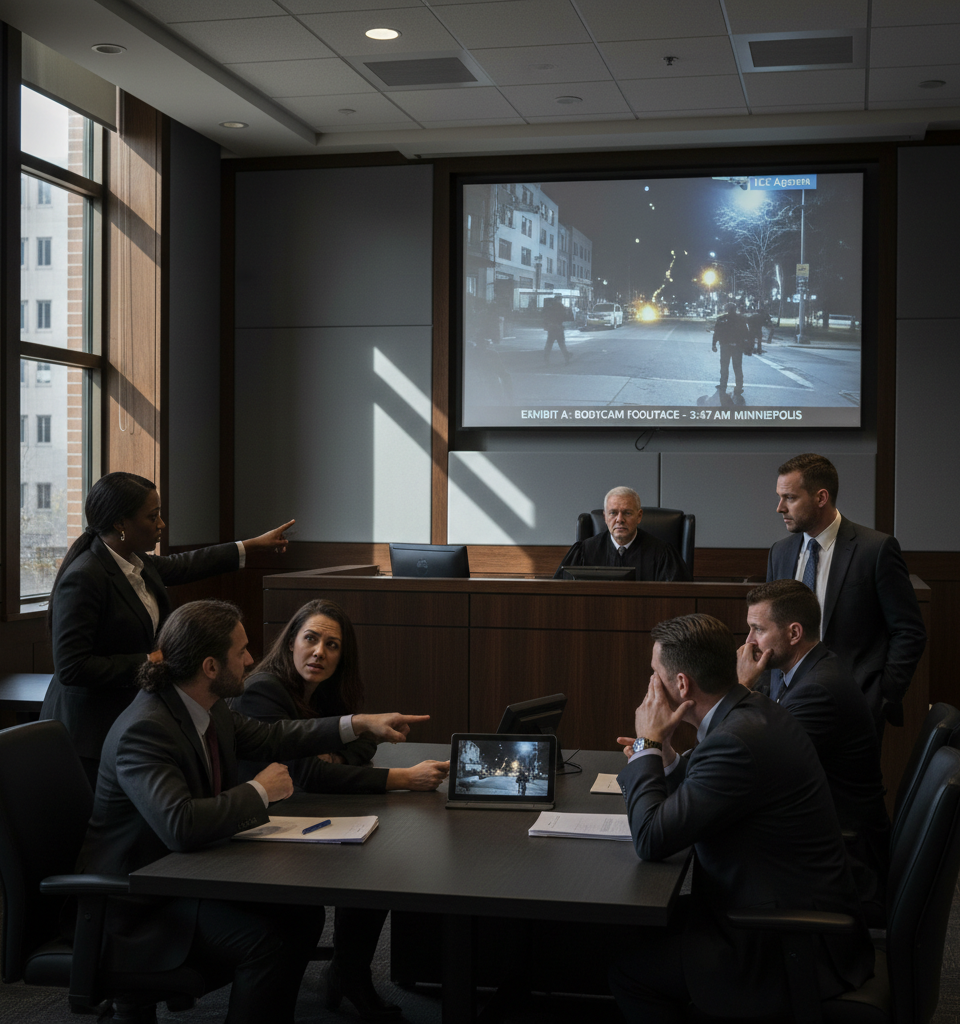
MINNEAPOLIS – A newly obtained video detailing a nonfatal shooting incident involving Immigration and Customs Enforcement (ICE) agents in Minneapolis directly contradicts the agency’s initial public statement, thrusting the investigative integrity of the case into question. The footage, critical to understanding the altercation, was reportedly not seen by prosecutors until weeks after charges were formally brought against the wounded man, an admission that has sparked immediate criticism from legal experts and advocacy groups alike. This development signals a potential failure in due diligence on the part of prosecuting authorities and casts a long shadow over the original narrative presented by federal law enforcement.
This incident is not an isolated event but rather unfolds against a backdrop of increasing scrutiny over federal law enforcement's use of force and investigative transparency, particularly concerning agencies like ICE. In recent years, there have been numerous high-profile cases across the United States where video evidence has dramatically altered public perception and legal outcomes, often revealing discrepancies between official reports and the actual events. The delayed review of such crucial evidence in this Minneapolis case highlights a systemic vulnerability within the justice system, where initial narratives, once established, can be difficult to challenge without robust independent verification. Furthermore, it adds to a growing catalog of incidents where information provided by federal agencies has been subsequently challenged by independent media or newly unearthed evidence.
Key details surrounding the shooting remain contentious. According to ICE's preliminary statement, agents acted in self-defense during a high-stakes encounter. However, sources close to the investigation, who viewed the recently surfaced video, suggest that the footage presents a significantly different sequence of events, implying that ICE agents may have been the initial aggressors or that the use of force was disproportionate to the perceived threat. While specific individuals involved have not been publicly named due to ongoing legal processes, the wounded man, identified only by his initials, faces charges related to assault on a federal officer. His legal team vehemently argues that the new video evidence exonerates their client, painting him as a victim rather than an assailant. The investigation into the delay in reviewing this critical evidence is now a primary focus, with initial reports suggesting bureaucratic oversight rather than intentional suppression.
The broader implications of this incident resonate deeply within the justice system and beyond. This case could significantly impact public trust in law enforcement agencies, particularly ICE, which already faces considerable criticism regarding its operational practices and accountability. If the video evidence definitively contradicts the official account and exposes a prosecutorial oversight, it could trigger calls for systemic reforms in how critical evidence is handled and reviewed in cases involving federal agents. From a legal standpoint, it increases the likelihood of the charges against the wounded man being significantly reduced, or even dismissed, leading to a substantial blow to the prosecution's credibility.
Legal scholars and civil liberties advocates are weighing in, emphasizing the critical role of video evidence in modern jurisprudence. Sarah Chen, a professor of criminal justice at the University of Minnesota, states, "The delayed review of this video is deeply troubling. In an era where body cameras and surveillance footage are ubiquitous, it's inexcusable for prosecutors to proceed with charges without first examining all available visual evidence. This undermines the foundational principle of due process." Other experts highlight the potential for significant legal precedent, should this case proceed to trial and the video be instrumental in a different verdict, underscoring the legal imperative for immediate and comprehensive evidence review.
Looking ahead, several key developments are anticipated. The defense team for the wounded man is expected to file motions to suppress the initial charges based on the new evidence, potentially leading to a re-evaluation of the entire case by the District Attorney's office. Simultaneously, there will likely be increased internal investigations within both ICE and the Minneapolis prosecuting attorney's office to ascertain why the video was not reviewed earlier and to implement new protocols to prevent similar oversights. This incident may also fuel legislative efforts aimed at mandating immediate review of all available visual evidence in cases involving federal law enforcement officers, strengthening transparency and accountability measures. The outcome of this case could therefore profoundly influence future interactions between federal agencies and the public. The call for an independent external review has also gained traction amongst civil rights organizations, pushing for greater scrutiny beyond internal investigations.
Potential Reforms and Policy Changes
The incident is already catalyzing discussions around potential policy reforms. Activists and legal groups are advocating for mandatory, expedited review protocols for all visual evidence in cases involving law enforcement officers' use of force. This would include specific timelines for prosecutors to access and evaluate footage before filing charges. Furthermore, there's a push for greater transparency in how incident reports from federal agencies like ICE are verified, suggesting the establishment of independent oversight boards that are empowered to review internal investigations and evidence, reducing reliance solely on agency-provided narratives. The legal community is exploring mechanisms to hold prosecutorial offices accountable for significant evidentiary oversights, perhaps through mandatory re-training programs or even disciplinary actions in severe cases. This could include federal funding incentives for jurisdictions that implement robust, transparent evidence review policies.
Community Response and Public Trust
The Minneapolis community response has been swift, with local advocacy groups organizing protests and demanding answers regarding the prosecutorial delay and ICE's conduct. Public trust in law enforcement, already fragile in many communities, has taken another hit. Residents are expressing concerns about the fairness of the justice system when critical evidence appears to be overlooked or intentionally ignored. Community leaders are calling for town hall meetings and greater dialogue between law enforcement agencies and the public to restore confidence. This renewed distrust could complicate future law enforcement operations and increase resistance to cooperation in investigations, underscoring the long-term societal cost of such investigative integrity failures. The financial cost of litigation and potential settlements stemming from this error could also run into millions, impacting taxpayer money.
The Role of Media and Independent Journalism
This case also highlights the indispensable role of independent journalism in holding powerful institutions accountable. The initial revelation of the video’s existence and its contradictory nature often originates from diligent investigative reporting, pushing for details beyond official statements. Without consistent media scrutiny, such vital evidence might remain buried, altering the course of justice and perpetuating unchecked power dynamics. The pursuit of this story by various media outlets has forced the issue into the public discourse, compelling official bodies to address the discrepancies and their internal processes, ultimately serving as a critical check on government power. It also demonstrates how social media and citizen journalism, in some instances, can contribute to bringing such critical details to light, providing alternative perspectives to official reports.