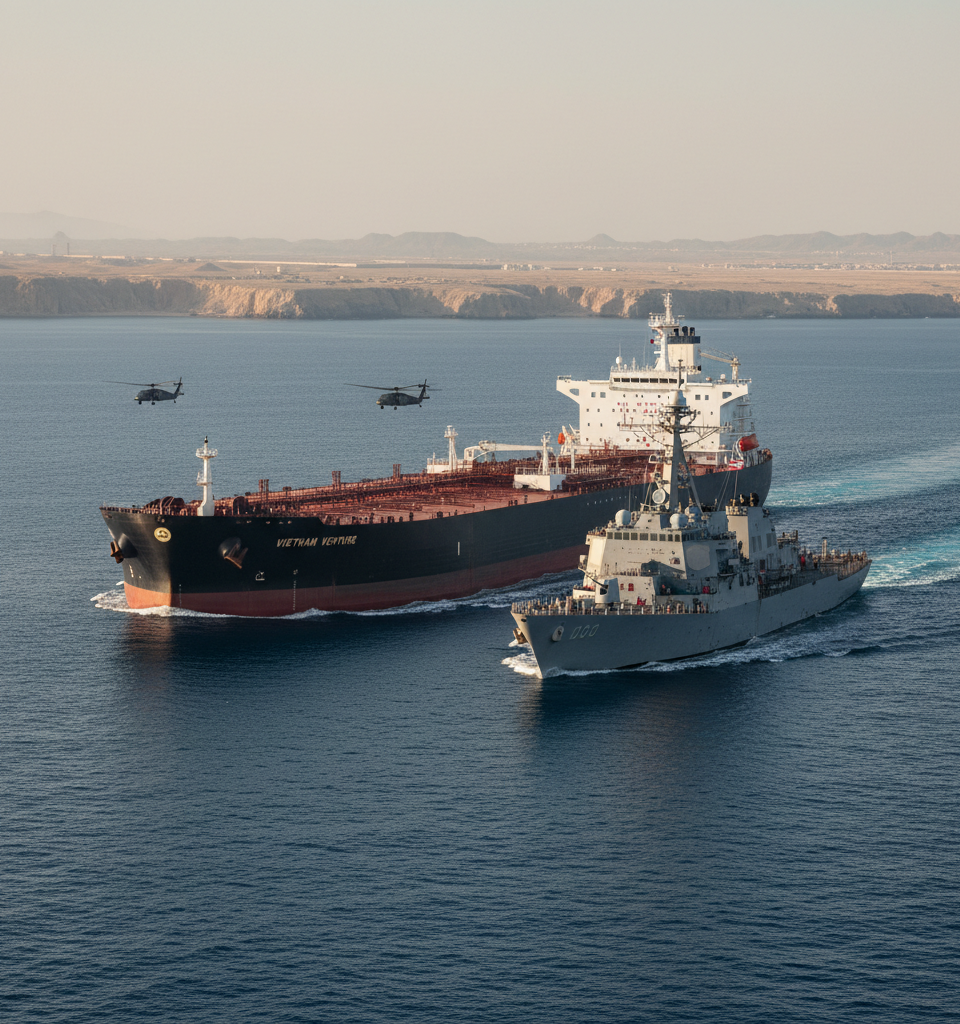
A supertanker laden with approximately 2 million barrels of Iraqi crude oil, destined for Vietnam, has resumed its journey after being briefly detained by US naval forces. The interdiction occurred days ago following the vessel's transit through the highly strategic Strait of Hormuz, a choke point crucial for global energy supplies. The incident drew immediate attention to the volatile maritime environment in the Middle East and the complex interplay of international law and geopolitical interests.
Geopolitical Flashpoint: The Strait of Hormuz
This incident highlights the perennial volatility surrounding the Strait of Hormuz, through which roughly one-fifth of the world's total petroleum liquids and a quarter of its liquefied natural gas pass daily. The frequent passage of oil tankers through this narrow waterway, often flanked by Iranian territorial waters, makes it a recurring flashpoint. Previous incidents, including vessel seizures and attacks on shipping, have underscored the region's sensitivity and its direct impact on global energy security and prices. The US Navy's presence in the area, typically aimed at ensuring freedom of navigation and deterring illicit activities, often intersects with regional power dynamics and international disputes.
The Incident and Immediate Aftermath
Specific details surrounding the reason for the supertanker's initial halt remain largely undisclosed by official sources. Reports indicate that the vessel, identified as carrying crude from Iraq's southern oilfields, was stopped shortly after exiting the Persian Gulf. During the temporary cessation, the tanker reportedly underwent a period of inspection or inquiry by US naval personnel. Following what appears to have been a resolution, the vessel was permitted to continue its eastward trajectory towards Southeast Asia. The precise duration of the stoppage, though brief, was sufficient to trigger significant monitoring from maritime intelligence agencies and commodity traders.
Industry and Market Implications
The temporary disruption, though resolved, sends ripples through the global oil market, albeit minor given its swift resolution. Even fleeting interruptions in major crude transit routes can trigger precautionary measures, elevating insurance premiums for vessels operating in the region. Analysts monitoring real-time tanker movements noted a slight, albeit temporary, upward tick in spot crude prices as news of the halt emerged, reflecting the market's inherent sensitivity to supply chain stability. For oil importers like Vietnam, dependent on consistent crude deliveries, such incidents underscore the vulnerabilities in their energy supply lines and may prompt considerations for diversifying sourcing or routes in the long term.
Expert Analysis on Maritime Security
Maritime security analysts suggest that the incident, while not escalating into a major confrontation, serves as a stark reminder of the US's commitment to maintaining freedom of navigation in critical international waters. "The US Navy's actions, even if temporary, assert international norms in a region rife with jurisdictional ambiguities and historical grievances," commented Dr. Eleanor Vance, a senior fellow at the Institute for Global Maritime Studies. She added, "It underscores that even commercial vessels, particularly those carrying strategic commodities, operate under a constant geopolitical gaze when transiting conflict-prone areas." The lack of a prolonged dispute indicates that the US likely deemed the interdiction as falling within established international maritime protocols or resolved any concerns swiftly.
The Road Ahead: Ongoing Vigilance
As the supertanker proceeds toward its Vietnamese destination, anticipated to arrive in the coming weeks, the broader implications for maritime security in the Persian Gulf persist. International shipping organizations continue to advise heightened vigilance for all vessels transiting the Strait of Hormuz. For energy industry stakeholders, the incident reaffirms the need for robust contingency planning against potential supply chain disruptions. Future developments in the region will undoubtedly be closely watched, with any further US naval interventions or escalations having the potential to significantly impact global energy markets and international relations.