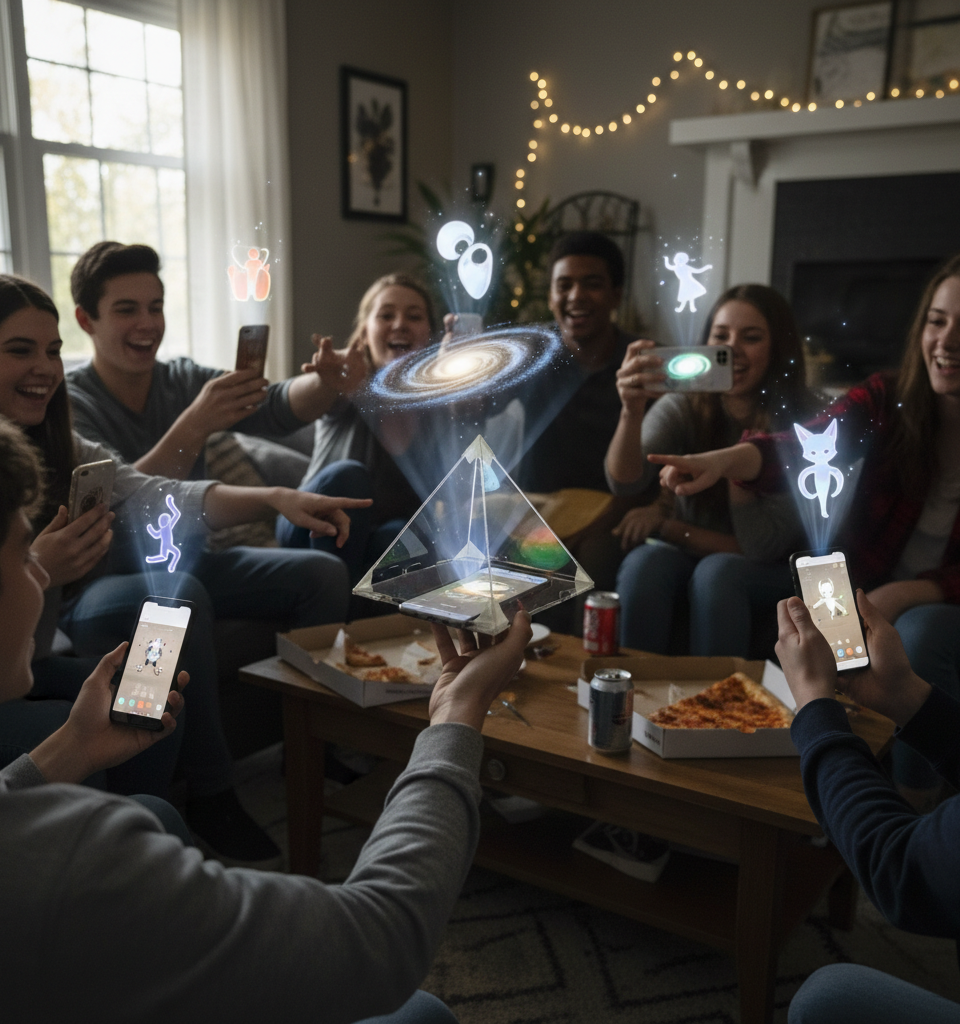
Social media users are currently captivated by a do-it-yourself innovation that transforms standard smartphones into makeshift 3D hologram projectors. The method, widely circulated on TikTok, involves a surprisingly simple construction using common household materials, offering an accessible entry point into pseudo-holographic entertainment. This development highlights a growing trend of consumer-driven innovation, leveraging existing technology in unexpected ways to create novel visual experiences.
The Rise of DIY Visuals
This particular TikTok trend underscores a broader cultural movement towards accessible technology and creative repurposing. In an age dominated by high-definition displays and advanced virtual reality, the appeal of a low-tech, self-made holographic device resonates deeply with an audience eager for engaging, hands-on projects. The simplicity of the hack, requiring minimal investment and readily available components, has been a significant factor in its rapid dissemination, fostering a sense of shared discovery and ingenuity among online communities. Historically, the concept of holography has been associated with complex, expensive laboratory equipment, making this democratized version particularly notable for its potential to broaden public engagement with visual technology.
Unveiling the Method
At the core of this viral phenomenon is a straightforward yet effective construction. The process reportedly entails creating a specific pyramidal shape from a common, transparent household item, which is then inverted and placed centrally on the smartphone's screen. When paired with specially designed holographic video content – often featuring four identical video segments arranged to project outwards from a central point – the pyramid acts as a prism. This configuration is said to refract the light from the smartphone's display, creating the illusion of a three-dimensional image hovering above the screen. The specific household item is not explicitly detailed, but its transparent nature and ease of manipulation are key to its utility in this application.
Industry Implications and Innovation
While this DIY projector won't rival professional holographic displays, its widespread adoption could signal interesting shifts within both the consumer electronics and content creation industries. For content creators, it presents a new, albeit niche, format for visual storytelling and entertainment. For device manufacturers, it might inspire further exploration into integrated holographic functionalities, especially as the cost of advanced display technologies continues to decrease. The viral nature of such hacks also demonstrates the power of user-generated content in driving technological curiosity and informal education around complex visual principles.
Expert Observations on Perception
Experts in optics and digital media suggest that the illusion generated by this DIY projector is primarily a form of pepper's ghost illusion, enhanced by the smartphone's backlit display. This classic theatrical technique, dating back to the 19th century, uses angled glass or a reflective surface to make objects appear or disappear. In this context, the transparent pyramid reflects the screen's image in multiple directions, creating the perception of depth. They emphasize that while not true volumetric holography, the effect is sophisticated enough to trick the human eye, especially in controlled low-light environments, leading to the "surprising results" frequently mentioned by users.
Future of Accessible Holography
The success of this TikTok trend could pave the way for more refined, low-cost holographic experiences. While current iterations are basic, the enthusiasm generated might spur development in areas such as portable holographic viewers or even enhanced smartphone accessories designed to replicate or improve upon this effect. The democratized access to such visual effects could also influence educational tools, making complex optical principles more tangible and engaging for students. As the appetite for immersive and interactive visual content grows, these grassroots innovations serve as a powerful indicator of future market demands and technological aspirations, pushing the boundaries of what consumers expect from their personal devices.