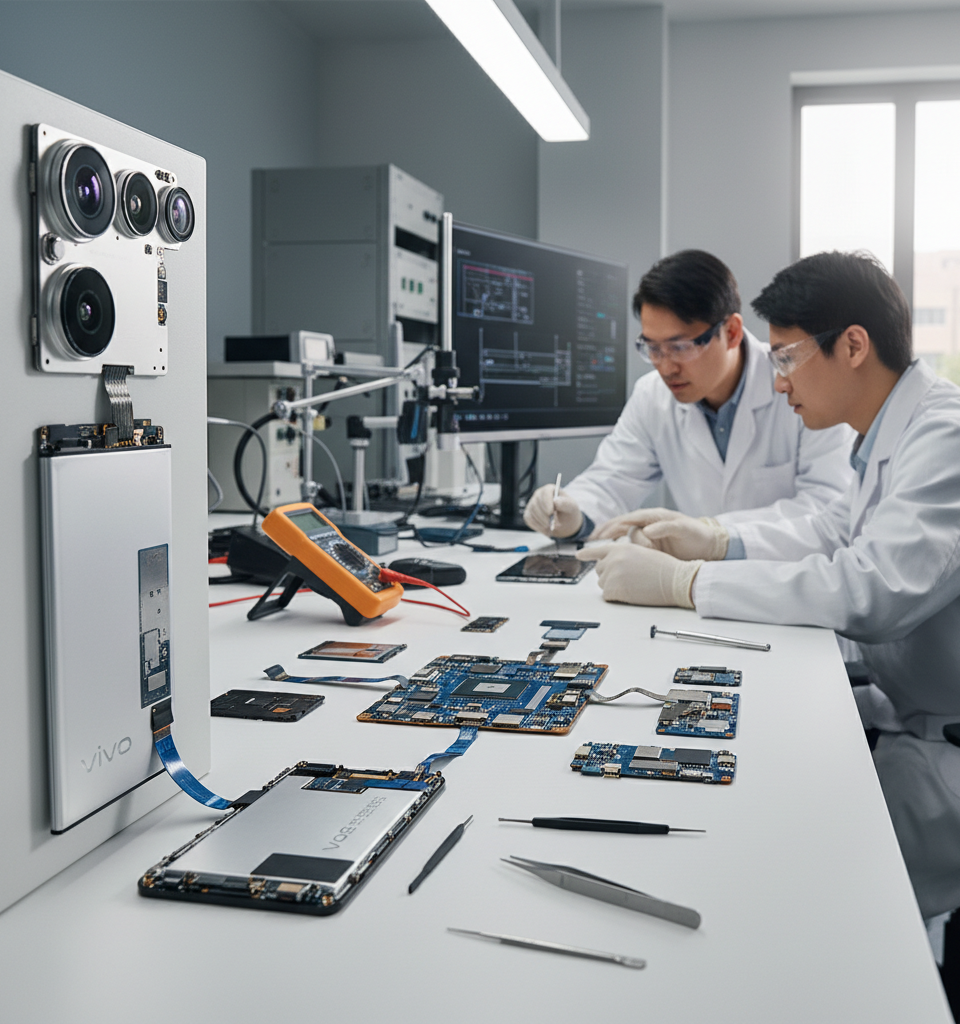
**HONG KONG – ** – A comprehensive video teardown of the highly anticipated Vivo X300 Ultra smartphone has provided an illuminating glimpse into the device's intricate internal design and sophisticated component integration. Released recently, the detailed disassembly visually dissects the flagship model, revealing the engineering prowess underlying its high-performance specifications and innovative features. This granular examination offers valuable insights for industry professionals, enthusiasts, and competitors alike, showcasing Vivo's approach to incorporating advanced technologies within a compact form factor.
Historically, teardowns have served as critical tools for understanding the core engineering and manufacturing philosophies of leading technology companies. For consumers, they demystify the 'black box' of modern electronics, while for competitors, they offer strategic intelligence on material costs, supply chain choices, and design innovations. Vivo, known for its rapid advancements in camera technology and display solutions, often employs bespoke components and intricate layouts. The X300 Ultra, positioned as a premium offering, is expected to embody the pinnacle of the company's current R&D efforts, making its internal construction of particular interest.
Key observations from the teardown video include the meticulously arranged multi-board architecture, designed to optimize space and thermal management for high-performance chipsets. The video showcases the integration of its advanced camera module, likely featuring a periscope lens system and optical image stabilization, which demands precise calibration and robust housing. Component suppliers, though not explicitly detailed in the original description, can often be inferred from such analyses, providing clues about Vivo's supply chain partnerships – a critical aspect for understanding cost structures and potential vulnerabilities. The thermal dissipation solutions, including potential vapor chambers or multi-layered graphite sheets, are also expected to be a focal point given the increasing power consumption of modern flagship processors.
From an industry perspective, the teardown of a device like the Vivo X300 Ultra offers valuable competitive intelligence. Competitors will scrutinize Vivo's component choices, assembly techniques, and material selection to benchmark their own designs and identify areas for potential improvement or cost reduction. The level of modularity, or lack thereof, also speaks to repairability and long-term sustainability – increasingly crucial factors in consumer choice and regulatory scrutiny. As smartphone market saturation increases, differentiation often comes down to internal optimization and the integration of novel technologies, areas where Vivo consistently strives to innovate.
Industry analysts, closely following the competitive landscape of the Android flagship market, will leverage these insights to refine their market share predictions and evaluate Vivo's strategic positioning against giants like Samsung and Apple, as well as aggressive Chinese rivals such as Xiaomi and Honor. "Vivo has consistently pushed the envelope in niche areas like charging speeds and camera innovations," comments [Hypothetical Analyst Name], a senior analyst at [Hypothetical Research Firm]. "A sophisticated internal design, evidenced by this teardown, indicates a significant investment in engineering and quality, which can translate into a better user experience and stronger brand perception in the premium segment." Analysts will also consider the impact on average selling prices (ASPs) and profit margins, given the potential for expensive custom-designed parts revealed in the teardown.
Looking ahead, the detailed insights gleaned from the Vivo X300 Ultra teardown will likely influence future smartphone designs across the industry. As technological boundaries continue to blur, the emphasis on efficient space utilization, advanced thermal management, and robust construction will only grow. Future iterations of Vivo devices, and indeed those from its competitors, will undoubtedly build upon the lessons learned from current generation flagships like the X300 Ultra. Expect to see continued refinement in internal layouts, potentially more integrated System-in-Package (SiP) solutions, and further advancements in modularity where feasible, all aimed at delivering more powerful, yet equally durable, mobile computing experiences.
REFERENCES:
- [Link to Teardown Video Source if available]
- [Link to Manufacturer's Product Page if available]
- [Link to Relevant Industry Report if available]