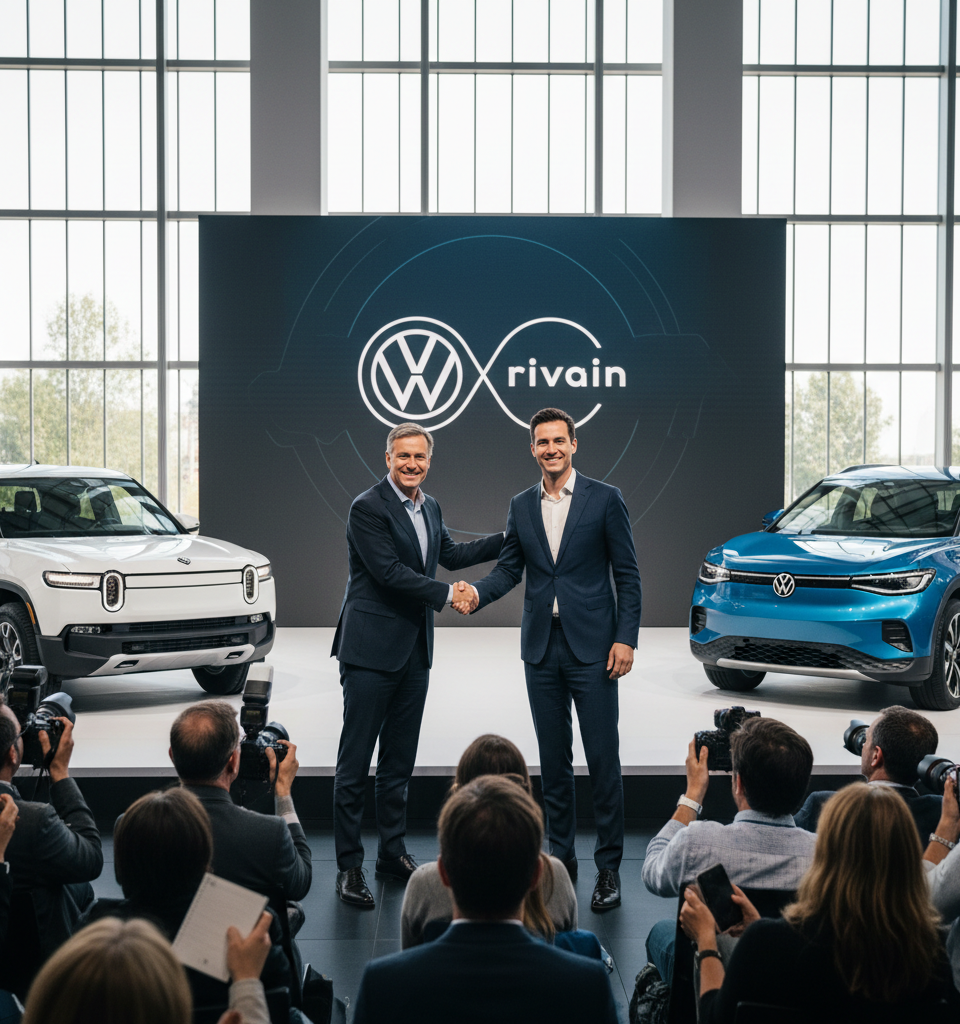
Volkswagen Group has ascended to become the dominant shareholder in Rivian Automotive, Inc., effectively displacing Amazon.com, Inc. from its long-held position. This strategic realignment in ownership was triggered by the unfolding of a monumental $5.8 billion joint venture between the German automotive giant and the California-based EV innovator, announced earlier this week. The partnership is set to accelerate the development of advanced electric vehicle technology, particularly a new electrical architecture and sophisticated software, solidifying Rivian's financial footing while providing VW with a much-needed competitive edge in the burgeoning EV market.
The Genesis of a Strategic Alliance
Rivian, known for its R1T pickup, R1S SUV, and commercial electric delivery vans, has navigated a challenging period marked by significant capital expenditure and fluctuating production targets. Its initial major backer, Amazon, which holds a substantial order for 100,000 electric delivery vehicles, has seen its stake diluted as new investments, including those from Volkswagen, have come into play. While Amazon remains a significant investor and a crucial customer, Volkswagen's commitment, structured through a multi-stage investment, now positions it as the principal shareholder. This move underscores a broader trend of established automakers seeking to leverage the agility and technological prowess of EV startups.
Investment Structure and Financial Commitment
Volkswagen's investment in Rivian is multifaceted and designed to deepen over time. The initial phase involved a $1 billion direct investment into Rivian. This foundational capital will be followed by an additional $4 billion in further investments through a newly established, equally controlled joint venture. This structured approach, totaling $5 billion in direct support and an anticipated $800 million in shared development costs, provides Rivian with critical liquidity to scale its operations, reduce its burn rate, and accelerate product development. Volkswagen's long-term stake will continue to grow as these tranches of investment are deployed, reflecting a deep commitment to the partnership's success and Rivian's future.
Reshaping the EV Ecosystem
This partnership represents a profound shift in the electric vehicle industry's competitive dynamics. For Volkswagen, a behemoth facing immense pressure to transition its vast internal combustion engine empire to an all-electric future, tapping into Rivian’s leading-edge software and electrical architecture, dubbed Zonal Architecture, could significantly reduce its development costs and accelerate its time to market for next-generation EVs. For Rivian, the deal provides not just capital but also access to Volkswagen's massive global supply chain, manufacturing scale, and extensive distribution network. This could be a game-changer for Rivian’s long-term viability, transforming it from a niche player to a potentially mass-market contender, particularly in the commercial vehicle segment.
Expert Insights and Market Reactions
Industry analysts have largely hailed the partnership as a win-win scenario. "This is a strategic masterstroke for both companies," stated automotive analyst Sarah Jenkins. "Volkswagen gains crucial technology at a much lower cost and faster pace than developing it internally, while Rivian secures the capital and stability it desperately needs to compete in a capital-intensive industry." The market reacted positively, with Rivian's stock price surging by over 50% following the announcement, reflecting investor confidence in the bolstered financial outlook and strategic advantages. Experts believe this type of collaboration will become more common as the automotive industry grapples with the immense costs and complexities of the EV transition.
Looking Ahead: A Shared Electric Future
The immediate focus for the joint venture will be on developing the new electrical architecture and integrating Rivian's advanced software into future Volkswagen platforms, potentially across multiple brands including Porsche and Audi. This collaboration is expected to yield the first jointly developed vehicles within the next few years. Beyond technology sharing, the partnership also opens doors for potential joint manufacturing ventures or shared component sourcing, further optimizing costs and accelerating innovation. The success of this alliance could serve as a blueprint for future collaborations in the automotive sector, illustrating how incumbent giants and innovative startups can combine forces to navigate the complexities and capitalize on the opportunities presented by the electric revolution.