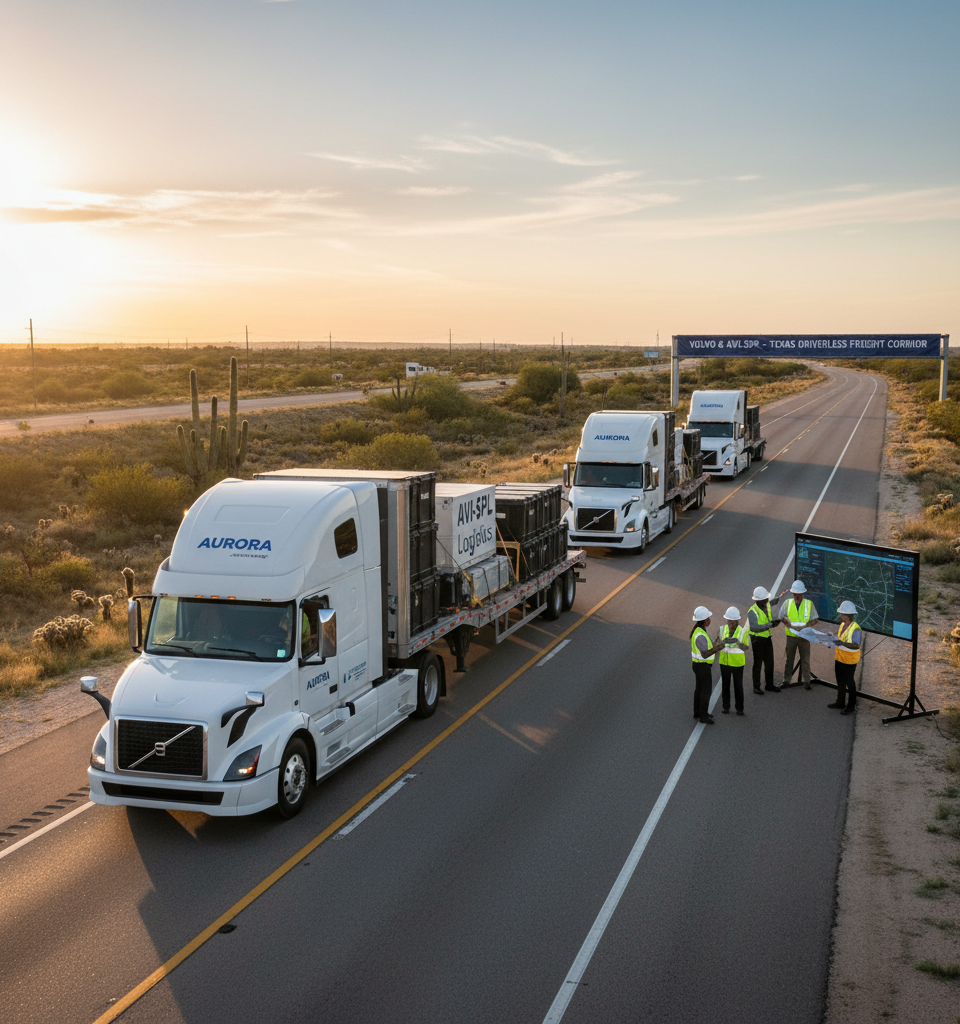
Volvo Autonomous Solutions, in collaboration with AVI-SPL, has commenced driverless freight operations on the bustling Dallas-Houston lane. The initiative leverages advanced autonomous technology integrated into Volvo VNL trucks, powered by Aurora’s self-driving platform, to transport AVI-SPL’s audio-visual equipment. This launch, as of June 19, 2026, signals a notable progression in the commercialization of autonomous trucking, specifically targeting high-demand corridors like the one linking Texas's two largest metropolitan areas.
Context and Significance
The Dallas-Houston corridor is one of the busiest freight routes in the United States, characterized by high volumes of traffic and persistent demand for efficient logistics solutions. The introduction of driverless operations on this route addresses several industry challenges, including the ongoing shortage of human truck drivers and the constant pressure for faster, more reliable delivery times. This deployment builds on years of development and testing in autonomous vehicle technology, moving beyond pilot programs into sustained commercial application. The partnership between a major truck manufacturer like Volvo and a technology provider like Aurora, coupled with a logistics end-user like AVI-SPL, represents a comprehensive approach to integrating autonomous capabilities into the existing supply chain infrastructure.
Operational Details and Technology
The core of this operation lies in the Aurora-powered Volvo VNL trucks. These vehicles are equipped with a suite of sensors, software, and computing systems that enable them to navigate highways autonomously. The specific cargo for these initial driverless runs consists of AVI-SPL's audio-visual equipment, underscoring the trust placed in the autonomous technology for delicate and high-value goods. While the operations are driverless, it is understood that remote monitoring and support systems are integral to ensuring safety and efficiency. This marks a critical phase for Aurora’s ‘Aurora Driver’ technology, moving from validation to real-world commercial deployment on public roads. The choice of the Volvo VNL, a popular long-haul model, further emphasizes the intent to scale these operations across the broader freight market.
Industry and Market Impact
This launch is expected to have a ripple effect across the logistics and transportation sectors. For the autonomous trucking industry, it serves as a powerful demonstration of viability and commercial readiness. It could accelerate investment and adoption rates among other carriers and shippers. For traditional freight companies, it highlights the increasing competitive pressure to integrate advanced technologies or risk being outpaced. The potential for reduced operating costs through optimized fuel consumption and elimination of driver-related expenses, such as wages and hours-of-service limitations, presents a compelling economic argument for this shift. Furthermore, the inherent consistency of autonomous driving could lead to more predictable transit times and reduced accident rates, improving overall supply chain reliability.
Future Implications
Looking ahead, the success of this Dallas-Houston operation will likely inform the expansion of autonomous freight services to other high-demand corridors across North America. The data collected from these initial runs will be crucial for refining the autonomous systems, training algorithms, and establishing best practices for scaled deployments. Volvo Autonomous Solutions and Aurora are expected to continue their collaboration, exploring further enhancements to the technology and broadening the scope of their partnerships. For AVI-SPL, this move could provide a significant logistical advantage, allowing them to optimize their equipment delivery schedules and potentially reduce their operational footprint in the long run. The industry will be closely watching for scalability, regulatory developments, and broader adoption trends as this initiative progresses into its next phases.