For businesses operating across global supply chains, optimizing fleet uptime and reducing operational overheads are critical factors directly impacting competitiveness and profitability. Volvo Trucks' advancements in remote vehicle management offer a compelling case study for how technological integration can mitigate risks associated with cross-border logistics and ensure smoother, more predictable delivery schedules, directly benefiting companies that rely on efficient goods movement worldwide.
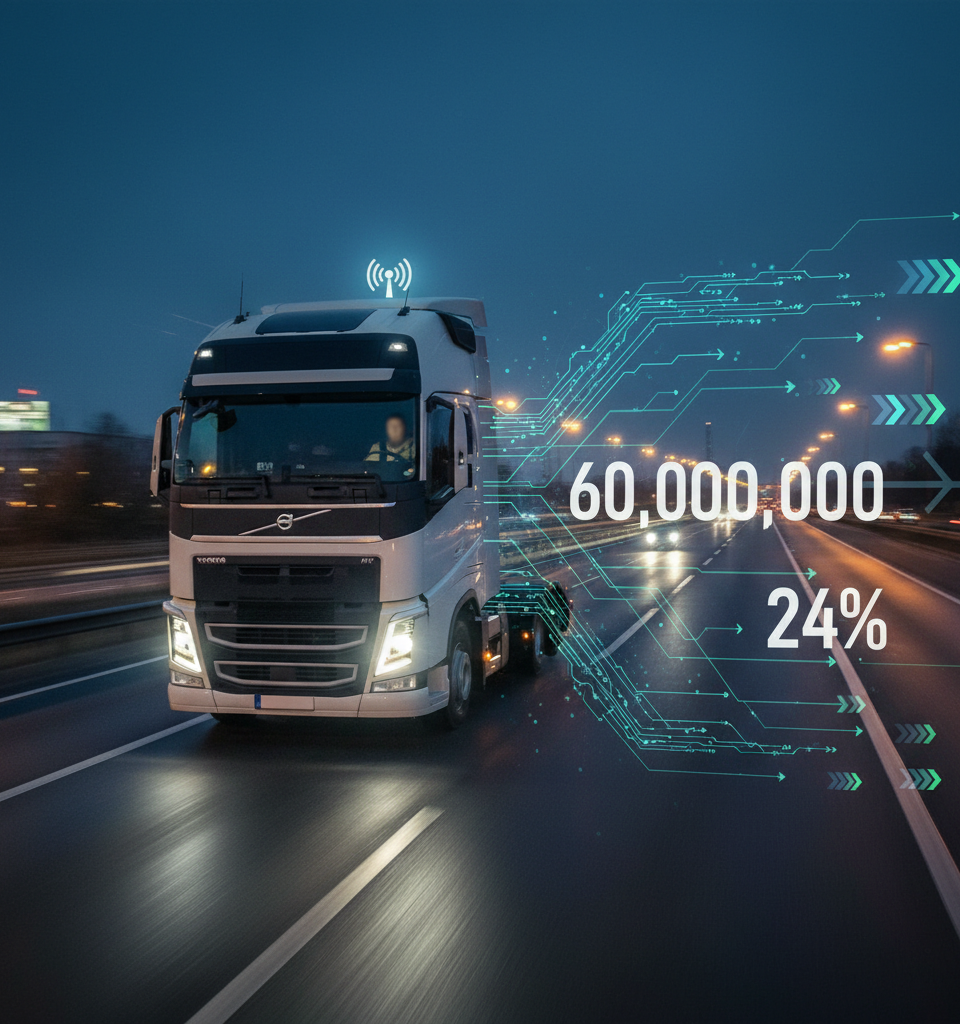
Volvo Trucks has established itself as a frontrunner in fleet management innovation, successfully deploying an over-the-air (OTA) software update system that enables unprecedented flexibility in vehicle maintenance. This pioneering approach allows commercial truck drivers to schedule essential software updates and maintenance procedures remotely, circumventing traditional workshop visits and significantly enhancing operational efficiency. The manufacturer has already quantified the impact of this system, reporting an estimated $60 million in avoided downtime costs and a remarkable 24% reduction in unplanned service stops across its enabled fleet.
The Mechanism of Remote Maintenance
The core of Volvo Trucks' achievement lies in its OTA technology, which functions similarly to smartphone software updates but on a much larger, more complex scale. Instead of requiring a physical visit to a service center for diagnostics or software installation, updates can be transmitted wirelessly to a truck's onboard systems. This capability extends beyond minor tweaks, encompassing critical software patches and performance enhancements that traditionally necessitated pulling a vehicle out of service. Drivers or fleet managers can initiate these updates at convenient times, such as during rest periods or overnight, minimizing disruption to delivery schedules. The remote scheduling aspect ensures that maintenance is performed proactively rather than reactively after a breakdown has occurred.
Quantifying the Economic Impact
Industry analysts frequently highlight downtime as one of the most substantial hidden costs in commercial trucking. Every hour a truck spends off the road, whether for planned maintenance or an unplanned breakdown, translates directly into lost revenue, delayed shipments, and potential contract penalties. Volvo Trucks' reported $60 million in avoided costs underscores the immense economic benefits of their OTA system. This figure likely accounts for reductions in labor hours for mechanics, decreased towing expenses, fewer lost revenue opportunities due to idled vehicles, and potentially lower insurance premiums over time. The 24% decrease in unplanned stops is equally significant, as unexpected breakdowns are often the most costly and disruptive events for a fleet, impacting not just a single truck but potentially an entire logistics chain.
Broader Industry Implications
Volvo Trucks' success with OTA updates is setting a new benchmark for the commercial vehicle industry. This shift signifies a broader trend towards predictive maintenance and smart fleet management, where data and connectivity play a central role in optimizing performance and reducing operational expenditures. Competitors are likely observing Volvo's results closely, as the ability to offer similar remote service capabilities could become a crucial differentiator in a highly competitive market. The technology also contributes to enhanced driver satisfaction, as less time spent waiting for service means more time on the road or at home.
The Future of Connected Fleets
The ongoing integration of OTA updates is just one facet of the rapidly evolving connected vehicle landscape. Looking ahead, this technology forms a foundational layer for more advanced applications, such as autonomous driving capabilities and enhanced vehicle-to-infrastructure (V2I) communication. As software becomes an even more dominant component in vehicle functionality, the ability to update, diagnose, and troubleshoot remotely will be indispensable. Volvo Trucks' current achievements suggest a future where commercial fleets are not just assets for transport but intelligent, self-optimizing networks, continually improving efficiency and reliability through seamless digital integration. This trajectory promises further reductions in operational costs and significant advancements in the safety and environmental performance of heavy-duty vehicles globally.