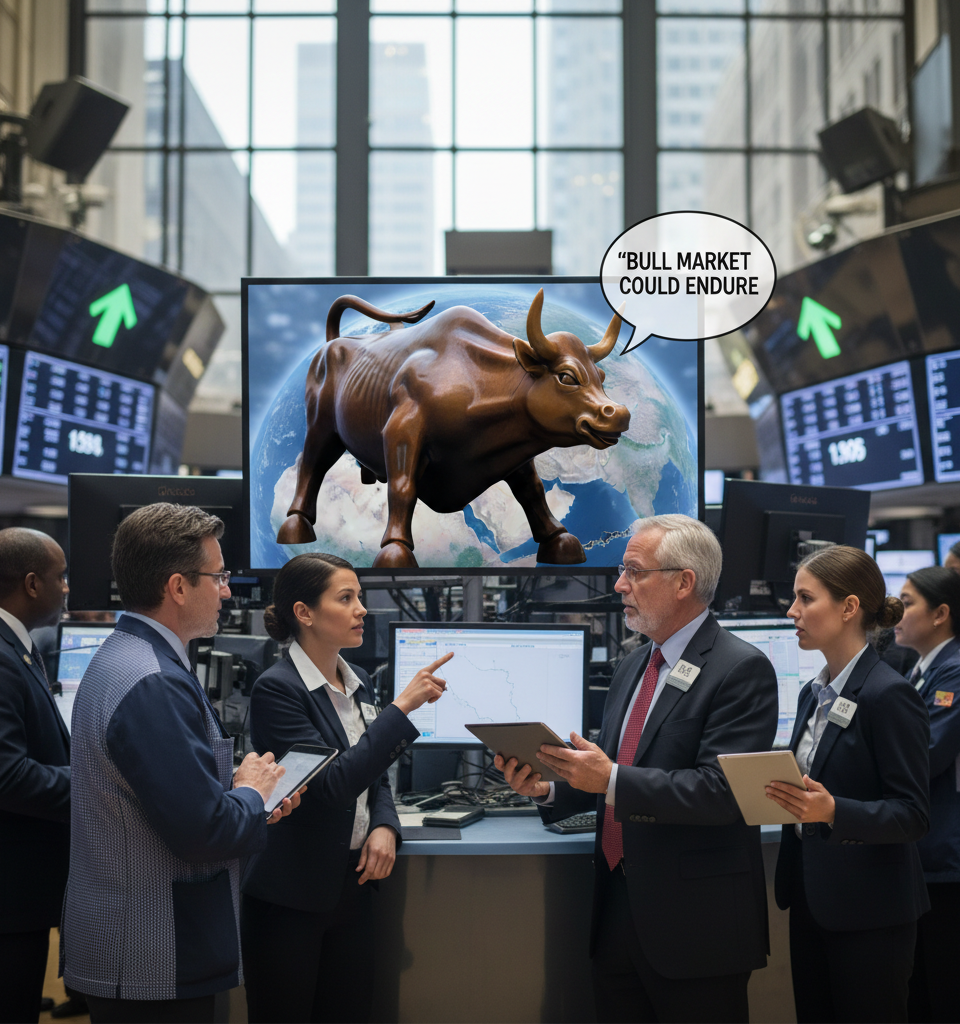
NEW YORK – Leading financial analysts and market strategists are expressing a notable degree of optimism regarding the longevity of the current bull market, even as geopolitical instability in the Middle East escalates following recent incidents involving Iran. This sentiment, indicating a potential 'de-linking' of market performance from immediate international conflicts, suggests that underlying economic strengths and corporate earnings are poised to overshadow short-term volatility. The prevailing view among many on Wall Street is that while initial reactions to such events are inevitable, the broader trajectory of equity markets remains upward, fueling investor confidence.
Contextualizing Market Resilience Amidst Conflict
The financial world has a long history of navigating geopolitical turbulence, often demonstrating remarkable resilience after initial shockwaves. From significant oil crises to acts of international aggression, markets tend to absorb bad news, re-evaluate the true economic impact, and then adjust. The current assessment comes at a crucial juncture, as oil prices have seen moderate increases and defense stocks have rallied, typical responses to heightened tensions. However, the overarching belief is that these movements are largely reactive and do not signal a fundamental shift in the broader economic landscape, particularly in the U.S. economy, which continues to exhibit strength in employment figures and consumer spending.
Key Analyst Perspectives and Market Drivers
Several prominent investment banks and independent analysts have articulated this surprising resilience. JPMorgan Chase's Chief Global Market Strategist, David Kelly, for instance, remarked, "I wouldn't be shocked if this bull market continues." This viewpoint is echoed by others who point to robust corporate earnings reports, particularly from the technology and healthcare sectors, as primary catalysts. Q1 2024 earnings, for example, have largely exceeded expectations, with a significant percentage of S&P 500 companies reporting positive surprises. Furthermore, the Federal Reserve's cautious stance on interest rates, coupled with expectations of potential rate cuts later in the year, provides an additional tailwind for equity valuations, making equities a relatively attractive asset class versus bonds.
Broader Market and Sectoral Impact
The impact on various market sectors has been nuanced. While traditional safe havens like gold and the U.S. dollar have experienced some upward movement, the broader equity market indices, including the S&P 500 and Nasdaq Composite, have shown remarkable fortitude. Energy stocks, specifically crude oil producers and refiners, typically benefit from supply concerns, though the current situation has not yet led to a sustained, dramatic spike in global oil prices. Conversely, consumer discretionary and industrial sectors remain sensitive to broader economic health, which analysts believe remains robust enough to absorb the current geopolitical noise without significant detriment.
Expert Analysis: Disentangling Risk from Fundamentals
Market experts are largely of the opinion that while geopolitical events are important, they rarely derail an economy with strong underlying fundamentals unless they directly impact global supply chains or trigger a severe commodity shock. “Investors are becoming increasingly adept at differentiating between localized geopolitical risks and systemic economic threats,” noted Dr. Evelyn Reed, a geopolitical risk analyst at a major hedge fund. She added, “Unless the conflict significantly disrupts global trade routes or leads to a sustained, unmanageable surge in energy costs, the impact on corporate profitability and consumer sentiment in major economies like the U.S. will likely be transient.”
Looking Ahead: Monitor, Don't Panic
The consensus advice to investors is to monitor developments closely but avoid panic-selling. Future implications hinge on the de-escalation or further intensification of the conflict. Any significant escalation that draws in more regional or global powers, or that threatens vital shipping lanes like the Strait of Hormuz, could force a re-evaluation of current market optimism. However, in the near term, the market appears priced for a contained confrontation. Upcoming economic data releases, particularly inflation reports and manufacturing indices, will also play a crucial role in reinforcing or challenging the current bullish sentiment, potentially offering a clearer picture of the economic bedrock supporting Wall Street's seemingly unwavering confidence.
Analysts will be keenly watching for any shifts in global energy supply, especially from Middle Eastern producers, and how international diplomacy progresses. The market's ability to compartmentalize risk will be tested, but for now, the prevailing view is that the bull market has resilient legs and a high pain tolerance for geopolitical headlines.