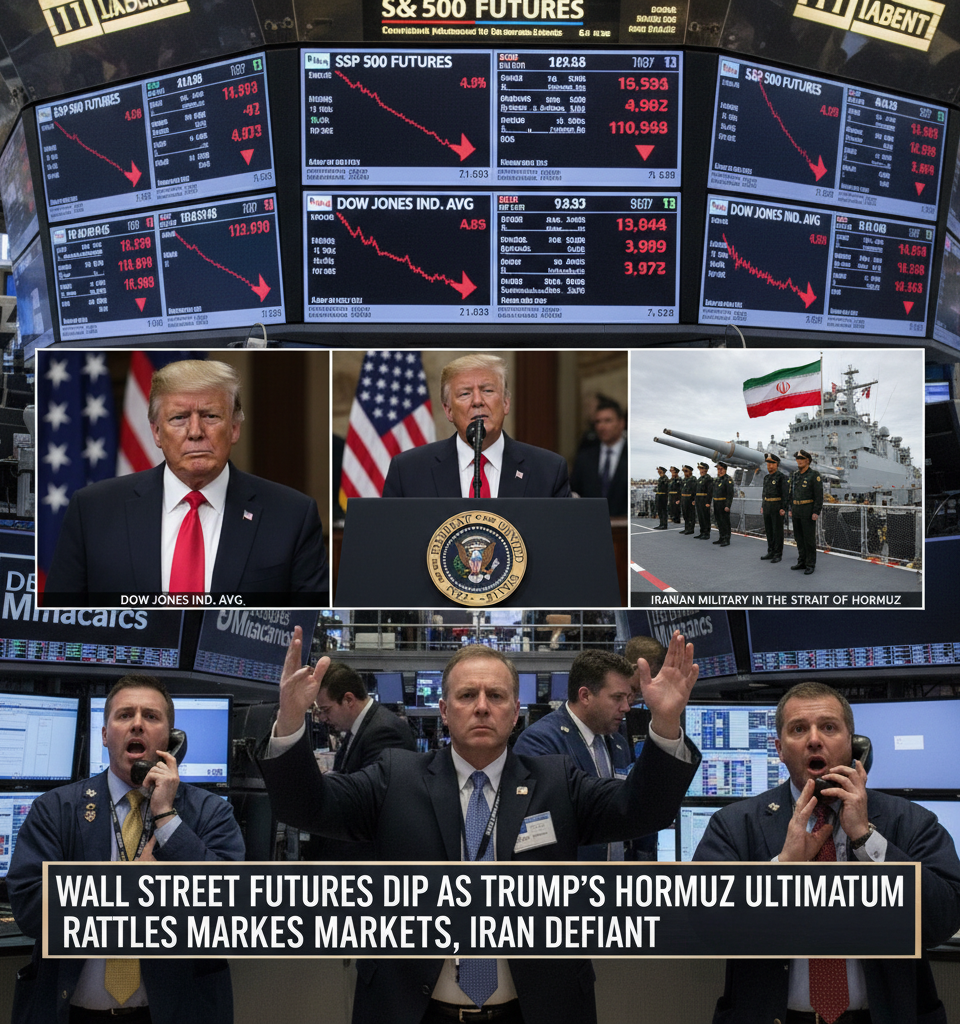
U.S. stock index futures registered a decline Tuesday, signaling a cautious start to trading after President Donald Trump delivered an unequivocal ultimatum to Iran, demanding the immediate reopening of the Strait of Hormuz by the end of the week. This pronouncement, delivered via Twitter in the early hours of the morning, has rapidly intensified geopolitical anxieties in the crucial Middle Eastern waterway, prompting investors to shed riskier assets and seek safe havens. The S&P 500 futures were down 0.4%, while Dow Jones Industrial Average futures fell by 0.35%, reflecting immediate market apprehension.
Geopolitical Tensions Escalate in Vital Shipping Lane
The Strait of Hormuz, a narrow yet strategically indispensable choke point, facilitates approximately 20% of the world's petroleum liquids consumption and is a conduit for a substantial portion of global liquefied natural gas (LNG) shipments. Trump's directive follows a period of heightened tensions in the region, including recent attacks on oil tankers that the U.S. and its allies have attributed to Iran. The Islamic Republic, however, vehemently denies involvement, accusing the U.S. of orchestrating provocations. The potential for a unilateral closure or disruption of this strait by Iran, as it has threatened in the past in response to sanctions, represents a critical threat to global energy supplies and, by extension, the world economy.
Iran Labels Ultimatum 'Unacceptable'; Oil Prices React
Iranian officials swiftly dismissed President Trump's ultimatum as 'unacceptable interference' and 'futile theatrics,' reaffirming their sovereign control over the waterway and their right to respond to perceived threats. Brigadier General Hossein Salami, commander of Iran's Revolutionary Guard Corps, stated, "The Strait of Hormuz is our strategic asset, and we will defend it against any aggression or unwarranted demands." This defiant stance signals a protracted standoff rather than an immediate resolution. In response to the escalating rhetoric, Brent crude oil futures initially surged by over 2.5% to $64.80 per barrel, before moderating slightly as traders weighed the likelihood of actual disruption against diplomatic efforts. Gold, a traditional safe-haven asset, also saw an uptick, rising 0.8% to $1,425 per ounce.
Broad Market Impact and Industry Concerns
The ripple effects of this geopolitical flashpoint extend far beyond the energy sector. Airlines, shipping companies, and manufacturers reliant on global supply chains are particularly vulnerable to increased fuel costs and potential transit disruptions. Major European and Asian indices also recorded declines, with Germany's DAX down 0.7% and Japan's Nikkei 225 closing 0.6% lower. Analysts are particularly concerned about the potential for a sustained increase in oil prices, which could act as a significant drag on global economic growth, especially in import-dependent nations. The shipping industry, already navigating challenges from trade disputes, now faces the added complexity of heightened security risks in a key maritime artery.
Expert Analysis: A Precarious Standoff with Economic Risks
"This is a classic 'risk-off' scenario for markets," commented Dr. Anya Sharma, Chief Global Strategist at Zenith Financial Group. "The uncertainty surrounding the Strait of Hormuz directly threatens a cornerstone of global trade – energy supply. Investors are rightly de-risking their portfolios, moving into bonds and precious metals. The real danger is if rhetoric escalates into kinetic action, which could trigger a global oil shock, potentially derailing any nascent economic recovery." Edward Mills, an energy market analyst at Stellar Capital, added, "While a full closure of the Strait is a low-probability, high-impact event, even minor disruptions or increased shipping insurance premiums can significantly impact profitability for energy companies and the broader economy." He estimates that a sustained 10% increase in oil prices could shave 0.2-0.3 percentage points off global GDP growth over a year.
The Path Forward: Diplomacy, De-escalation, or Confrontation?
The immediate future of the Strait of Hormuz situation hinges on the diplomatic maneuvering between Washington and Tehran, as well as the engagement of international actors. The U.S. has notably increased its military presence in the region, which some interpret as a deterrent, while others see it as a potential flashpoint. The European Union has called for de-escalation and dialogue, urging both sides to exercise restraint. The deadline set by President Trump creates a critical window for negotiations or, conversely, a point of increased tension. Market participants will be closely watching for any signs of diplomatic breakthrough or further provocative actions, with the looming Friday deadline serving as a key inflection point for future market direction and regional stability.
Long-Term Implications of Geopolitical Instability
Beyond the immediate market reactions, the ongoing friction in the Persian Gulf highlights profound long-term implications for global energy security and international relations. Major oil consumers, particularly in Asia, may accelerate efforts to diversify energy sources and shipping routes, albeit at significant cost and logistical challenge. Furthermore, the episode underscores the fragility of global supply chains to geopolitical events, prompting companies to re-evaluate risk management strategies. The U.S.'s 'maximum pressure' campaign against Iran, coupled with Iran's defiant stance, suggests that regional instability could be a persistent feature, demanding continuous vigilance from policymakers and investors alike. The coming days will be crucial in determining whether the rhetoric subsides or if the situation spirals into a deeper crisis with systemic economic consequences.