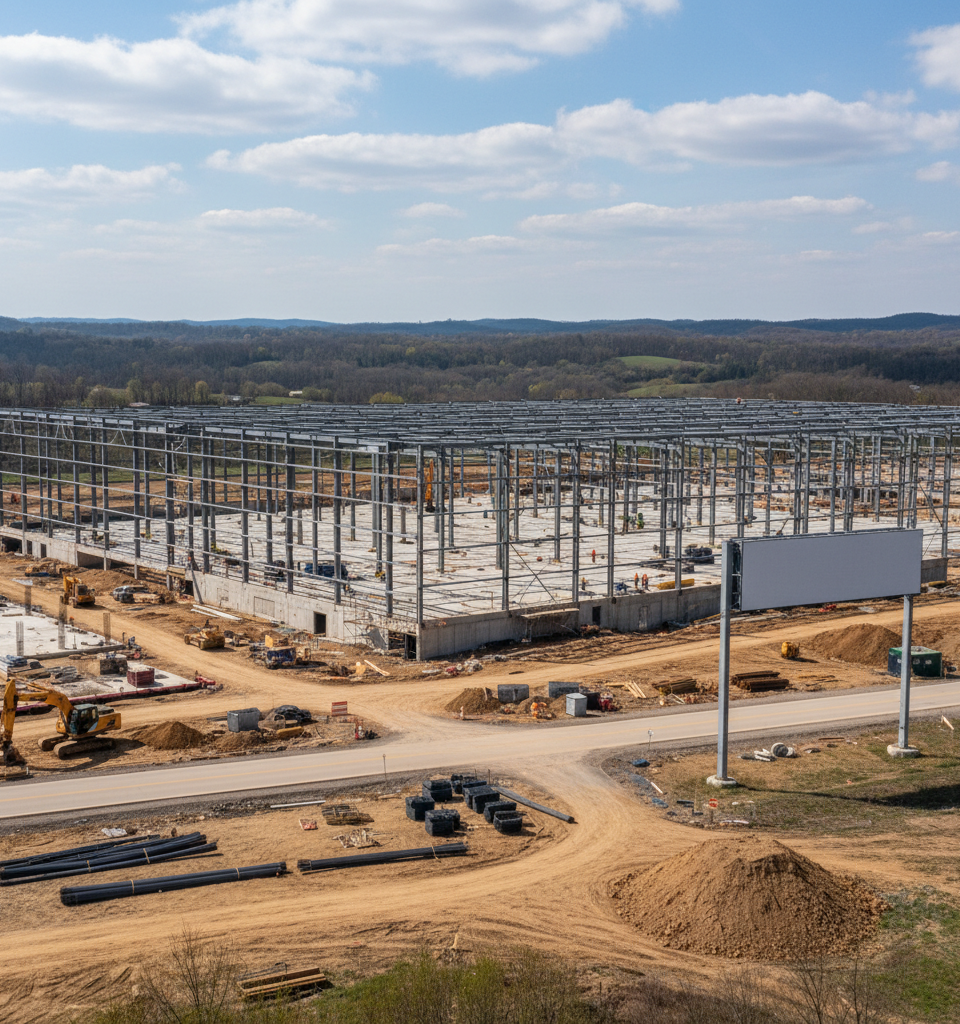
The construction of a new, highly automated fulfillment center by a global retailer like Walmart in Georgia can significantly reshape regional logistics costs and delivery timelines for businesses shipping products internationally. This type of infrastructure investment directly impacts supply chain efficiency for global sellers.
Walmart is moving forward with plans to build a substantial 1.5-million-square-foot automated fulfillment center in Georgia. The project represents a significant financial commitment of $1.3 billion from the retail giant. This new facility is currently scheduled to begin its ground-breaking phase later in the current year, marking a key development in Walmart's logistics strategy.
This investment underscores Walmart's ongoing push to enhance its supply chain capabilities and speed up product delivery to customers. Automated fulfillment centers are designed to streamline order processing, picking, packing, and shipping, ultimately improving efficiency and reducing the time items spend in transit. The scale of this particular project suggests a strategic focus on bolstering distribution networks, especially in the Southeastern United States.
The decision to locate such a large facility in Georgia positions the state as a critical hub for regional and potentially broader distribution. Georgia's existing infrastructure, including its ports, highway systems, and rail lines, likely played a role in the selection. For retailers, improved logistics infrastructure translates into reduced operational costs and faster delivery times, which are crucial in the competitive e-commerce landscape.
The retail sector continues to see massive investments in automation and fulfillment technology. Companies like Walmart are recognizing that robust, efficient supply chains are not just a competitive advantage but a necessity. This trend is driven by consumer expectations for rapid delivery and the increasing volume of online sales, which demand sophisticated logistical solutions.
Strategic Investment in Logistics
Walmart's $1.3 billion commitment highlights the intense competition in the retail and e-commerce sectors, particularly regarding last-mile delivery and inventory management. The 1.5-million-square-foot footprint of the new Georgia facility indicates its potential to handle a substantial volume of goods, serving a wide geographical area. Such centers often incorporate advanced robotics, artificial intelligence, and sophisticated software to manage inventory and fulfill orders with minimal human intervention.
The project's timing, with groundbreaking expected later this year, indicates a relatively rapid deployment of this strategic asset. It aligns with broader industry trends where major retailers are investing heavily to create integrated networks of fulfillment centers, distribution hubs, and last-mile delivery points. This approach aims to bring products closer to customers, thereby reducing shipping costs and delivery windows.
Impact on Regional Economy and Supply Chain
For Georgia, the construction of this mega-facility promises significant economic benefits, including job creation during both the construction and operational phases, though specific numbers were not disclosed. The presence of such a large-scale distribution hub also tends to attract other logistics-related businesses and can enhance the region's appeal for further industrial development. From a supply chain perspective, the new center could improve the flow of goods across the Southeast, potentially benefiting smaller businesses and local suppliers looking to integrate into Walmart's extensive network.
The enhanced logistical capabilities provided by this new center could also influence consumer behavior by making a wider array of products available for faster delivery. For global sellers, this infrastructure represents a potential bottleneck reduction point, enabling more efficient transit of imported goods from ports to distribution points and ultimately to consumers.
The Future of Retail Fulfillment
This investment reflects a crucial component of modern retail strategy: the race for supply chain optimization. As e-commerce continues its rapid expansion, the ability to process and deliver orders quickly and cost-effectively becomes paramount. Automated fulfillment centers like the one planned for Georgia are at the forefront of this evolution, designed to manage high volumes and diverse product inventories with precision and speed.
The groundbreaking later this year will commence a multi-year effort to bring this advanced facility online. Once operational, it will be a key player in Walmart's strategy to maintain its competitive edge in both online and in-store retail, reinforcing its position as a major force in global retail logistics.