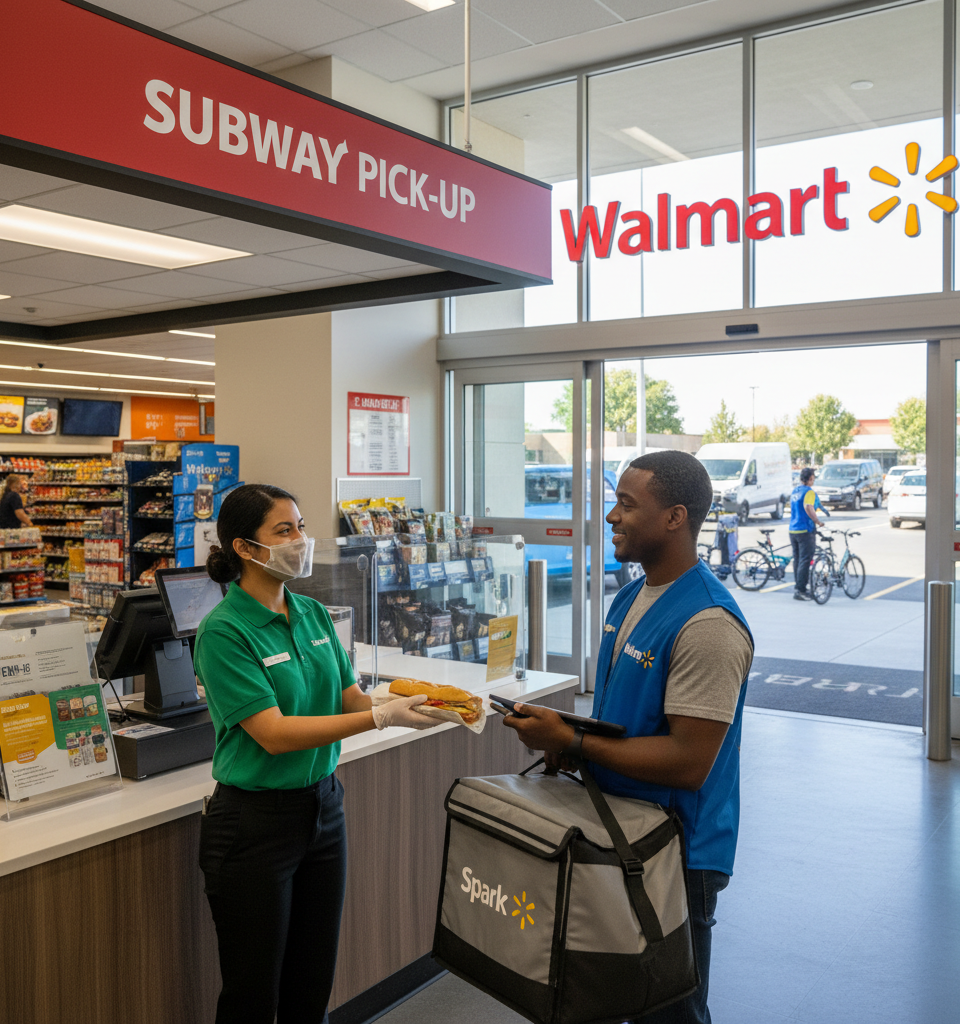
BENTONVILLE, AR – Walmart is poised to integrate a selection of Subway restaurants into its existing express delivery service, signaling a strategic deepening of the retail giant's involvement in the food service delivery market. This initiative targets Subway outlets that operate within Walmart stores, capitalizing on their established footprint within the retailer's physical locations.
This move represents a logical progression for Walmart, which has been steadily expanding its various delivery capabilities, from groceries to general merchandise. By adding restaurant meals, particularly from a widely recognized brand like Subway, Walmart aims to enhance the value proposition of its express delivery service, offering customers a more comprehensive range of immediate-need items. The integration also underscores the evolving strategies of traditional brick-and-mortar retailers to compete in an increasingly on-demand economy.
Strategic Rationale and Operational Details
The decision to include Subway in its express delivery platform is strategic, given Subway's substantial presence as the leading in-store restaurant tenant across Walmart's vast network of retail supercenters and discount stores. This pre-existing integration simplifies logistics and allows Walmart to leverage its established infrastructure for fulfillment. While specific operational details regarding the rollout schedule or the precise number of participating Subway locations have not been publicly disclosed, the initial focus will be on select shops. This phased approach will likely allow Walmart to fine-tune its delivery operations for restaurant orders, addressing challenges such as order accuracy, temperature control, and delivery speed.
Impact on the Retail and Food Delivery Landscape
This development is expected to have notable implications for both the retail and food delivery sectors. For Walmart, it represents a further blurring of lines between traditional retail and ancillary services, potentially bolstering customer loyalty and increasing basket size for express delivery orders. It could also provide a competitive edge against other retailers and dedicated food delivery platforms, as Walmart can offer a broader selection of goods delivered directly from its stores. For Subway, the partnership offers an additional revenue stream and expands its reach to a customer base seeking convenience, particularly those who frequent Walmart stores or utilize its delivery services. The collaboration could also set a precedent for other in-store concessionaires or fast-food chains to explore similar partnerships with major retailers.
Competitive Environment and Future Outlook
The food delivery market remains highly competitive, with established players like DoorDash, Uber Eats, and Grubhub dominating the landscape. Walmart's entry with an integrated offering could fragment the market further or force existing platforms to innovate. The success of this initiative will hinge on several factors, including the efficiency of Walmart's delivery infrastructure, the price point for delivery, and the overall customer experience.
Should this initial rollout prove successful, it is conceivable that Walmart could expand its express delivery service to include other in-store food vendors or even external restaurants, transforming its stores into micro-fulfillment centers not just for groceries and general merchandise, but also for prepared meals. This strategic evolution could redefine convenience for millions of consumers and significantly impact the future trajectory of both retail and food service industries.
The long-term implications suggest a future where large retailers act as comprehensive hubs for consumer needs, delivering everything from household essentials to fresh meals with speed and efficiency. The Subway integration is a key step in Walmart's journey to solidify its position as an indispensable daily resource for its customers.