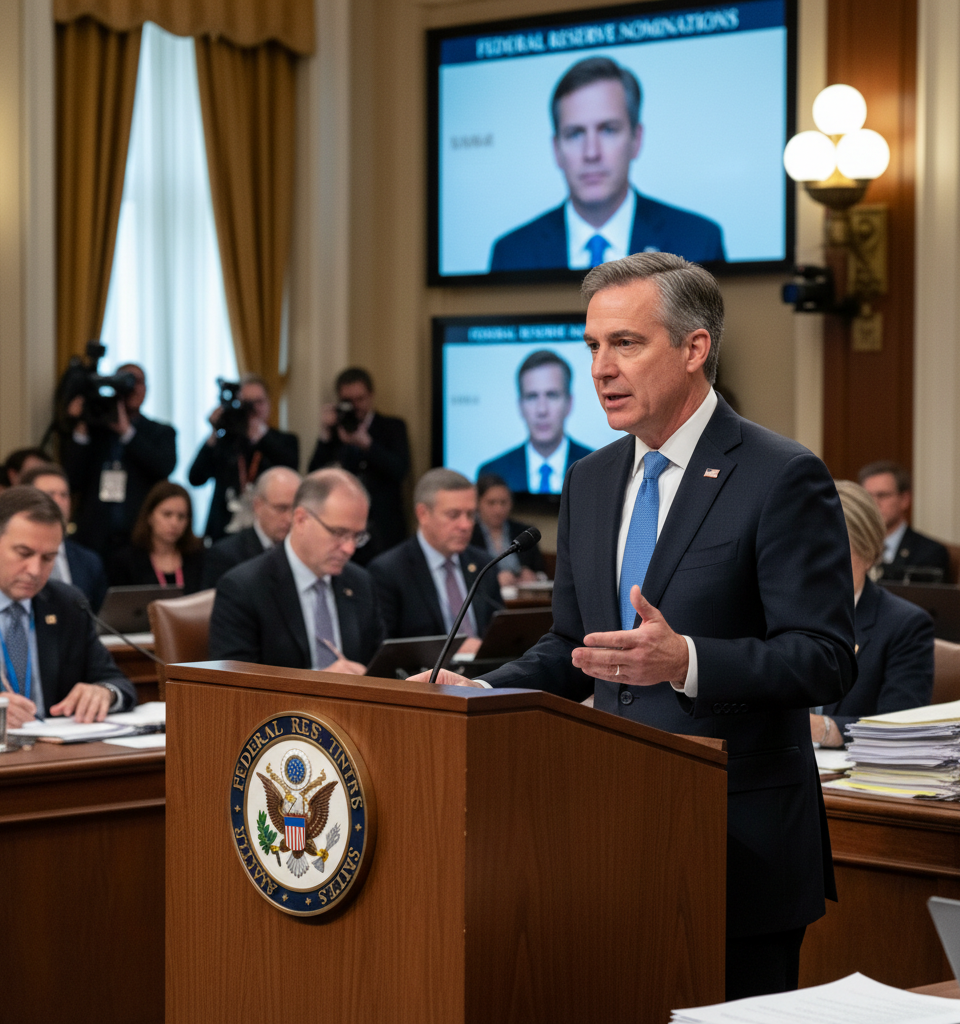
The anticipated confirmation process for Kevin Warsh as the next Chairman of the Federal Reserve has hit a significant snag, with a planned Senate hearing indefinitely postponed. The delay stems from Senator Thom Tillis (R-NC), who has publicly indicated his unwillingness to proceed until outstanding questions surrounding an investigation into current Fed Chair Jerome Powell are adequately addressed. This unexpected development injects further uncertainty into President Donald Trump's critical economic leadership appointments, highlighting the complex political dynamics at play in shaping the nation's monetary policy.
Background: A Contested Succession at the Fed
President Trump's search for a new Federal Reserve Chair has been marked by speculation and careful consideration, with Warsh emerging as a prominent candidate. His potential elevation to lead the world's most influential central bank is pivotal, as the Fed dictates interest rates, influences inflation, and stewards the nation's economic stability. The current delay underscores the meticulous scrutiny applied to such high-stakes nominations, particularly when intertwined with inter-agency investigations and political maneuvering. Historically, Fed Chair nominations largely sailed through with bipartisan support, a tradition that appears to be eroding in the current polarized political climate.
Senator Tillis's Demand and the Powell Probe
Senator Tillis's intervention is directly linked to an ongoing, albeit unspecified, investigation concerning current Fed Chair Jerome Powell. While details of the probe remain scant, its existence has been sufficient to cast a shadow over new appointments. Sources close to the Senate Banking Committee, which is responsible for vetting Fed nominees, indicate that Senator Tillis has communicated his firm stance to committee leadership, asserting that a confirmation hearing for Warsh would be premature without full transparency regarding the Powell inquiry. This signals a heightened level of oversight from Capitol Hill, aiming to ensure accountability and integrity within the nation's financial leadership.
Market Implications and Economic Uncertainty
This delay introduces further uncertainty into financial markets already sensitive to shifts in monetary policy and economic leadership. The Federal Reserve's independence and the stability of its leadership are viewed as crucial bulwarks against economic volatility. Prolonged uncertainty regarding the Fed's future direction or a drawn-out confirmation battle could trigger market jitters, potentially impacting investor confidence and long-term economic planning. Analysts suggest that a protracted nominations process might delay critical policy decisions, particularly concerning inflation management and interest rate adjustments, which have significant implications for global capital flows and the value of the U.S. dollar.
Expert Perspectives: A Test of Presidential Prerogative
Economists and political analysts are keenly observing this evolving situation. Dr. Evelyn Reed, a senior fellow at the Brookings Institution, commented, "This isn't just about Kevin Warsh; it's a test of the President's ability to swiftly install his preferred economic team. Any perceived external influence on the Fed's leadership, even through senatorial oversight, can compromise market perceptions of its autonomy." Others point out that such delays, while frustrating, are a fundamental aspect of the American system of checks and balances. "The Senate has every right to demand answers," states Dr. Peter Vance, a professor of political science at Georgetown University, "especially when an incumbent's conduct is under review. This ensures due diligence in leadership appointments." The consensus is that while the delay is inconvenient, it underscores a robust albeit sometimes cumbersome vetting process.
The Road Ahead: Potential Scenarios and Next Steps
For Kevin Warsh's nomination to move forward, two primary pathways emerge: either the investigation into Jerome Powell is swiftly concluded with a satisfactory public explanation, or Senator Tillis's concerns are otherwise assuaged through direct communication and assurances from the White House or relevant investigative bodies. Should the delay persist, President Trump may face pressure to either address the Powell situation decisively or consider alternative candidates to avoid a prolonged leadership vacuum at the Fed. The coming weeks will likely involve intense negotiations between the White House, Senate leadership, and Senator Tillis, as all parties seek to navigate this delicate political and economic landscape. The eventual resolution will not only determine the next Fed Chair but also set a precedent for future high-level appointments in a politically charged environment.
Impact on Fed Independence and Future Nominees
The current situation also raises broader questions about the perceived independence of the Federal Reserve and the extent to which political machinations can influence its leadership. Should the confirmation process become highly politicized or prolonged due to external investigations, it could undermine the public's trust in the institution's non-partisan stature. Future presidential administrations may confront similar challenges, making the handling of Warsh's nomination a significant case study. The outcome will undoubtedly shape the strategic approach to central bank appointments for years to come, emphasizing the need for transparent processes and clear communication between the executive and legislative branches of government.