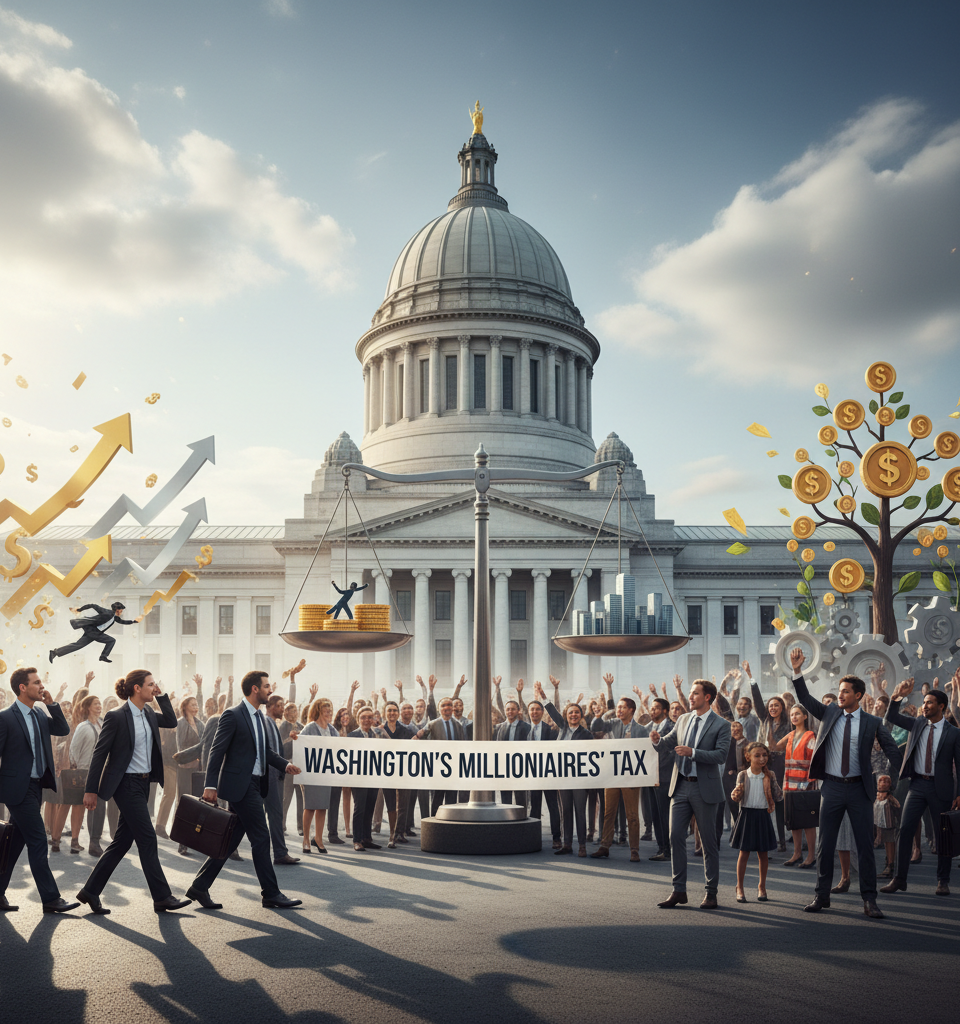
Washington State is poised at a critical juncture, contemplating a groundbreaking tax on its wealthiest residents that promises to redefine its fiscal landscape but also ignite a contentious debate over economic migration. This proposed 'millionaires' tax' aims to generate substantial revenue for public services, from education to infrastructure, but faces significant opposition from those who warn of an impending flight of capital and talent from the state.
The National Context of Wealth Taxation
The move comes amid a growing national conversation about wealth inequality and the role of progressive taxation. States like California and New York have explored or implemented similar measures, highlighting a broader trend among progressive legislatures to seek new revenue streams from high-net-worth individuals to address budget deficits and fund social programs. Washington, which currently lacks a state income tax, has historically relied on sales and property taxes, placing a disproportionate burden on lower and middle-income families. Proponents argue this wealth tax is a necessary step towards a more equitable tax system, aligning with the state's progressive political leanings and addressing long-standing fiscal disparities.
Proposal Specifics and Revenue Projections
The most prominent proposal, often dubbed the 'millionaires' tax,' targets intangible personal property – such as stocks, bonds, and other financial assets – exceeding a certain threshold, typically in the range of $1 billion. While specific legislative details are still under refinement, earlier iterations suggested a tax rate of approximately 1% on assets above this substantial benchmark. Proponents project that such a tax could generate hundreds of millions, if not billions, of dollars annually. For instance, according to recent analyses by organizations like the Washington State Budget & Policy Center, a 1% tax on intangible assets over $250 million could generate an estimated $3 billion over six years, earmarking these funds for critical investments in education, childcare, and affordable housing.
Potential Economic Ripple Effects
The implementation of such a tax could have profound ripple effects across Washington's economy. Advocates foresee a robust injection of funds into public services, potentially stimulating economic growth through improved infrastructure and a better-educated workforce. However, critics, primarily from the business community and conservative think tanks, fear a significant drain on the state's capital. They argue that high-net-worth individuals, who often have significant control over investment and job creation, could relocate to states with more favorable tax climates, ultimately stifling innovation, reducing charitable contributions, and shrinking the state's overall tax base. This potential exodus could impact the real estate market, luxury goods and services sectors, and even philanthropic endeavors.
Expert Opinions on Behavioral Responses
Economists and tax policy experts offer varied perspectives on the likely behavioral responses of the wealthy. Dr. Sarah Miller, a tax policy expert at the University of Washington, suggests, "While some high-profile individuals may indeed relocate, the vast majority of wealthy residents have deep ties to their communities, businesses, and social networks that transcend tax considerations." She emphasizes that lifestyle, family, and business operations often outweigh marginal tax increases for many. Conversely, analysts from groups like the Washington Policy Center contend that even a small percentage tax on substantial wealth could incentivize wealth managers to advise clients on moving assets or even residences. "When you're talking about billions of dollars in assets, even a one percent tax represents millions of dollars in annual liabilities," states one anonymously cited financial advisor, highlighting the potential for significant financial incentives to relocate.
Legal Challenges and Future Outlook
The proposed wealth tax is almost certain to face significant legal challenges, primarily centering on its constitutionality given Washington's existing limitations on income taxation and the definition of 'property' for tax purposes. Previous attempts to implement similar taxes have encountered legal hurdles, and this proposal is unlikely to be an exception. The legislative process itself will be a battleground, with powerful lobbying efforts from both sides. Looking ahead, the debate will intensify in the upcoming legislative sessions, with both proponents and opponents marshalling data and expert testimony to support their arguments. The long-term success, both legally and economically, of Washington's wealth tax will undoubtedly serve as a crucial test case for similar initiatives across the nation, shaping the discourse on fiscal equity and economic mobility for years to come.
The Broader Implications for State Revenue and Services
Should the wealth tax pass and withstand legal scrutiny, the revenue generated could fundamentally transform Washington's capacity to fund essential public services. Proponents envision a future where schools are better funded, public transportation is expanded, and healthcare access is improved, all without increasing the tax burden on the majority of residents. However, the risk remains that if the anticipated wealthy exodus materializes, the state could face unintended consequences, including a dwindling tax base and a potential slowdown in economic dynamism. The outcome in Washington will therefore provide critical insights into the delicate balance between progressive taxation and the potential for capital flight, influencing fiscal policy debates far beyond the Evergreen State's borders.