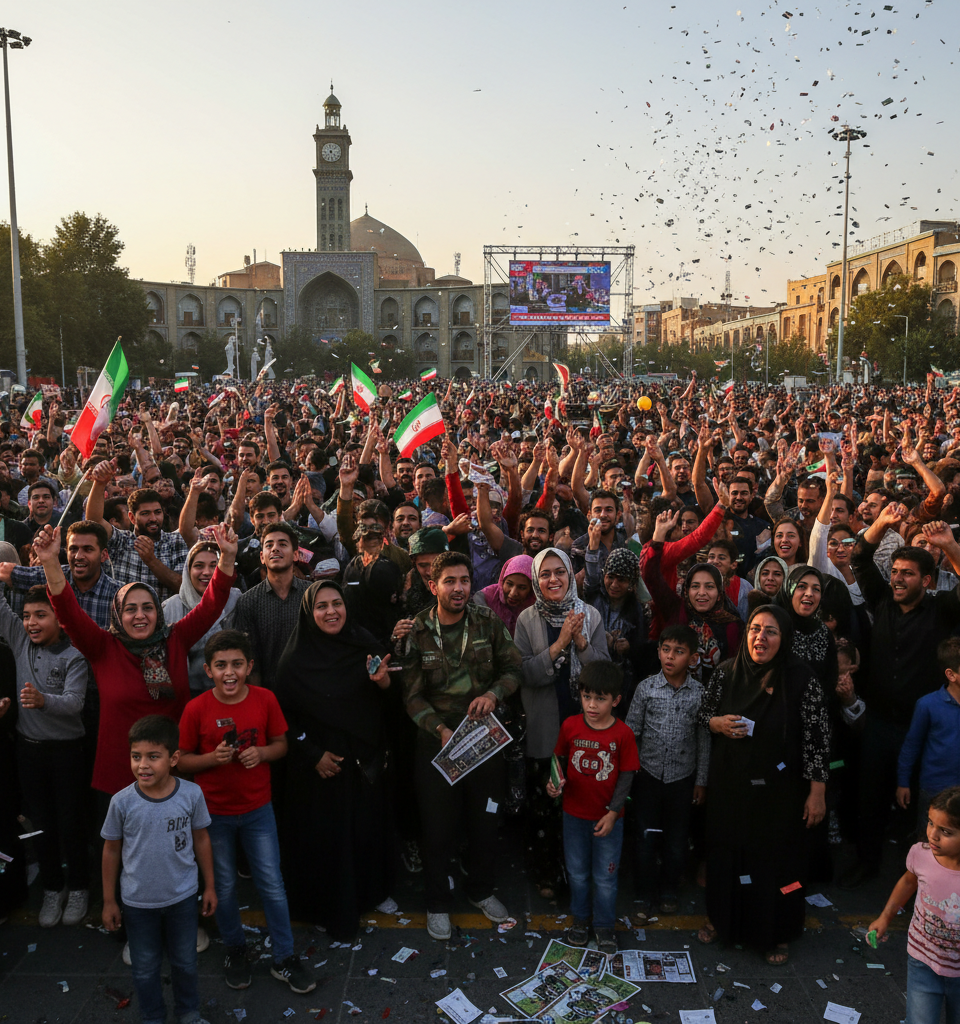
Tehran, Iran – Thousands of pro-government demonstrators have converged on the streets of the Iranian capital today, celebrating en masse following the announcement of a conditional two-week ceasefire between the United States and Iran. The spontaneous outpouring of public sentiment underscores the profound impact of the diplomatic breakthrough on the Iranian populace, marking a pivotal moment in the often-strained relations between the two nations.
The ceasefire, described as conditional, suggests a tentative step towards de-escalation, offering a glimmer of hope amidst years of heightened regional tensions and economic sanctions. While specific details of the conditions remain unreleased, the immediate public reaction in Tehran highlights a widespread longing for stability and a potential respite from geopolitical friction. The sight of citizens flooding major boulevards and squares, waving flags and chanting slogans, paints a vivid picture of a populace eager for peace and an end to protracted international disputes.
Geopolitical Shift and Regional Implications
This development comes after a period characterized by persistent diplomatic stalemates and intermittent hostilities in the Middle East. The conditional nature of the ceasefire implies ongoing negotiations and the potential for a more comprehensive agreement, but its current form already denotes a significant shift. For Iran, a pause in direct confrontation with the U.S. could alleviate some of the immense pressure on its economy and allow for a refocusing on domestic issues. The Iranian government's decision to permit, or even tacitly encourage, these public gatherings also suggests an effort to leverage the moment for internal consolidation and to project an image of national unity and confidence on the international stage.
The broader implications for regional stability are considerable. The U.S. and Iran have been key players in numerous proxy conflicts across the Middle East, from Syria and Iraq to Yemen. A ceasefire, even temporary, could create a critical window for dialogue and de-escalation in these theatres. Analysts are closely watching how allied and rival states in the region, such as Saudi Arabia, Israel, and Turkey, will react to this development, anticipating potential shifts in their own foreign policy calculations. The initial reaction in Tehran may well be an indicator of a prevailing sentiment within Iran that views any de-escalation with the U.S. as a positive step.
Economic and Social Ramifications
The economic impact of such a ceasefire, even a temporary one, cannot be overstated. Decades of sanctions have severely crippled Iran's economy, leading to high inflation, unemployment, and a general decline in living standards. While a conditional two-week pause is unlikely to lead to immediate large-scale economic relief, it could foster an environment conducive to future economic engagement and potentially signal a pathway for the easing of some sanctions. Businesses in Iran and internationally will undoubtedly be monitoring the situation closely for any signs of sustained détente that could unlock new investment opportunities or resumed trade.
The social ramifications are equally significant. The celebratory mood observed in Tehran reflects a collective yearning for a return to normalcy and a reduction in the existential anxieties that have long plagued Iranian society. For many ordinary citizens, the prospect of reduced tensions with a major global power is a welcome change, offering hope for improved social conditions, greater international access, and less isolation. The government's allowance of these demonstrations also serves as a crucial barometer of public opinion, revealing the depth of desire for peace among the Iranian populace.
The Path Forward: Negotiations and Uncertainties
The nature of the "conditional" ceasefire suggests that much work remains to be done, likely involving a complex series of negotiations to address deeply entrenched disagreements. Key issues are expected to include Iran's nuclear program, its regional influence, and the fate of various proxy forces. The success of these follow-up discussions will dictate whether this two-week pause evolves into a more durable peace or merely serves as a brief interlude before renewed tensions. International observers will be keenly focused on the terms and progress of these negotiations, understanding that the implications extend far beyond the immediate protagonists.
For now, the images from Tehran speak volumes: a population, weary from years of conflict and isolation, is ready to embrace even a temporary reprieve. The coming weeks will be critical in determining whether this initial burst of optimism can be sustained and translated into meaningful, long-term diplomatic achievements. The world watches intently as this fragile ceasefire unfolds, holding its breath for what could be a turning point in one of the most volatile geopolitical relationships of the century.