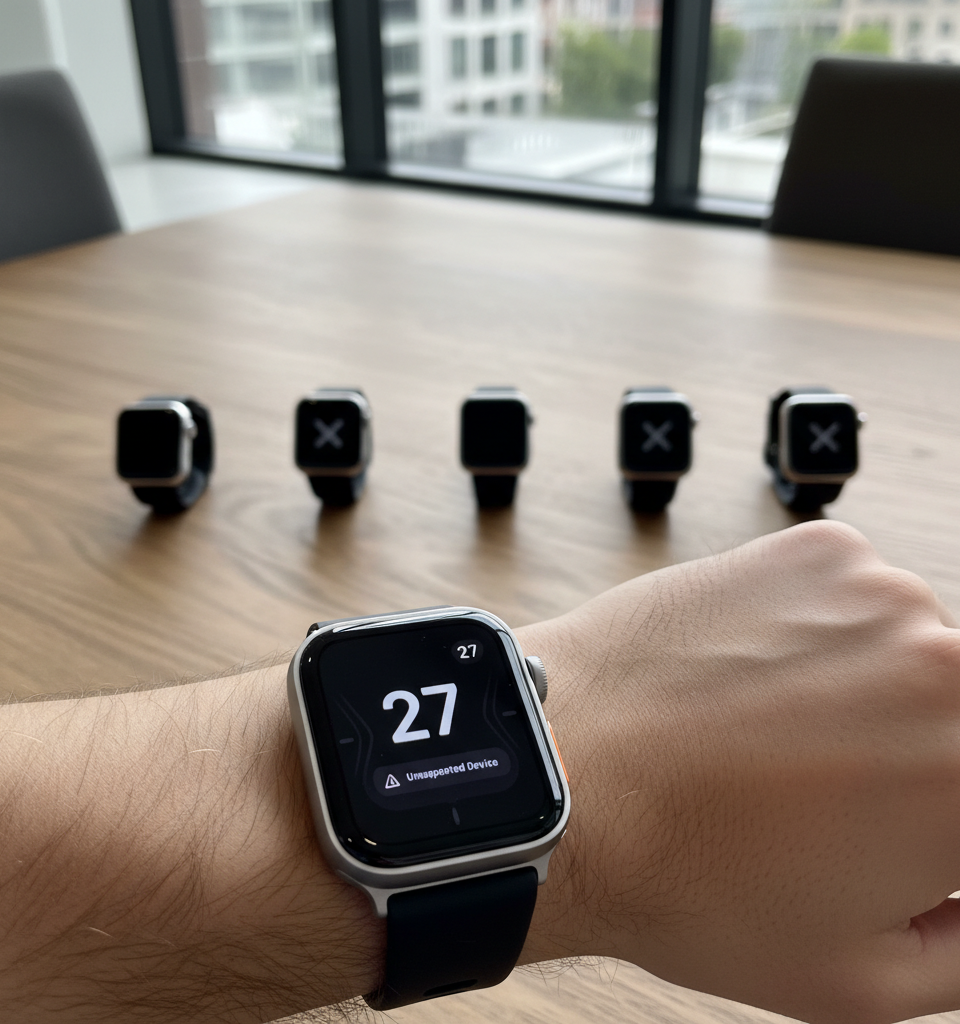
Apple's highly anticipated watchOS 27, unveiled earlier this month at the company's Worldwide Developers Conference, is poised to bring significant changes to the Apple Watch ecosystem. However, alongside new features, the update will notably discontinue full support for several older models, a decision that is already generating considerable discussion among consumers and industry observers alike. Among the most prominent devices to be affected is the original Apple Watch Ultra, which first hit the market in 2022 with a hefty $799 price tag.
This move means that while these unsupported devices will continue to receive critical security updates, they will not be eligible for the new functionalities and enhancements integral to watchOS 27. For owners of the original Apple Watch Ultra, in particular, this represents a relatively quick obsolescence for a premium product. The device was positioned at the high end of Apple's wearable offerings, aimed at professionals and enthusiasts requiring advanced features and robust build quality. Its exclusion from the latest OS update after just four years raises questions about Apple's product lifecycle strategy for its most expensive wearables.
Impact on Consumers
The decision to drop support for several models, especially the Ultra, could lead to frustration among consumers who invested heavily in these devices. Many users, particularly those who purchased the Ultra, may still consider their watches relatively new and fully functional. The shift to a security-updates-only status effectively limits their access to future innovations and improvements that Apple promotes with each new watchOS release. This could prompt a segment of the current user base to consider upgrading sooner than anticipated, despite the substantial initial investment.
Historically, Apple has maintained a strong, albeit not indefinite, support cycle for its devices, offering software updates for many years post-launch. The lifecycle for wearables, however, appears to be accelerating, reflecting perhaps the rapid pace of technological advancements in the segment. The original Apple Watch, for instance, received several years of major watchOS updates before transitioning to a security-only footing.
Industry Implications
This development is significant not only for Apple but also for the broader wearables market. It highlights a recurring industry challenge: balancing innovation with device longevity and consumer expectations. Rapid software obsolescence, even if only for major feature updates, can fuel consumer skepticism about premium pricing for technology products, especially those designed for long-term use. Competitors in the smartwatch space, such as Samsung and Google, will likely observe the consumer reaction closely as they refine their own software support policies and product lifecycles.
The strategy could also be interpreted as an aggressive push to encourage upgrades to newer hardware, thereby boosting sales of the latest Apple Watch models. By making watchOS 27 exclusive to newer chips and architectures, Apple potentially ensures optimal performance and takes advantage of more advanced hardware capabilities, which might not be fully present in older models, including the early Ultra.
Apple's Rationale
When questioned about the decision, Apple representatives cited the need for specific hardware capabilities to effectively run watchOS 27's new features. While a detailed technical explanation was not provided, it is understood that the latest operating system likely leverages newer processors, more advanced sensors, or enhanced memory configurations that are not present in the discontinued models. This aligns with a common practice in the tech industry where software advancements eventually outpace the capabilities of older hardware, leading to a natural progression of device support.
For consumers, the implication is clear: to experience the full suite of watchOS 27 features, an upgrade to a newer Apple Watch model will be necessary. This reinforces a cyclical consumption model that has long characterized the personal electronics market, where software innovation drives hardware adoption.
What This Means for the Future
Looking ahead, this trend suggests that future premium Apple Watch models, particularly those featuring advanced health sensors, processing power, and specialized components, may also have a defined support window for major OS updates. Consumers investing in new Apple Watches should perhaps calibrate their expectations regarding the number of full watchOS updates their devices will receive. This could influence buying decisions, prompting some to weigh the initial cost against the anticipated software longevity.
The rollout of watchOS 27 this fall will undoubtedly usher in a new era for Apple Watch users, bifurcating the experience between those with the latest software and those limited to security patches. The long-term effects on brand loyalty and consumer perception will be a key metric to watch in the coming months as the update becomes widely available.