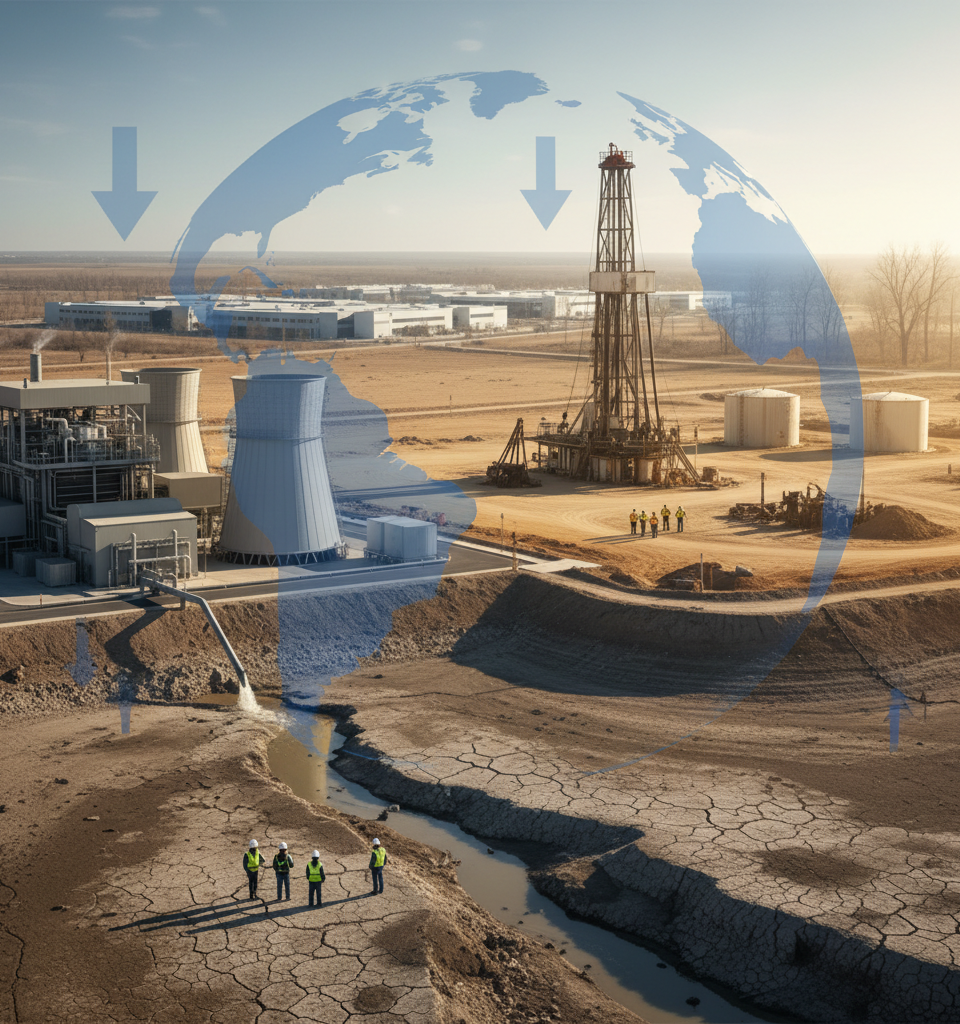
The world's energy landscape is facing an unprecedented, yet often overlooked, challenge: growing water scarcity. This critical environmental issue is now directly impacting the feasibility and economics of various energy production methods, including shale oil and gas extraction, thermal and renewable power generation, the emerging hydrogen sector, and the rapidly expanding data center industry. This nexus, increasingly evident over the past five years, demands immediate and strategic intervention from policymakers and industry leaders to avoid severe disruptions to global energy supply and economic stability.
Historical Context and Escalating Concern
For decades, water's role in energy production was largely taken for granted, considered an abundant resource in most industrialized regions. However, a confluence of factors – including climate change-induced droughts, population growth, agricultural demands, and industrialization – has dramatically altered this perception. The International Energy Agency (IEA) has highlighted that approximately 10% of global water withdrawals are currently used for energy production, a figure projected to rise significantly. This competition for water resources is intensifying, particularly in arid and semi-arid regions, making water availability a significant geopolitical and economic concern alongside traditional energy security.
Specific Sectoral Impacts and Data
The impact is multifold across the energy spectrum. In the shale industry, hydraulic fracturing, or 'fracking', requires millions of gallons of water per well, often straining local water supplies in regions like the Permian Basin. A single fracking operation can consume between 3 to 5 million gallons.
For thermal power generation, both coal and nuclear plants rely heavily on water for cooling, with withdrawals accounting for the largest share of industrial water use. Nuclear power, for instance, can require up to 450 gallons of water per megawatt-hour. Even renewable energy sources like solar thermal plants use water for cooling and cleaning, while hydropower is directly dependent on water flow.
The burgeoning hydrogen economy, particularly green hydrogen produced via electrolysis, is also water-intensive, requiring about nine liters of pure water to produce one kilogram of hydrogen. Furthermore, the rapid proliferation of data centers, essential for the digital economy, demands vast quantities of water for cooling server racks, with some large facilities consuming millions of gallons daily.
Broader Market and Economic Implications
The escalating water constraint introduces significant risks to energy projects and investments. Developers face increased regulatory hurdles, higher operational costs due to water sourcing and treatment, and potential public opposition. This directly impacts project timelines and financial viability, leading to deferred or canceled projects. Utilities are grappling with forced curtailments during severe droughts, affecting grid stability and reliability. The competition for water between energy, agriculture, and municipal use also creates socio-economic tensions, potentially leading to price volatility in both water and energy markets. Investment firms are increasingly incorporating water risk into their due diligence, recognizing it as a material financial risk.
Expert Commentary and Analysis
Energy analysts and environmental economists are increasingly vocal about the need for integrated water-energy policy. Dr. Lena Hansen, a senior energy policy expert, recently stated, "Water is no longer just an environmental issue; it's an economic imperative that will dictate the future contours of our energy mix." Others, such as Dr. Kenji Tanaka from the Institute for Energy Research, emphasize technological solutions: "Innovation in water recycling, desalination, and less water-intensive cooling technologies will be paramount, but these often come with significant capital outlays that must be factored into energy pricing." There's also a growing consensus that a circular economy approach to water, where water is reused and treated effectively, is essential for energy sector resilience.
Forward Outlook and Strategic Responses
The future of energy development will be inextricably linked to sustainable water management. Upcoming developments will likely include more stringent water usage regulations, increased investment in water-efficient technologies such as dry cooling systems and advanced wastewater treatment for industrial use, and greater adoption of decentralized water sourcing. The push for green hydrogen, while water-intensive, may also spur innovations in seawater desalination for electrolysis.
Furthermore, expect to see more localized and regionalized energy strategies that consider specific water availability. Collaborative efforts between governments, industry, and local communities will be vital to navigate this intricate challenge and ensure a secure and sustainable energy future amidst a tightening global water supply. The decisions made in the next five to ten years regarding water-energy nexus will profoundly shape global economic and environmental stability.