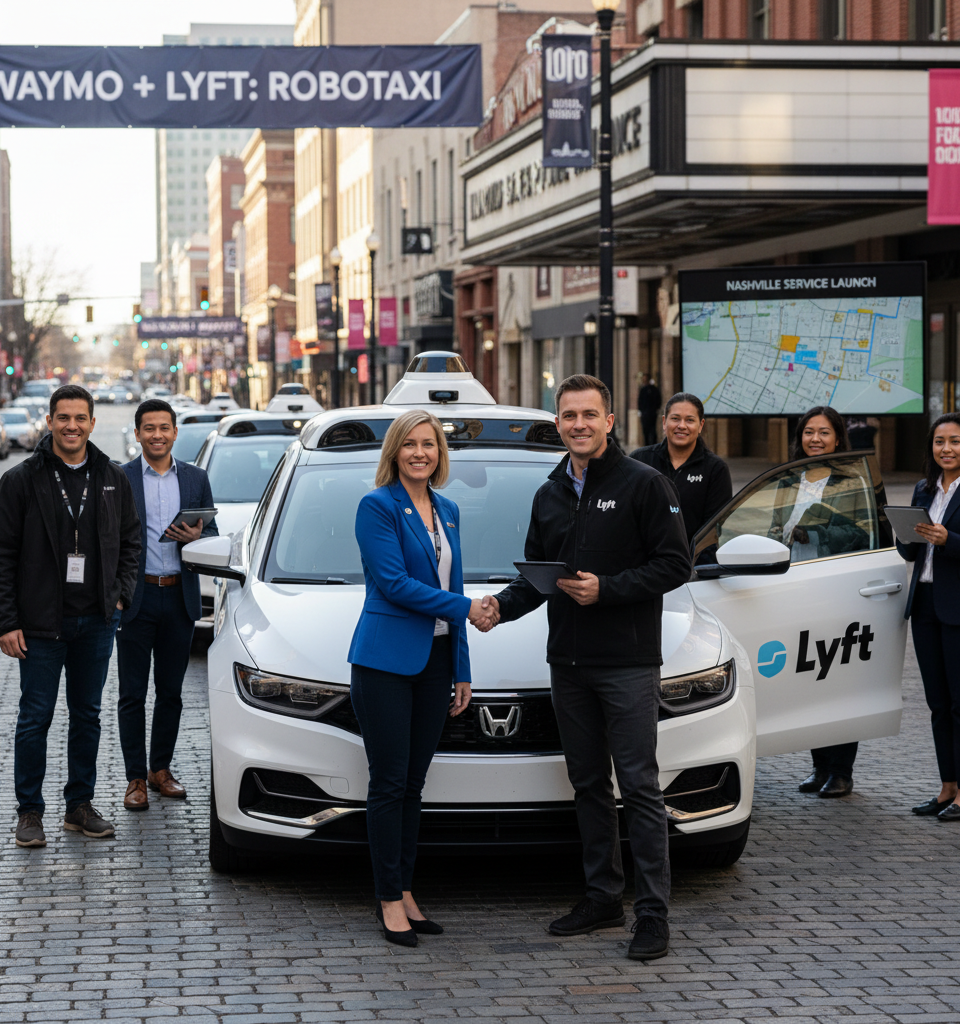
NASHVILLE – Waymo, a leader in autonomous vehicle technology, today announced the commencement of its commercial robotaxi operations in Nashville, Tennessee. This expansion signifies a substantial step in the company's broader strategy to proliferate self-driving ride-hailing services across major U.S. metropolitan areas. Nashville now represents the eleventh city where Waymo offers its autonomous ride services, further solidifying its presence in the burgeoning robotaxi market.
The deployment in Music City is particularly notable for its integration with the Lyft platform. This partnership allows Waymo vehicles to be hailed through the established Lyft app, providing a familiar and convenient interface for consumers to access the autonomous service. This dual-platform approach—Waymo's proprietary app alongside the Lyft integration—is expected to significantly accelerate user adoption and increase the overall operational footprint in the new market.
Strategic Market Expansion
Waymo's entry into Nashville underscores a broader trend of autonomous vehicle companies strategically expanding their commercial services into diverse urban environments. The choice of Nashville, a rapidly growing city with a dynamic transportation landscape, highlights Waymo’s deliberate approach to scale its operations. Prior to this launch, Waymo had established commercial services in ten other cities, employing various ride-hailing methods tailored to local market conditions and partnership opportunities.
The company's operational model typically involves a phased rollout, beginning with an initial service area and gradually expanding its coverage as data is collected and system performance is optimized. The integration with Lyft is a critical component of Waymo's go-to-market strategy in cities like Nashville, leveraging existing ride-sharing infrastructure and customer bases to streamline the introduction of autonomous services.
Industry Impact and Competitive Landscape
This expansion is poised to intensify competition within the autonomous ride-hailing sector. Waymo, backed by Alphabet, is a key player alongside companies like Cruise (General Motors) and Zoox (Amazon), all vying for market dominance in this nascent but rapidly evolving industry. Each entry into a new major market serves as both a technological validation and a strategic move to capture market share.
The partnership with Lyft is mutually beneficial. For Waymo, it offers immediate access to a vast network of riders and a proven booking platform, reducing the need to build a new customer base from scratch. For Lyft, it presents an opportunity to offer advanced, autonomous ride options to its users, potentially enhancing service reliability, reducing operational costs in the long term, and differentiating itself in a highly competitive ride-hailing market. Such collaborations are likely to become more common as autonomous technology matures and seeks broader commercialization.
Operational Synergies and Future Outlook
The ability to hail Waymo robotaxis through multiple channels, specifically Waymo's native application and the Lyft platform, exemplifies a multifaceted approach to consumer access. This strategy aims to maximize utilization rates for the Waymo fleet and cater to diverse user preferences. The operational synergies created by integrating with an established ride-sharing network are significant, potentially leading to more efficient dispatching and a smoother customer experience.
Looking ahead, Waymo is expected to continue its aggressive expansion drive, targeting similarly advantageous urban markets. The company's focus remains on refining its autonomous driving technology, expanding its operational domains, and forging strategic partnerships that facilitate rapid market penetration. The success of the Nashville launch and its integration with Lyft will provide valuable insights for future deployments, influencing how autonomous services are introduced and scaled in cities globally. This latest expansion marks another milestone in the journey towards ubiquitous self-driving transportation.