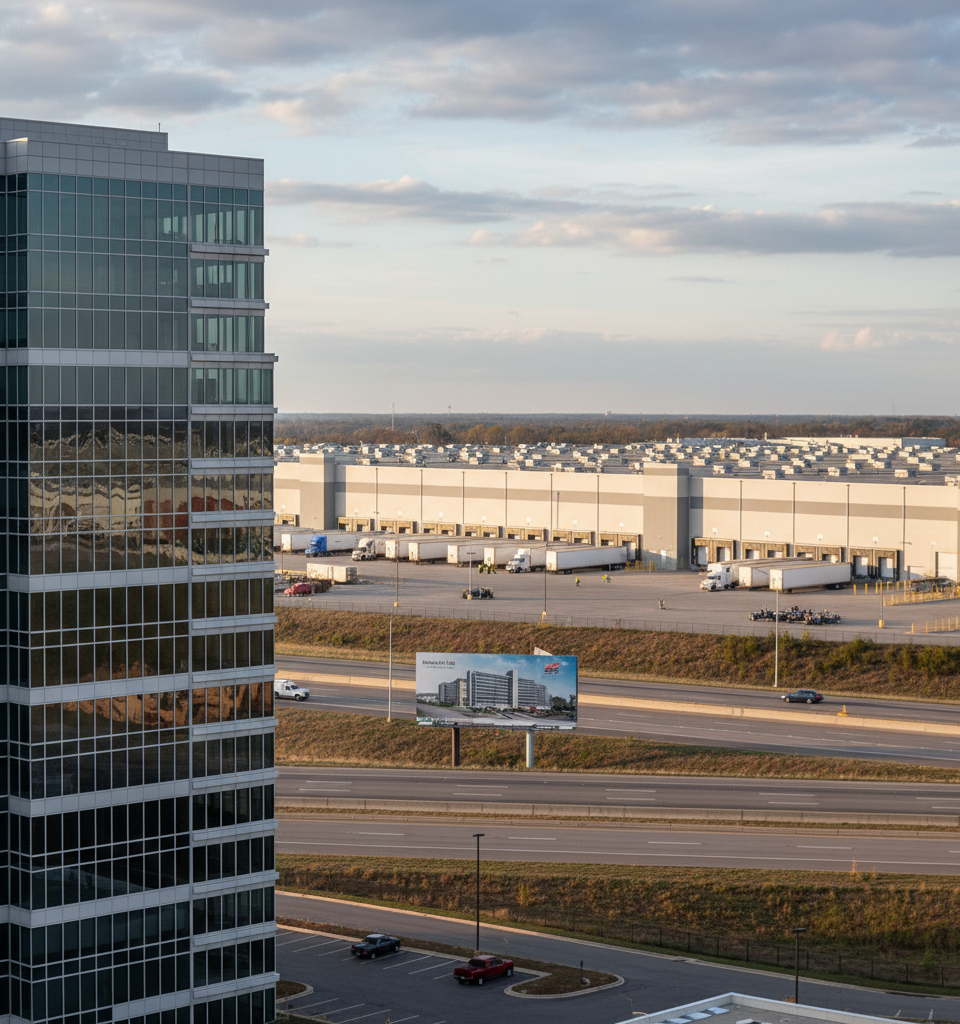
While ostensibly an East Coast transaction, this substantial refinancing deal in the commercial real estate sector could subtly tighten capital availability or shift investment focus for large-scale logistics properties, potentially influencing future development costs impacting supply chains for goods consumed even by high-end Southern California households.
Wells Fargo has extended a substantial $455.7 million in refinancing to 1959 RE Holdings for Family Dollar's considerable portfolio of leased distribution centers. This financing aims to consolidate and restructure existing debt across the 7.1 million-square-foot logistics network. The arrangement underscores continued lender confidence in the essential retail infrastructure, even as economic conditions evolve.
The Deal Specifics
The funding from Wells Fargo is structured as a floating-rate loan. The recipient, 1959 RE Holdings, is a corporate entity that holds and manages the distribution center assets. This entity is notably controlled and partially owned by two prominent private equity firms: Brigade Capital Management and Macellum Capital Management. The refinancing addresses existing debt, allowing the owners to optimize their capital structure for these critical operational assets.
Family Dollar, a discount retail chain, relies heavily on its distribution network to stock its stores efficiently across the country. These 7.1 million square feet of distribution centers are leased, meaning the company operates them but does not own the underlying real estate outright. Instead, ownership lies with entities like 1959 RE Holdings, which then secures financing against these valuable, income-generating properties.
Market Context and Implications
This transaction highlights the ongoing demand for financing in the industrial real estate sector, particularly for assets critical to retail supply chains. Distribution centers, driven by e-commerce growth and the need for rapid goods movement, have remained a robust asset class. Lenders, including major financial institutions like Wells Fargo, continue to see these properties as stable investments capable of generating consistent cash flows.
For private equity firms like Brigade Capital Management and Macellum Capital Management, securing new financing allows for capital management flexibility. Floating-rate loans can offer lower initial interest rates compared to fixed-rate options, but they also expose borrowers to interest rate fluctuations. This strategy often reflects a specific outlook on future interest rate movements or a desire for short-to-medium-term financing solutions.
The Role of Private Equity
Private equity's involvement in owning and managing these distribution centers speaks to the value seen in logistics infrastructure. Firms like Brigade and Macellum specialize in acquiring and optimizing asset portfolios, often seeking to enhance their value through operational improvements or strategic financing. Their control over 1959 RE Holdings positions them to make such strategic financial decisions for the Family Dollar portfolio.
This kind of large-scale refinancing in the logistics sector also provides an indicator of the broader commercial real estate market's health. When major banks commit significant capital to such deals, it suggests a continued belief in the long-term viability and growth potential of the underlying assets and the sectors they serve. It also provides liquidity, allowing property owners to redeploy capital or strengthen their balance sheets.
Forward Outlook
The successful refinancing of Family Dollar's distribution network should ensure continued stability in the company's operational backbone. For investors and lenders, the deal reinforces industrial real estate as a reliable asset class within a diverse portfolio, particularly for essential services and retail. As interest rates remain a key variable, future financing decisions for similar large-scale portfolios will likely continue to weigh the benefits of floating versus fixed-rate structures.
This capital infusion positions the owners of these critical distribution assets to maintain competitive operations. It also ensures that the vast logistical framework supporting Family Dollar's retail footprint remains financially sound, facilitating the consistent flow of goods to consumers nationwide.