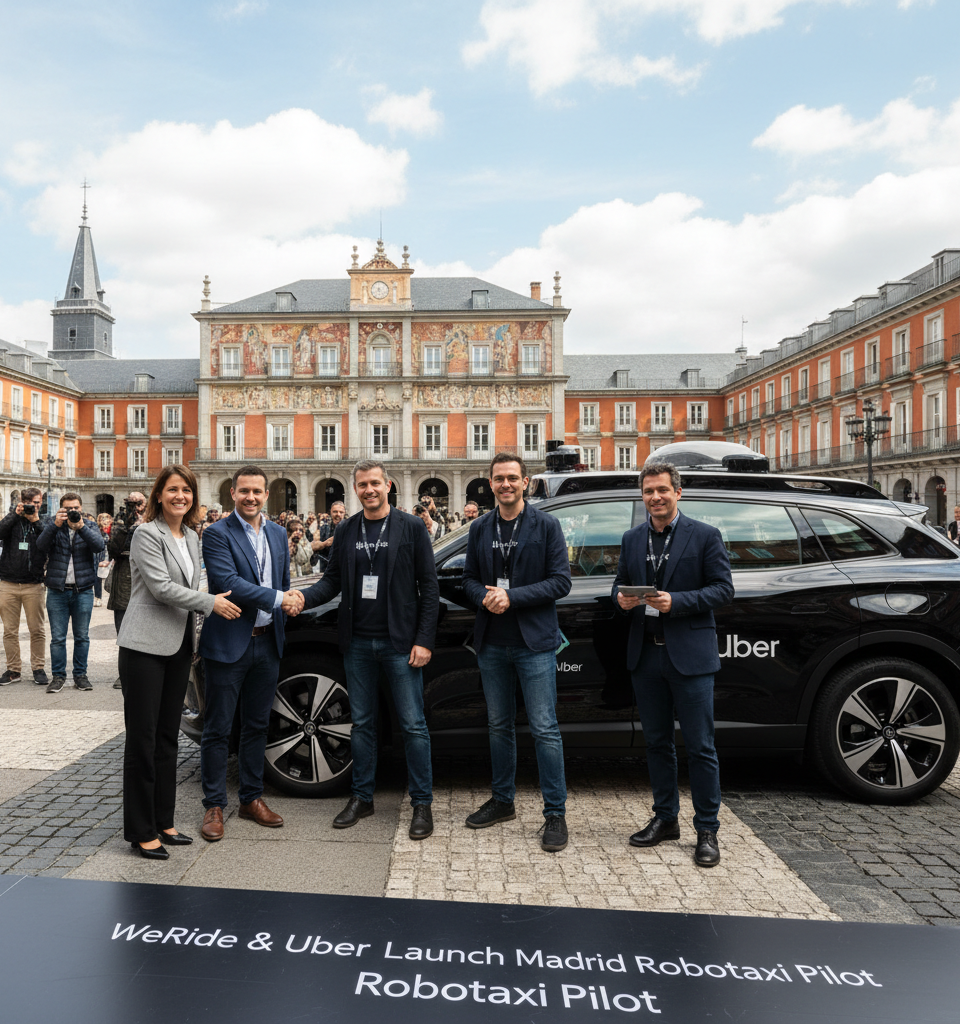
Madrid is poised to join the growing map of European cities embracing autonomous vehicle technology, as WeRide and Uber announced plans to jointly launch what they describe as Spain’s first commercial robotaxi pilot. The initiative, slated to commence operations later this year, will enable residents and visitors in the Region of Madrid to book rides using the widely accessible Uber application. This partnership signals a strategic move by both companies to extend their reach into the burgeoning European robotaxi market.
Strategic Expansion into European Markets
The introduction of a commercial robotaxi service in Madrid represents a notable advancement in the global deployment of autonomous driving technology. Europe has seen a gradual but steady integration of robotaxi services, with various cities across the continent beginning to host pilot programs and commercial operations. This latest venture underscores a broader trend of technology companies and ride-sharing platforms collaborating to bring self-driving capabilities to urban environments. The historical context of ride-sharing platforms, which disrupted traditional taxi services, now extends to integrating advanced robotics, promising a transformation in urban mobility.
Pilot Program Details and Accessibility
While specific operational zones within the Region of Madrid are yet to be fully detailed, the announcement confirms that the service will be accessible via the Uber app. This integration is crucial, leveraging Uber's established user base and operational infrastructure to facilitate easy adoption of the new autonomous service. Customers familiar with using Uber for traditional ride-hailing will find a seamless experience when opting for a robotaxi. The pilot program's commercial nature suggests an intention to move beyond mere testing, aiming for a revenue-generating service, albeit initially on a limited scale. This approach allows for real-world data collection and user feedback, which are vital for refining autonomous driving systems and expanding services.
Impact on the Autonomous Vehicle Industry
This collaboration between WeRide, a prominent autonomous driving technology company, and Uber, a global leader in ride-sharing, has significant implications for the broader autonomous vehicle industry. It highlights the increasing trend of specialized technology developers partnering with established service providers to accelerate market penetration and commercialization. For WeRide, Madrid represents an expansion of its international footprint, adding to its existing operations in other regions. For Uber, it reinforces its commitment to being at the forefront of mobility innovation, diversifying its service offerings to include cutting-edge autonomous solutions. The successful implementation of such pilots is critical for building public trust and demonstrating the viability and safety of self-driving cars on public roads.
Regulatory Landscape and Future Prospects
The launch of a commercial robotaxi pilot in Madrid will also put the spotlight on the regulatory frameworks governing autonomous vehicles within Spain and the European Union. Spain's embrace of this technology for commercial trial suggests a proactive stance from local authorities in fostering innovation while prioritizing safety. The data and experiences gathered from this pilot will likely inform future regulatory decisions and potentially pave the way for wider deployment across Spain and other EU member states. The scalability of such services will depend heavily on robust safety protocols, advanced mapping technologies, and positive public acceptance.
What's Next for Autonomous Mobility in Europe
Looking ahead, the Madrid pilot is anticipated to serve as a crucial benchmark for the expansion of urban autonomous mobility in Europe. Should the pilot prove successful, it could catalyze similar initiatives in other major European cities. The long-term vision for both WeRide and Uber likely involves a significant expansion of their robotaxi fleets and operational areas. This gradual, city-by-city approach allows companies to adapt to local traffic conditions, regulatory requirements, and consumer preferences, moving towards a future where autonomous vehicles play an integral role in sustainable and efficient urban transportation systems.