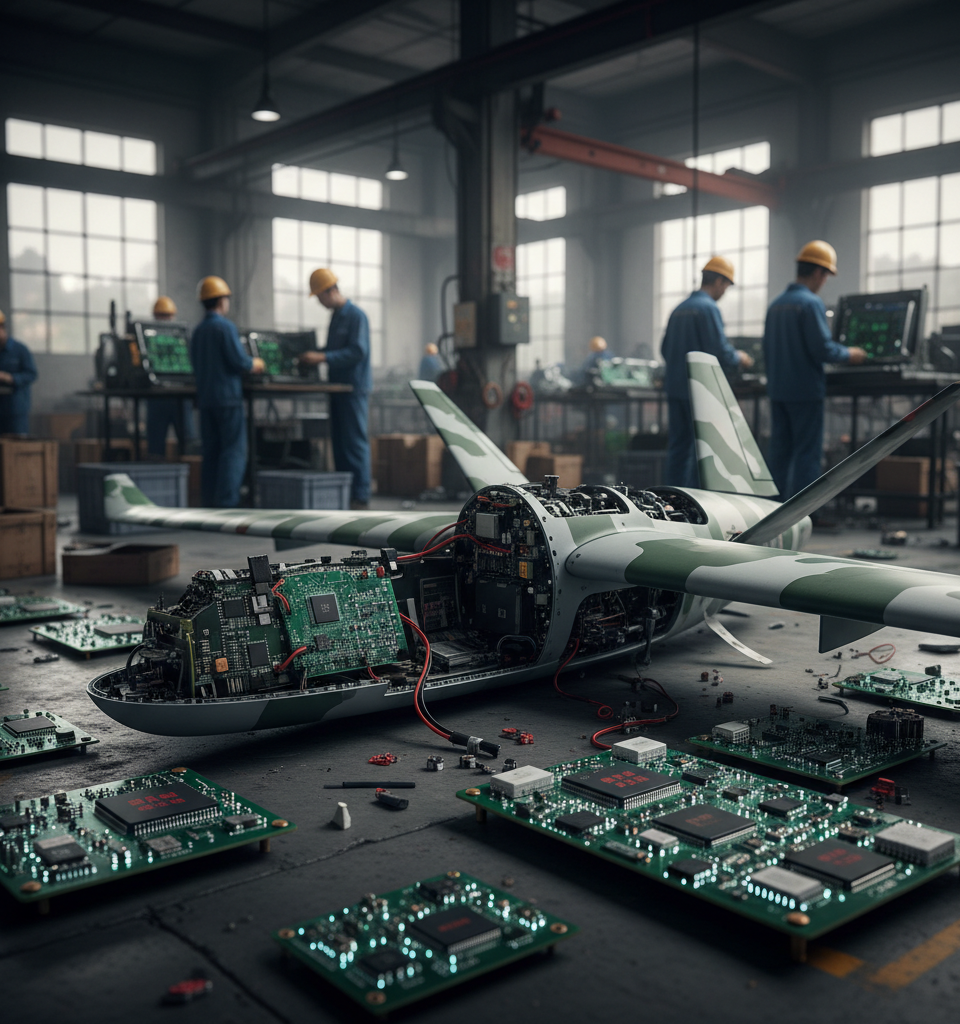
The ongoing conflict in Ukraine has unveiled a critical, and often unacknowledged, paradox in global military preparedness: Western nations, particularly the United States, are heavily reliant on Chinese supply chains to fuel their rearmament efforts. This strategic vulnerability, acutely felt since Russia's full-scale invasion in February 2022, forces a reckoning with the 'obscene economics' of modern warfare where adversarial economic interdependence complicates national security objectives and industrial strategies. The urgency to replenish stockpiles and support allies has underscored the significant gap between aspiration and industrial reality in Western defense manufacturing.
The Unsettling Imbalance
This fundamental imbalance has long disquieted Western military planners. The dramatic surge in demand for munitions, components, and raw materials has met an industrial base largely optimized for peacetime efficiency rather than wartime surge capacity. Years of 'just-in-time' manufacturing and globalization have pushed defense contractors to seek the most cost-effective production, often leading them directly to China. For example, essential components for everything from high-tech guidance systems to basic artillery shells frequently trace their origin, at some point, back to Chinese factories. This reliance presents a multifaceted challenge: it grants Beijing significant leverage, complicates efforts to decouple supply chains, and potentially undermines the very security objectives it seeks to support.
Data and Declarations of Dependence
While specific figures on the percentage of Chinese-sourced components in Western defense articles are often classified, industry reports and government statements hint at the scale. The U.S. Department of Defense's 2022 "Industrial Capabilities Report to Congress" highlighted significant dependencies on foreign sources, including China, for critical minerals, microelectronics, and rare earths essential for modern weaponry. For instance, China controls approximately 85-90% of the world's refined rare earth elements, crucial for everything from jet engines to precision-guided munitions. Public statements from defense officials often lament the decades-long decline in domestic manufacturing capacity, making the pivot away from Chinese suppliers a multi-year, multi-billion-dollar endeavor.
Industrial Repercussions and Market Shifts
This strategic dilemma is sending reverberations throughout the global defense industry. Major defense contractors are under immense pressure from governments to 're-shore' or 'friend-shore' supply chains, a move that entails substantial investment in new facilities, workforce development, and R&D. Companies like Lockheed Martin and Raytheon Technologies are exploring vertical integration and diversifying suppliers, but the scale of the task is daunting. The market is seeing increased activity in additive manufacturing and automation as solutions to reduce reliance on cheap foreign labor and rapidly scale production. Concurrently, smaller and mid-sized European defense firms are experiencing a boom in orders, pushing them to expand production lines and hire aggressively after years of contraction.
Expert Commentary on Geopolitical Risks
Defense analysts and geopolitical strategists are unanimous in their assessment: the current reliance on China for military industrial inputs is a profound strategic vulnerability. "It's the ultimate paradox," notes Dr. Evelyn Farkas, former Deputy Assistant Secretary of Defense for Russia, Ukraine, Eurasia. "We are building arsenals to deter potential adversaries, while simultaneously empowering one of them economically." Other experts, like Elbridge Colby, co-founder of The Marathon Initiative, emphasize that this interdependence severely limits strategic autonomy. "The West must accept the economic costs of true strategic independence," Colby argues, "otherwise, our deterrence will always be compromised by supply chain fragility."
Forging a Path to Independence
The immediate future will see concerted efforts by Western governments to address this strategic Achilles' heel. Initiatives such as the European Defence Industrial Reinforcement through common Procurement Act (EDIRPA) and the U.S.'s Defense Production Act invocations aim to stimulate domestic and allied production. Billions of dollars are being funnelled into expanding artillery shell manufacturing, bolstering microchip fabrication, and securing critical mineral supplies from non-Chinese sources. This will involve long-term investments in innovation, reskilling workforces, and forging new alliances to create robust and resilient supply chains that can withstand future geopolitical shocks. The goal is not just rearmament, but the fundamental re-engineering of the defense industrial base for a new era of great power competition.