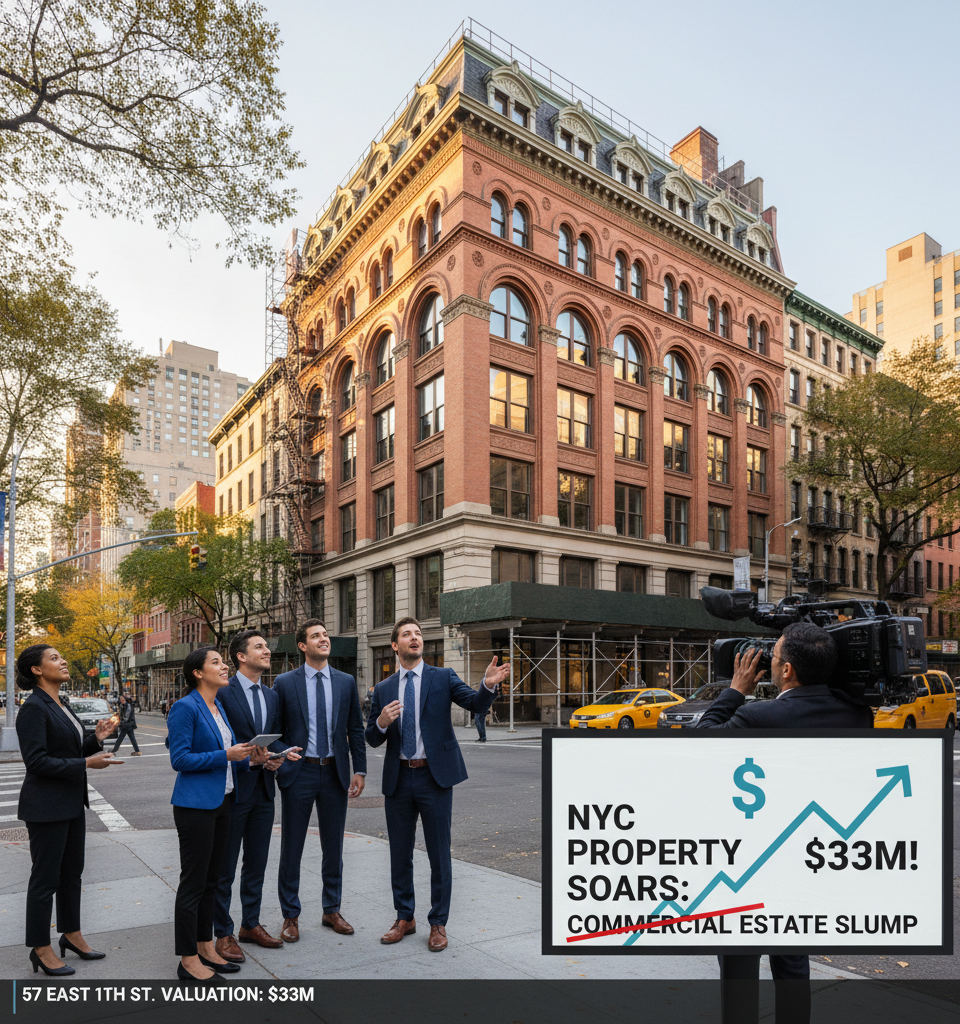
A former WeWork-occupied building at 57 East 11th Street in Manhattan's Greenwich Village has dramatically increased its appraised value, reaching $32.9 million. This represents an astonishing nearly 100% rise from its June 2023 valuation of $16.4 million, according to a Morningstar Credit alert issued recently. The 11-story property, previously owned by Winter Properties and now part of a commercial mortgage-backed securities (CMBS) loan, has defied prevailing trends in the struggling office sector, where many valuations have faced downward pressure due to high vacancy rates and evolving work patterns.
Context and Background
This valuation surge comes at a critical juncture for the commercial real estate market, particularly in urban centers like New York City. The remote work paradigm shift, accelerated by the pandemic, has left many office buildings underutilized, leading to widespread concerns about their long-term viability and financial performance. WeWork, once a dominant force in the co-working space, itself underwent a substantial restructuring, filing for Chapter 11 bankruptcy in November 2023. The property at 57 East 11th Street was fully occupied by WeWork for several years, symbolizing both the boom and subsequent challenges faced by the flexible office giant prior to its departure. The original loan secured against this property, part of a Larger CMBS pool, has been under scrutiny given its vacancy and the challenging market conditions.
Key Details and Financials
The most recent appraisal, placing the property at $32.9 million, represents a significant positive adjustment compared to its previous valuation. The property serves as collateral within the JP Morgan Chase Commercial Mortgage Securities Trust 2017-FL3 loan. While the building is currently vacant, this valuation suggests an underlying confidence in its future potential, possibly driven by factors such as its prime Greenwich Village location, potential for redevelopment, or a belief in the eventual recovery of the office market. The initial loan balance associated with the property was reported at $21.5 million, highlighting that the new appraisal now significantly exceeds this figure, offering a stronger buffer for bondholders if the property were to be sold.
Industry and Market Impact
This development is noteworthy because it contravenes the broader narrative of distress in the commercial office sector. While many Class B and C office properties face severe headwinds, this revaluation suggests that well-located assets, even if temporarily vacant, can retain or even enhance their value if they possess desirable attributes or future conversion potential. It might signal a bifurcation in the market, where prime locations and adaptable structures maintain strength despite widespread challenges. This could offer a glimmer of hope to investors and lenders concerned about the overall health of urban commercial real estate portfolios.
Expert Perspective
Real estate analysts suggest several reasons for such an outlier valuation. "A near doubling in appraisal value for a vacant property in this market is certainly unexpected, but not impossible," states Clara Jenkins, a senior real estate economist. "It could be attributed to a re-assessment of development potential, such as a residential conversion or a shift to life sciences, rather than simply its traditional office use. Additionally, the underlying land value in Greenwich Village is exceptionally high, which provides a strong support." Others point to a repricing of risk and a more optimistic outlook on certain asset types, despite overall market pessimism. The sale of comparable properties in the area could also have influenced the appraiser's updated assessment.
What's Next?
The significant increase in valuation will undoubtedly influence the strategic decisions concerning 57 East 11th Street. Owners or lenders may now be in a better position to pursue a sale, secure new tenants, or explore redevelopment options. The enhanced valuation also improves the credit profile for the CMBS loan tied to the property, potentially alleviating concerns for bondholders. The market will be closely watching to see if this property secures a new tenant or is repositioned, and whether its success can serve as a bellwether for other high-quality, strategically located assets in the evolving New York City real estate landscape. This positive reassessment could also encourage other property owners to re-evaluate their assets, seeking out hidden value that may not be apparent in current market sentiment.