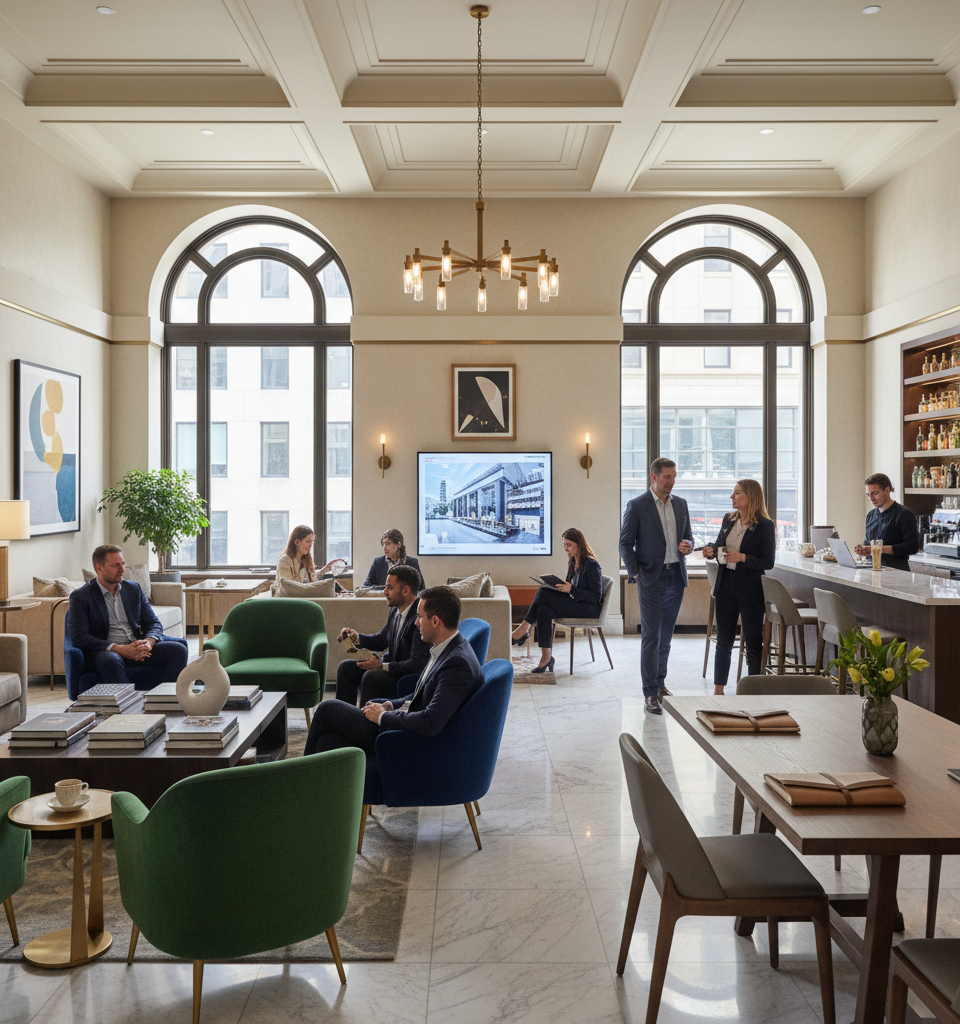
In a decisive move signaling a maturing strategy, WeWork is unveiling a refined design philosophy at its new floors within the prestigious 511 Fifth Avenue building. The flexible workspace provider recently secured approximately 37,000 square feet across four floors of the historic Beaux-Arts structure, nestled between East 42nd and East 43rd streets. This expansion, finalized earlier this year, represents a departure from the company's traditional, often bohemian, design ethos, opting instead for an aesthetic reminiscent of a high-end boutique hotel lobby, a clear bid to elevate its brand appeal and attract a broader, more established corporate membership.
Context and Background
This strategic shift comes at a critical juncture for WeWork, which has navigated a tumultuous few years marked by a dramatic valuation reset and subsequent restructuring efforts. Once synonymous with explosive growth and a distinct, youthful brand identity, the company is now focusing on sustainability and profitability. The decision to invest in a more polished, upscale design at a prime Midtown Manhattan location underscores a broader ambition to cater to larger enterprises and those seeking premium office solutions, moving beyond its initial strongholds of startups and freelancers. This evolution reflects the broader maturation of the coworking industry, which is increasingly segmenting to serve diverse business needs.
Key Details of the Transformation
The redesigned space at 511 Fifth Avenue emphasizes sophistication and functionality. Initial reports suggest the interiors will feature richer materials, thoughtfully curated furnishings, and an elevated level of finishings rarely seen in previous WeWork installations. Amenities are expected to align with this premium offering, potentially including enhanced private office suites, more formal meeting rooms, and refined communal areas designed for both collaboration and quiet contemplation.
While specific figures for the build-out budget have not been disclosed, observers anticipate a significant investment per square foot, aligning with the building's historic stature and prime location. The building itself, a landmark in New York City's commercial heart, offers unparalleled access to transportation hubs and prestigious corporate neighbors, further enhancing the appeal of this new WeWork outpost.
Industry and Market Impact
WeWork's move at 511 Fifth Avenue is poised to impact the competitive landscape of the flexible office market, particularly in Manhattan. By embracing a luxury-oriented design, WeWork directly challenges established executive suite providers and boutique coworking operators that have traditionally catered to the higher end of the market. This repositioning suggests a belief that profitability can be found in offering premium services and spaces, potentially at higher price points, rather than solely through volume. It also reflects a post-pandemic trend where companies, even large ones, are seeking greater flexibility without sacrificing quality or brand image in their office environments. The shift could exert pressure on competitors to either upgrade their offerings or define clearer niche markets.
Expert Perspective
"This is a shrewd move for WeWork," commented Sarah Chen, a senior analyst specializing in commercial real estate at Global Insights Group. "Post-COVID, many larger corporations are re-evaluating their long-term lease commitments and are interested in flexible solutions, but they demand a more refined aesthetic and professional environment than the 'ping-pong table and beanbag' stereotype. WeWork is tapping into that demand for flexible prestige, which could significantly expand its addressable market and improve its revenue per square foot." Another industry insider, John Davis, head of office leasing at Metro Realty Group, noted, "Placing this flagship in a Beaux-Arts gem like 511 Fifth Avenue immediately confers a level of gravitas. It tells the market WeWork is serious about its evolution and is competing at the very top tier."
What's Next for WeWork
The success of the 511 Fifth Avenue model will undoubtedly inform WeWork's future design and expansion strategies globally. If this upscale approach resonates with a new segment of corporate clients, the company could look to replicate this 'boutique hotel' style in other prime locations worldwide, further cementing its transformation from a disruptive startup to a more mature, diversified commercial real estate entity. This iteration represents a crucial stress test for WeWork's brand adaptability and its ability to capture a greater share of the evolving flexible workspace demand.
Future announcements are likely to detail specific membership tiers and pricing strategies tailored to this premium offering, alongside potential partnerships aimed at enhancing the concierge-like services synonymous with high-end hospitality. The industry will be eagerly watching to see if this sophisticated pivot yields sustained financial performance and a renewed market presence.