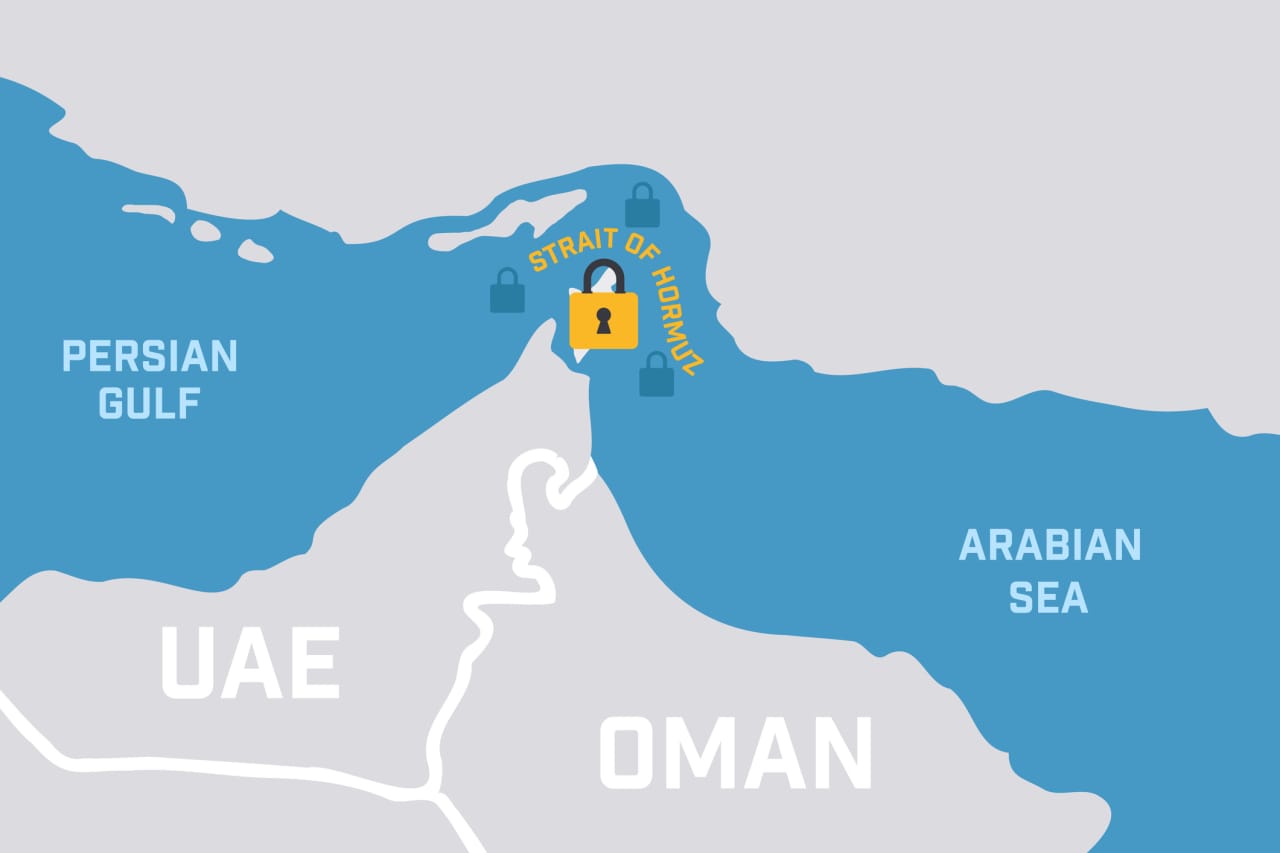
As of May 19, 2026, the global oil market anticipates the eventual full reopening of the Strait of Hormuz, a navigational choke point that, when fully operational, will undeniably reshape crude flows and pricing. While the timeline for this crucial development remains undefined, expert consensus underscores that the true determinant of market stability and supply sufficiency will hinge squarely on the comprehensive rebuilding of energy infrastructure and the resumption of full-scale production throughout the Middle East. The sheer volume of oil transiting this narrow waterway makes its unimpeded status a pillar of international energy security.
The Strategic Importance of the Strait of Hormuz
Historically, the Strait of Hormuz has served as the world's most vital oil transit chokepoint, with an estimated one-fifth of global oil consumption, or roughly 21 million barrels per day, passing through its waters daily. Its strategic significance cannot be overstated; it connects the oil-rich producers of the Persian Gulf – including Saudi Arabia, Iran, Iraq, Kuwait, Qatar, and the UAE – to international markets. Any disruption, partial or full, sends immediate ripples through global commodity exchanges, impacting everything from Brent and WTI crude futures to broader geopolitical stability. The current state of flux, wherein a full reopening is still pending, keeps market participants on tenterhooks, constantly assessing potential supply shocks and their corresponding inflationary pressures.
Rebuilding Middle East Energy Infrastructure: The Crucial Endeavor
The focus on rebuilding infrastructure transcends mere logistics; it encompasses a complex web of pipelines, storage facilities, pumping stations, export terminals, and refining capabilities. Years of potential underinvestment or damage could mean that even with a fully open strait, the ability to swiftly ramp up production and bring oil to market might be severely constrained. Such constraints could manifest as bottlenecks in crude transportation, limited storage capacity at export hubs, or even operational challenges at oil fields themselves that require significant capital expenditure and time to rectify. The speed and effectiveness of these rebuilding efforts will thus dictate the true economic impact of the strait's full restoration.
Impact on Global Oil Markets and Supply Chains
The implications for global oil markets are profound. A robust and rapid restoration of Middle Eastern production, coupled with unhindered passage through Hormuz, would likely lead to a significant increase in global supply, potentially driving down crude prices. Conversely, a sluggish recovery in infrastructure and production would maintain an environment of tight supply, supporting higher prices and increasing volatility. Beyond price, the stability of supply chains is also at stake. Major importing nations, particularly in Asia, rely heavily on oil traversing Hormuz. Any persistent limitations in the region’s export capacity could force these nations to seek alternative, potentially more expensive or less reliable, sources, thereby reshaping established trade routes and geopolitical alliances within the energy sector.
The Interplay of Geopolitics and Market Dynamics
Moreover, the process of infrastructure rebuilding is not solely an engineering challenge; it is deeply intertwined with regional geopolitics. Stability, political will, and international cooperation will be paramount in facilitating the necessary investments and operational capabilities. Funding for these extensive projects, security guarantees for workers and assets, and coordination among various national oil companies and international partners will all play critical roles. The global oil market will be watching closely not just for announcements regarding the strait but for concrete signs of progress in these foundational rebuilding efforts across the Middle East, understanding that the economic health of many nations is directly tied to the region's ability to efficiently bring oil to market.
What Lies Ahead: Monitoring Reconstruction Efforts
Looking ahead, market participants and policymakers will closely monitor several key indicators. These include announcements from major Middle Eastern oil producers regarding their production targets and capital expenditure plans, updates on the operational status of key export terminals and pipelines, and any international initiatives aimed at supporting large-scale infrastructure projects in the region. The interplay between the physical reopening of the Strait of Hormuz and the painstaking, multi-year process of energy infrastructure reconstruction will ultimately determine the future trajectory of global oil supplies and prices. The successful navigation of these challenges will be critical for ensuring global energy security in the coming years.