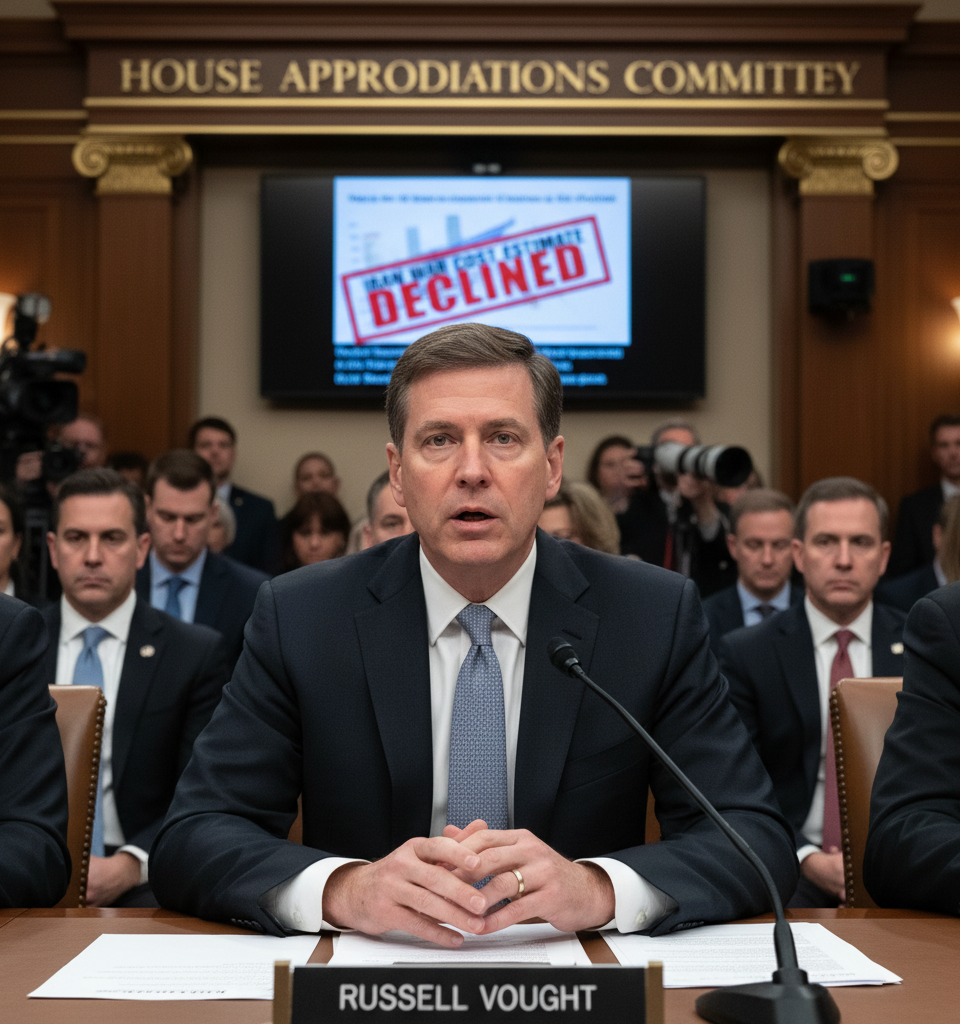
WASHINGTON D.C. — Office of Management and Budget (OMB) Director Russell Vought faced intense scrutiny from the House Budget Committee on Wednesday, ultimately declining to offer any cost projections for a hypothetical military conflict with Iran. His testimony underscored a significant lack of clarity regarding the potential financial implications of escalating tensions in the Middle East, leaving legislators and the public without clear budgetary foresight.
The exchange took place during a scheduled hearing on the administration's fiscal policies, where lawmakers pressed Vought on various spending priorities and contingency plans. However, the Director's evasiveness on the Iran question immediately became the focal point of the proceedings. This omission by a key White House budget official raises questions about the administration's internal calculations, or lack thereof, pertaining to major geopolitical risks with substantial financial ramifications for the United States.
Budgetary Opacity Amid Geopolitical Tensions
Vought's refusal to quantify the potential financial burden of a conflict with Iran is particularly striking given the historical precedent of significant, unforeseen expenditures associated with past military interventions. Wars in Afghanistan and Iraq, for instance, incurred costs far exceeding initial estimates, profoundly impacting national debt and domestic spending priorities for years. The absence of even a preliminary range of estimates from the OMB Director suggests either an unpreparedness for such exigencies or a deliberate strategy to avoid publicly addressing highly speculative but critical financial scenarios.
This budgetary opacity complicates congressional oversight, as the House Budget Committee is responsible for setting overall spending levels and identifying potential fiscal risks. Without even broad estimates from the administration's chief budget officer, the committee struggles to perform its mandated duties effectively, particularly concerning national security expenditures that could rapidly escalate in a conflict scenario. The refusal creates a vacuum of information that can breed speculation and distrust among legislative bodies and the public.
Broader Economic and Market Implications
The potential for a conflict involving a major oil-producing nation like Iran carries substantial implications for global markets, particularly energy prices and international trade. Any significant military engagement in the region would almost certainly trigger a spike in crude oil prices, impacting everything from consumer goods to transportation costs globally. This ripple effect could exacerbate inflationary pressures and potentially dampen economic growth, both domestically and internationally. Businesses, faced with such uncertainties, may defer investment decisions, further slowing economic momentum.
From a domestic perspective, a large-scale military operation would necessitate substantial increases in defense spending, potentially requiring reallocations from other federal programs or increased borrowing. Such shifts could impact social services, infrastructure projects, and other critical areas of the federal budget. The stock market often reacts negatively to heightened geopolitical tensions, especially when the financial costs remain undefined, as investor uncertainty can lead to market volatility. The lack of an estimated price tag for a potential Iran conflict could contribute to this market anxiety.
What Lies Ahead for Budget Oversight
Looking ahead, Director Vought's testimony is likely to intensify calls from Congress for greater transparency regarding the potential financial costs of military actions and geopolitical crises. Lawmakers are expected to continue pressing the administration for detailed assessments and contingency plans, arguing that responsible fiscal management requires a clear understanding of potential liabilities. The House Budget Committee may issue formal requests for studies or analyses to fill the information gap left by Vought's testimony.
Furthermore, this incident could prompt broader discussions within Congress about mechanisms for funding potential conflicts and the necessity of robust cost-benefit analyses before embarking on military engagements. The long-term implications for the nation's fiscal health, already burdened with significant debt, make accurate and transparent cost estimations crucial. The political debate surrounding defense spending and international relations will undoubtedly be shaped by this ongoing struggle for budgetary clarity, with the OMB under increased pressure to provide more comprehensive financial foresight in future proceedings.