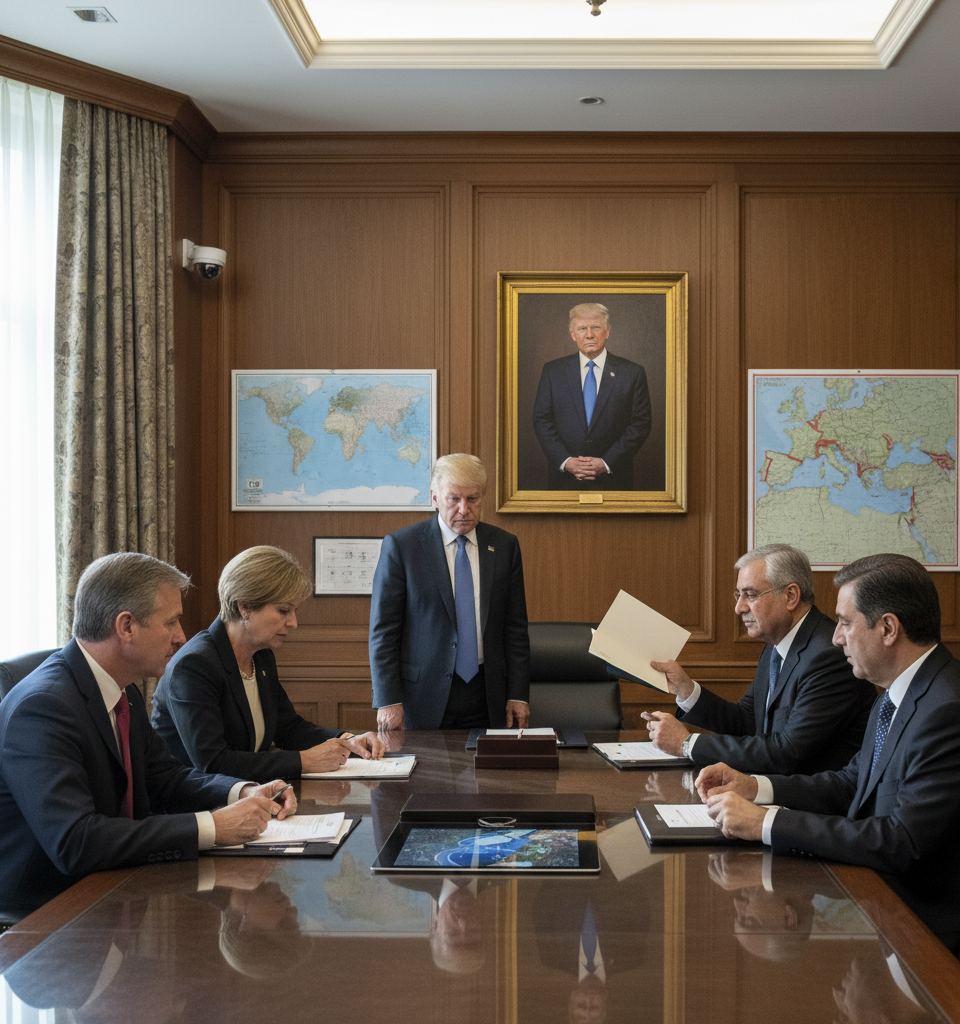
WASHINGTON D.C. – In a significant disclosure, the White House actively participated in shaping a public plea issued by Pakistan's Prime Minister on X (formerly Twitter), imploring then-President Donald Trump to extend a Tuesday evening deadline imposed on Iran. This unprecedented level of collaboration on a public social media post underscores the complex and often covert diplomatic channels employed by global powers to navigate international crises and avert potential escalation, as U.S.-Iran tensions reached a fever pitch.
Context of Escalating Tensions
The incident unfolded against a backdrop of severe geopolitical friction between the United States and Iran. The Trump administration had adopted a "maximum pressure" campaign against Tehran, characterized by stringent economic sanctions and ultimatums regarding its nuclear program and regional activities. The specific deadline in question, though not explicitly detailed in the original report, likely pertained to compliance demands or a period before further punitive measures would be enacted. Pakistan, a long-standing U.S. ally with significant regional influence and a historical relationship with Iran, found itself in a delicate mediating position, keen on de-escalating a situation that threatened broader regional stability.
Behind-the-Scenes Diplomacy Exposed
Sources close to the matter, speaking on condition of anonymity due to the sensitive nature of the diplomatic exchanges, confirmed that White House officials were in direct communication with Pakistani counterparts regarding the content and timing of the social media message. The aim was to craft a message that was both impactful enough to capture President Trump's attention and aligned with diplomatic strategies to encourage a de-escalation of hostilities without appearing antagonistic. This behind-the-scenes engineering of a public statement reveals the advanced evolution of digital diplomacy and the strategic use of platforms like X as extensions of traditional diplomatic channels.
Implications for Geopolitical Strategy
This revelation carries significant implications for understanding international relations and crisis management. It suggests that public pronouncements, even those seemingly organic, can be the result of careful negotiation and strategic input from multiple state actors. Such coordinated messaging can serve various purposes: to publicly signal compliance, to subtly influence another leader's decision-making, or to gauge public and international reactions without fully committing to a formal bilateral statement. The use of social media in such a high-stakes scenario highlights its undeniable role as a tool for modern diplomacy, blurring the lines between public relations and foreign policy.
Expert Analysis on Digital Diplomacy
Analysts specializing in international relations and digital diplomacy have weighed in on this development. Dr. Evelyn Reed, a professor of international security at Georgetown University, notes, "This is a textbook example of 'covert overtures' in the digital age. By involving the White House in the drafting of Pakistan's message, both parties could project a unified desire for de-escalation while allowing President Trump an off-ramp without a direct public concession." She added, "It speaks volumes about the pragmatic nature of foreign policy, where the appearance of independent action can sometimes mask highly coordinated efforts." The incident underscores the growing complexity for the public in discerning genuine independent international appeals from strategically orchestrated communications.
Financial and Market Repercussions Averted
The potential for a military confrontation between the U.S. and Iran had significant potential to disrupt global oil markets, trigger volatile stock market reactions, and deter foreign investment in the Middle East. News of any de-escalation, even through unconventional means, was often met with relief by financial markets. Had the deadline passed without any mitigating action or extension, experts projected a likely spike in Brent crude prices by 10-15%, potentially reaching over $75 a barrel, alongside a downturn in global equity indices. The subtle diplomatic outreach, therefore, may have indirectly contributed to averting a severe economic shock.
The Future of Covert Digital Engagements
Looking ahead, this episode is likely to inspire further examination into the ethics and transparency of digital diplomacy. States may increasingly leverage social media for nuanced signaling and collaborative messaging, raising questions about accountability and the potential for manipulation. The precedent set by the White House's involvement in Pakistan's tweet suggests a future where covert diplomatic engagements become even more integrated into public digital platforms. Future research will undoubtedly focus on the long-term impact on global trust and the evolving definition of sovereign communication in an hyper-connected world.