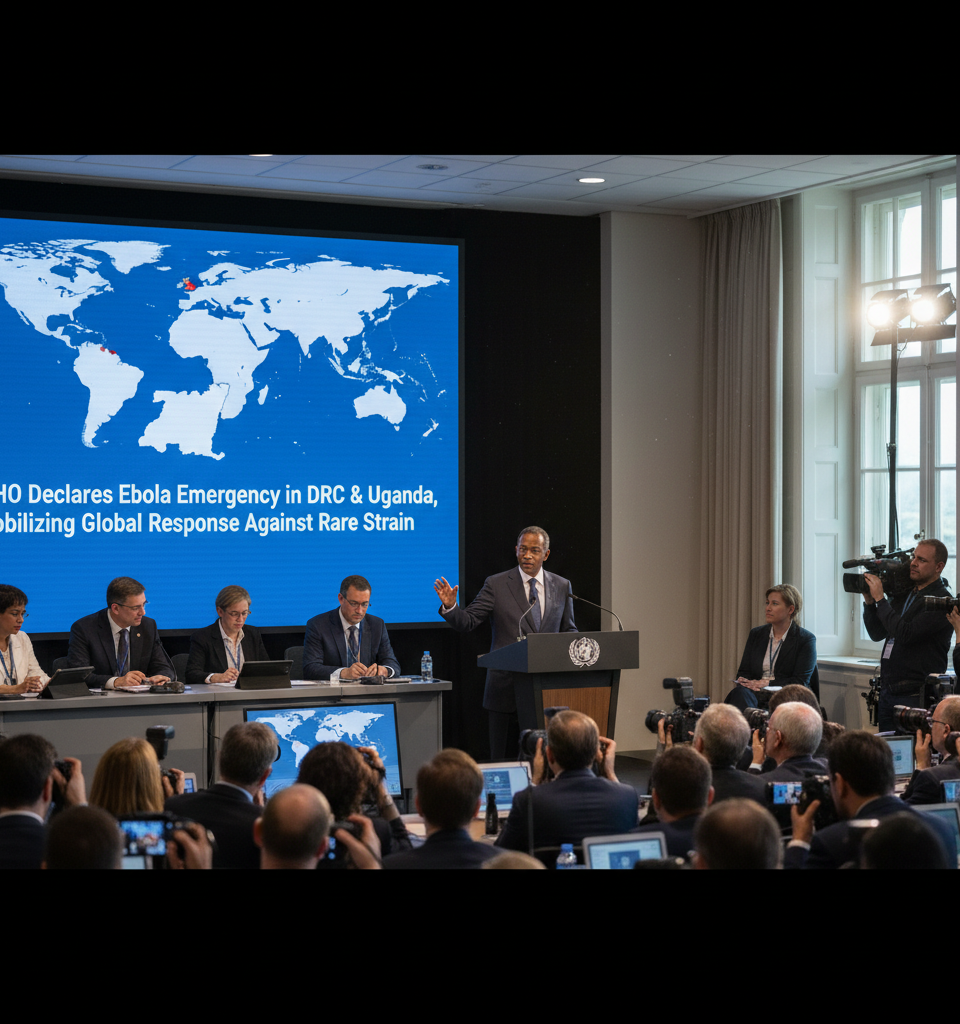
The World Health Organization (WHO) has elevated the Ebola outbreak in the Democratic Republic of Congo (DRC) and neighboring Uganda to a Public Health Emergency of International Concern (PHEIC), signifying a severe, unusual, or unexpected public health risk requiring coordinated international action. The declaration, made on July 17, 2019, follows an emergency committee meeting and an appeal from the DRC government for enhanced support, aiming to galvanize a more robust global response to contain the deadly virus.
Context and Background
This marks the fifth time the WHO has declared a PHEIC since the framework was established in 2005, underscoring the gravity of the situation. Previous declarations include the H1N1 influenza pandemic in 2009, the polio resurgence in 2014, the West African Ebola epidemic in 2014, and the Zika virus outbreak in 2016. The current outbreak, centered in North Kivu province of the DRC and now with confirmed cases in Uganda, has proven exceptionally challenging to control due to ongoing conflict, population displacement, and community mistrust. It is the second-largest Ebola outbreak on record, with over 2,500 cases and 1,600 deaths reported since its onset in August 2018. A particular concern is the Sudan Ebolavirus species, a rarer strain for which the existing rVSV-ZEBOV vaccine, highly effective against the Zaire strain, offers no protection.
Key Details and Challenges
The declaration came after a confirmed case in Goma, a city of over two million people and a major transit hub near the Rwandan border, significantly escalating fears of wider regional spread. Dr. Tedros Adhanom Ghebreyesus, WHO Director-General, emphasized that while the PHEIC is not a political tool, it is a call to action. He stressed that the declaration should not be used to justify trade or travel restrictions, which have historically proven ineffective and counterproductive, often hindering relief efforts by isolating affected regions. Logistical challenges have been immense; health workers have faced 198 attacks since the start of the outbreak, resulting in seven deaths and 58 injuries, severely disrupting vaccination and treatment efforts. The outbreak response has consumed an estimated $150 million to date, with significant funding gaps persisting.
Industry and Market Impact
While direct economic impacts on global markets are typically limited for localized outbreaks, the PHEIC declaration often triggers increased funding commitments from donor nations and international organizations. Pharmaceutical and biotech companies involved in vaccine and antiviral development may see renewed urgency and investment, particularly for the Sudan strain. The immediate impact is primarily felt in the affected regions, dampening local commerce, tourism, and cross-border trade due to heightened health concerns and potential, albeit officially discouraged, border restrictions. Travel advisories from various governments, even without WHO sanction, can curtail business and leisure travel to the broader region, affecting airlines and hospitality sectors.
Expert Perspective
Public health experts largely welcomed the PHEIC declaration, viewing it as a necessary step to draw global attention and resources. Dr. Jeremy Farrar, Director of the Wellcome Trust, articulated the sentiment, stating, "This declaration sends a clear message: it's time for the world to step up." He highlighted the need for improved security for health workers, heightened community engagement, and accelerated research into novel treatments and vaccines specifically for the Sudan strain. He also underscored the importance of strengthening health systems in neighboring countries, such as Uganda, Rwanda, and South Sudan, to prevent further cross-border transmission and ensure readiness for potential outbreaks. Analysts at risk assessment firms note that the political instability in eastern DRC exacerbates the public health crisis, creating a complex humanitarian emergency.
What's Next
The PHEIC declaration is expected to unlock additional financial resources and personnel from international donors, and facilitate greater deployment of experimental therapies and vaccines under compassionate use protocols. The WHO will now issue temporary recommendations to all member states aimed at containing the outbreak. Efforts will intensify to develop and test a vaccine against the Sudan Ebola strain, a major scientific and logistical undertaking. Crucially, the focus will remain on community engagement and building trust to overcome resistance to public health interventions, alongside ensuring the safety of healthcare workers. The long-term objective is to extinguish the current outbreak while strengthening regional health infrastructures to avert future crises, emphasizing that sustained commitment, rather than sporadic intervention, is paramount for success.