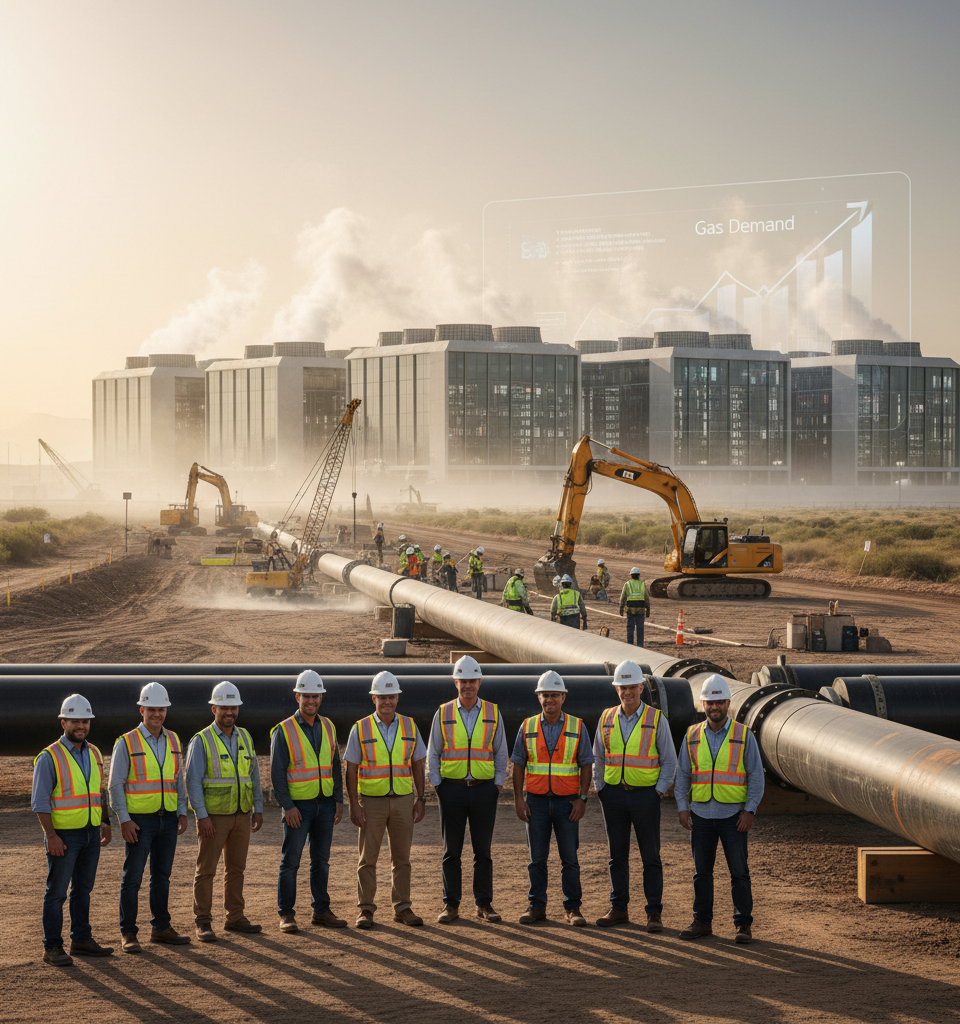
TULSA, OK – [Date] – The U.S. natural gas pipeline sector, long viewed as a stable but unglamorous utility, is witnessing a significant resurgence, largely driven by the insatiable energy demands of the burgeoning data center industry and expanding electricity needs. At the forefront of this unexpected boom is Williams Companies (NYSE: WMB), which analysts and industry observers are increasingly citing as a prime example of how traditional energy infrastructure is adapting to and benefiting from the digital economy. This revitalized focus on pipeline expansion and modernization marks a pivotal shift in the energy landscape, pushing gas infrastructure back into the spotlight as a critical enabler of technological advancement.
The Catalytic Role of Data Centers
For years, natural gas demand projections remained relatively flat, and pipeline development slowed significantly. However, the exponential growth of artificial intelligence (AI), cloud computing, and cryptocurrency mining has precipitated an unprecedented surge in data center construction across the United States. These facilities are colossal energy consumers, requiring reliable and substantial power generation, much of which is currently met by natural gas-fired power plants. Industry experts estimate that data centers could account for up to 9% of U.S. electricity consumption by 2030, a dramatic increase from approximately 2.5% in 2022. This burgeoning demand creates a direct, urgent need for enhanced natural gas transportation capacity.
Williams: A "Poster Child" for Growth
Williams, one of the nation's largest midstream energy companies, is strategically positioned to capitalize on these new market dynamics. The company operates approximately 33,000 miles of interstate pipelines, including the critical Transco pipeline, which delivers over half of the natural gas consumed on the East Coast. Recent financial results reflect this tailwind; Williams reported a net income of $1.15 billion for fiscal year 2023, up from $806 million in 2022, underscoring the improved profitability driven by increased throughput and pipeline expansion projects. The company has publicly highlighted its commitment to expanding its natural gas infrastructure to meet future power generation needs, particularly in regions experiencing heavy data center development.
Industry-Wide Impact and Investment
The impact of this data center-driven demand extends beyond Williams. Other pipeline operators, including Kinder Morgan and Energy Transfer, are also reassessing their capital expenditure plans, with a renewed emphasis on gas pipeline debottlenecking and expansion. This shift represents a significant injection of investment into an sector that had seen declining growth prospects. According to the Energy Information Administration (EIA), U.S. natural gas consumption is projected to rise steadily over the next decade, with a substantial portion attributed to the power sector. The development of new liquefaction terminals for LNG exports also contributes to this demand, but the domestic consumption for electricity remains a primary driver for pipeline capacity.
Expert Insights into the Transformation
Energy analysts are largely bullish on the future of natural gas pipelines, especially those with strategic footprints in high-growth demand regions. "What we're seeing is a fundamental re-rating of the midstream sector's growth potential," commented Sarah Jenkins, a senior energy analyst at Veritas Capital. "The narrative has shifted from 'peak gas demand' to 'essential infrastructure for AI.' Companies like Williams, with their vast interconnected networks, are perfectly positioned to benefit from this, becoming critical enablers for the digital economy." She further noted that regulatory hurdles for new pipeline construction remain, but the compelling economic and strategic arguments for supporting national energy security and technological advancement are beginning to sway policymakers.
Future Outlook and Development Pipeline
Looking ahead, Williams has already announced several expansion projects targeting regions with significant data center clusters, particularly in the Southeast and Mid-Atlantic. These projects include compressor station upgrades and looping initiatives designed to increase flow capacity on existing pipelines rather than constructing entirely new greenfield routes, which face greater environmental and regulatory challenges. The company anticipates investing approximately $1.5 billion in growth capital expenditures in 2024, with a significant portion allocated to these natural gas transmission projects. The strategic imperative is to ensure reliable and efficient delivery of natural gas to power generation facilities feeding these energy-intensive data centers, solidifying the pipeline's role as a linchpin in the nation's energy future.
Challenges and Regulatory Environment
While the demand picture is bright, pipeline operators still face considerable challenges. Environmental regulations, permitting delays, and community opposition continue to pose hurdles for new construction. However, the increasing recognition of natural gas's role in grid stability, particularly as a dispatchable power source complementing intermittent renewables, is beginning to alter the regulatory discourse. The industry is also exploring carbon capture and storage (CCS) technologies and hydrogen blending as long-term strategies to decarbonize natural gas infrastructure, potentially enhancing its social license to operate in a carbon-constrained future. The coming years will reveal whether this renewed pipeline momentum can navigate these complexities effectively.
Financial Highlights (FY2023)
- Net Income: $1.15 billion
- Growth Capital Expenditures (2024 Est.): ~$1.5 billion
- Pipeline Mileage (Williams): ~33,000 miles
- Transco Capacity (Approx.): Delivers over 50% of East Coast gas demand