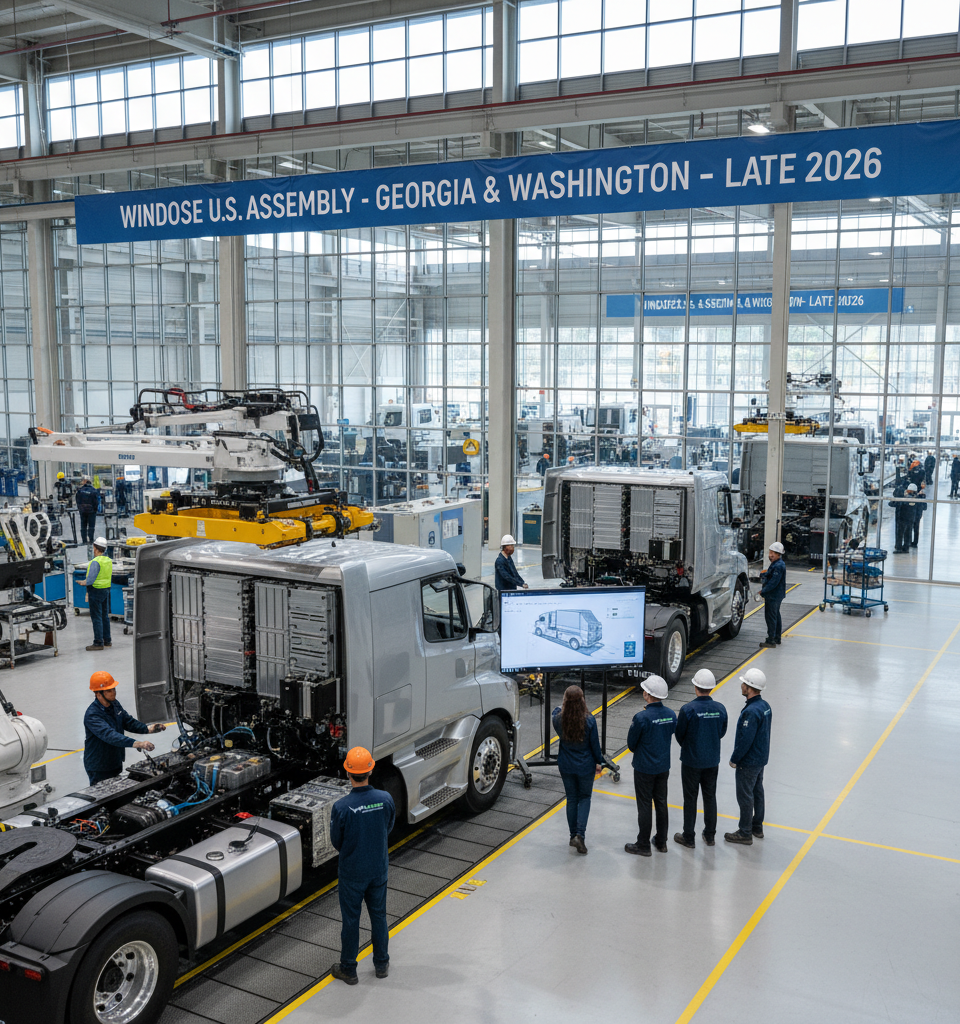
Windrose is set to initiate the assembly of its R700 Class 8 battery-electric tractor at two new sites located in Georgia and Washington state by the conclusion of 2026. This move signals a significant acceleration in the heavy-duty electric vehicle market, as the company plans to bring its advanced electric truck technology closer to U.S. customers.
Context and Background
The push for electrification in the commercial trucking sector has gained substantial momentum in recent years, driven by ambitious environmental regulations and a growing corporate commitment to sustainability. Class 8 trucks, which represent the heaviest category of commercial vehicles, are particularly challenging to electrify due to their demanding power requirements and extensive range needs. Windrose's commitment to U.S. assembly plants highlights a strategic effort to overcome logistical hurdles and scale production in a key market. The establishment of domestic manufacturing capabilities is often seen as a critical component for companies aiming to capture a significant share of the evolving electric commercial vehicle landscape, fostering economic growth and job creation in the regions involved.
Key Details
While specific details regarding the exact locations within Georgia and Washington state have not been disclosed, the announcement confirms the company's intention to begin assembly operations for its R700 model. The R700 Class 8 tractor is designed to meet the rigorous demands of long-haul transportation, offering a battery-electric solution that aims to reduce emissions and operating costs for fleet operators. The decision to establish dual assembly points suggests a strategy to efficiently serve different geographical regions within the U.S., potentially streamlining distribution and service networks. The end-of-2026 timeline indicates that extensive planning, facility development, and hiring processes are currently underway or are soon to commence.
Industry and Market Impact
This development is poised to have a notable impact on the burgeoning U.S. electric truck market. The entry of major players like Windrose with localized assembly capabilities intensifies competition, potentially accelerating technological advancements and driving down costs for electric heavy-duty vehicles. It also underscores a broader industry trend of supply chain localization, reducing reliance on overseas manufacturing and mitigating risks associated with global logistics. For freight and logistics companies, the increased availability of domestically assembled battery-electric tractors could facilitate easier adoption, aiding in the transition away from traditional diesel-powered fleets and helping meet increasingly stringent emissions targets.
What's Next
Looking ahead, the successful establishment and operationalization of these assembly plants by late 2026 will be a critical milestone for Windrose. The company will likely focus on ramping up production, securing supply chains for components, and developing robust distribution and servicing networks across the U.S. We can anticipate further announcements regarding hiring initiatives, partnerships with local suppliers, and detailed timelines for vehicle deliveries from these new facilities. The market will be closely watching for initial production figures and the performance of the R700 in real-world commercial applications, as Windrose aims to solidify its position in the competitive electric Class 8 truck segment.