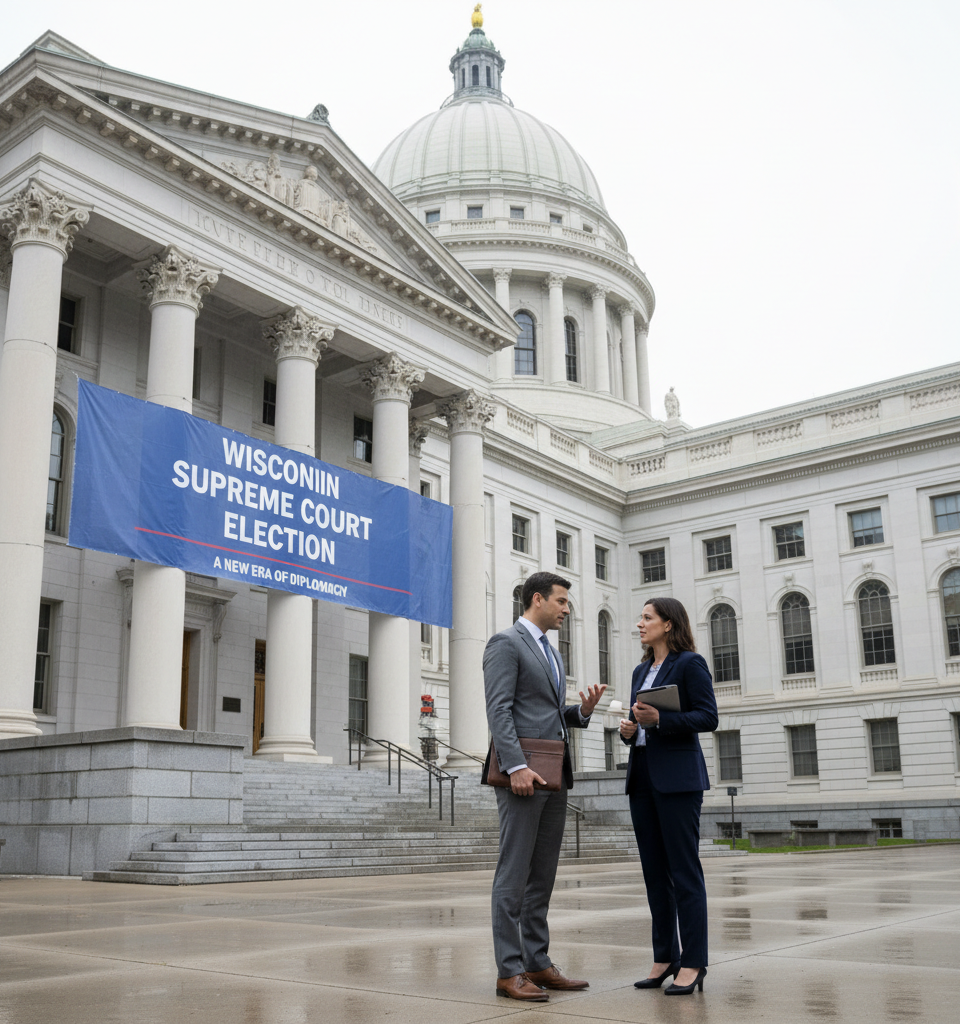
MADISON, WI – April 2, 2024 – The Wisconsin Supreme Court election, typically a battleground attracting national attention and unprecedented financial outlays, concluded on Tuesday, April 2, 2024, with a notable absence of the high-octane drama and exorbitant spending that have characterized past contests. This subdued atmosphere appears largely linked to the non-involvement of influential, high-net-worth individuals such as Elon Musk, whose past contributions have significantly amplified the political volume and financial stakes in state judicial races.
Historical Context: A Shift from High-Stakes Spending
Historically, Wisconsin Supreme Court elections have become bellwethers for national political trends, often drawing millions in out-of-state money and becoming proxies for partisan struggles over critical issues like abortion rights, electoral maps, and corporate regulations. The 2023 spring election, for instance, saw an unprecedented $50 million poured into the race, making it the most expensive judicial election in U.S. history. This year's pivot to a more muted affair suggests a potential recalibration of donor priorities or a strategic withdrawal by national figures who previously sought to influence the court's ideological balance.
Key Details: A Focus on Grassroots Engagement
In the absence of a 'Musk effect' or similar high-profile donor interventions, candidates in the current cycle have reportedly focused more on traditional grassroots campaigning, local endorsements, and direct voter outreach. Campaign finance reports, while still pending final aggregation, are anticipated to show a significant decrease in large, individual contributions, particularly from outside Wisconsin. Preliminary data suggests that the total spending for this cycle may not exceed $10 million, a dramatic drop from previous years. This shift has arguably allowed for greater emphasis on judicial temperament, legal experience, and an understanding of state-specific jurisprudence rather than national political narratives.
Industry and Political Landscape Impact
This altered funding landscape could have profound implications for future judicial elections, both in Wisconsin and nationwide. A reduction in external financial influence might empower local political organizations and state bar associations to play a more prominent role in shaping public discourse around judicial candidates. For industries heavily impacted by state legal rulings, such as environmental, energy, or technology sectors, the shift could mean a more unpredictable or less ideologically entrenched judiciary, potentially requiring new strategies for lobbying and advocacy, moving away from direct electoral intervention.
Expert Perspective: The De-Nationalization of State Races
Dr. Eleanor Vance, a political science professor at the University of Wisconsin-Madison, commented on the development: "The 'quiet' nature of this election is less about a lack of interest and more about a de-nationalization of a state-level race. Without figures like Musk injecting vast sums, the focus inherently returns to local issues and candidates' direct appeals to Wisconsin voters. It might be a healthier sign for judicial independence, but it also means less media spectacle and potentially fewer voters driven by national headlines." She added, "The previous cycles were aberrations, inflated by specific national political exigencies. This year might reflect a return to a historical norm, albeit one that still involves significant state-level political maneuvering."
What's Next: Implications for Judicial Independence and Future Elections
The long-term implications of this quiet election are still developing. Should this trend continue, it could foster a Wisconsin Supreme Court less beholden to out-of-state interests and more reflective of local political dynamics. It might also encourage a renewed focus on judicial qualifications over partisan alignment. However, there's also the risk that a less visible race could lead to lower voter turnout, potentially diminishing the democratic mandate of the elected justices. Future electoral cycles will be crucial in determining whether this year's subdued election was an anomaly or the beginning of a new chapter for Wisconsin's pivotal high court elections.