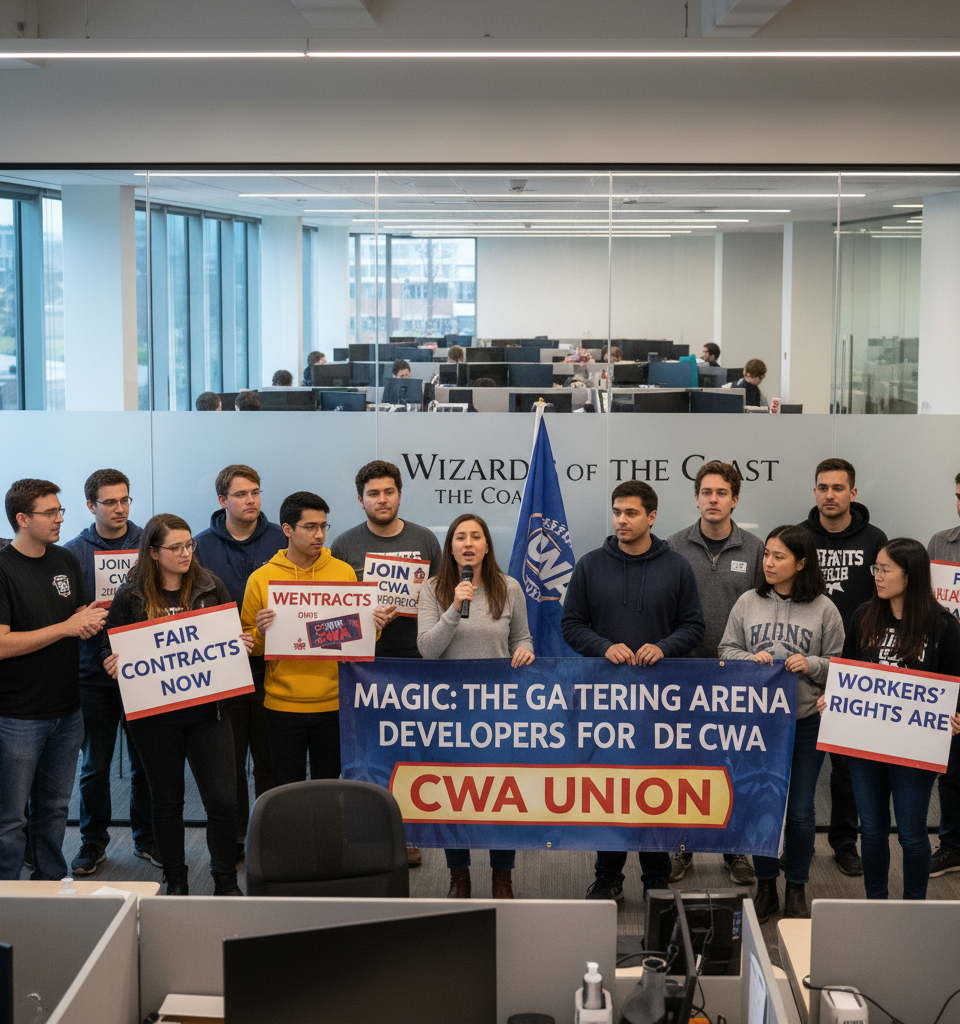
Developers of Magic: The Gathering Arena at Wizards of the Coast, a prominent subsidiary of toy and game giant Hasbro, have announced their intent to form a union with the Communications Workers of America (CWA). This move, publicly declared by the CWA, reveals that the newly formed chapter, named United Wizards of the Coast (UWOTC-CWA), has secured a "supermajority" of support among eligible workers. The CWA has formally filed for an election with the National Labor Relations Board (NLRB), a process they have committed to withdrawing if Hasbro agrees to voluntarily recognize the union by the impending deadline of May 1st.
Context and Historic Significance
This unionization drive comes amid a broader national trend of increasing labor organizing efforts across various industries, including technology and video games. The video game sector, in particular, has a history of intense work periods often referred to as "crunch," characterized by extended hours and high pressure, leading to growing calls for better worker protections and representation. Wizards of the Coast, known globally for its iconic tabletop games like Magic: The Gathering and Dungeons & Dragons, as well as their significant digital adaptations, represents a high-profile target for unionization. Its parent company, Hasbro, reported net revenues of $5.0 billion in 2023, showcasing the immense financial scale of the operations the developers contribute to.
Key Details and Developer Motivations
The driving force behind this initiative appears to be a desire among developers for improved working conditions, greater transparency in decision-making, and a more equitable share in the company's success. While specific demands have not been fully enumerated, typical unionization goals in the tech sector often include better pay, benefits, job security, and a clearer voice in company policy. The CWA's claim of a "supermajority" indicates strong internal consensus among the Arena development team, suggesting deep-seated issues that workers believe can only be addressed through collective bargaining. The choice of the CWA, a union with a well-established presence in telecommunications and media, underscores a strategic alignment with an organization experienced in navigating complex corporate labor relations.
Industry and Market Implications Should the
UWOTC-CWA successfully secure recognition, it would send a powerful signal across the highly profitable and often non-unionized video game industry. This could potentially spark similar efforts at other major studios, particularly those owned by large conglomerates. For Hasbro, a company consistently navigating shifts in consumer entertainment, a unionized workforce at a key digital product like Magic: The Gathering Arena could introduce new dynamics to its operational costs and employee relations strategies. The Magic: The Gathering franchise alone generates hundreds of millions in revenue annually, making its digital counterpart a critical asset. Companies like Activision Blizzard and Riot Games have also seen varying degrees of union activity, indicating a growing momentum for labor organization within the gaming sphere.
Expert Perspectives on Future Trends
Labor economists and industry analysts view this development as part of a larger trend of employees seeking more stability and influence in workplaces that have historically favored management. "The tech and gaming industries, once seen as bastions of progressive work culture, are now facing the realities of large-scale corporate operations," notes Dr. Eleanor Vance, a labor relations expert. "Workers are realizing that even competitive salaries don't always equate to job security or fair treatment. The CWA's success in organizing various tech branches demonstrates a sophisticated understanding of this evolving landscape." The Magic: The Gathering Arena effort could serve as a blueprint for organizing highly specialized digital entertainment development teams, potentially influencing how major publishers approach employee engagement and compensation.
What's Next: Recognition or NLRB Election
The immediate future hinges on Hasbro's response to the May 1st deadline for voluntary recognition. If Hasbro chooses to recognize the UWOTC-CWA, it would bypass a potentially lengthy and contentious election process, signaling a proactive approach to labor relations. However, if recognition is withheld, the process will proceed to a formal NLRB election, where eligible employees would cast secret ballots to decide on union representation. This path can often be more protracted and may involve campaigning from both the union and company management. The outcome will not only determine the fate of the Magic: The Gathering Arena developers but also serve as a crucial indicator of the evolving power dynamics between labor and management within the broader digital entertainment industry.