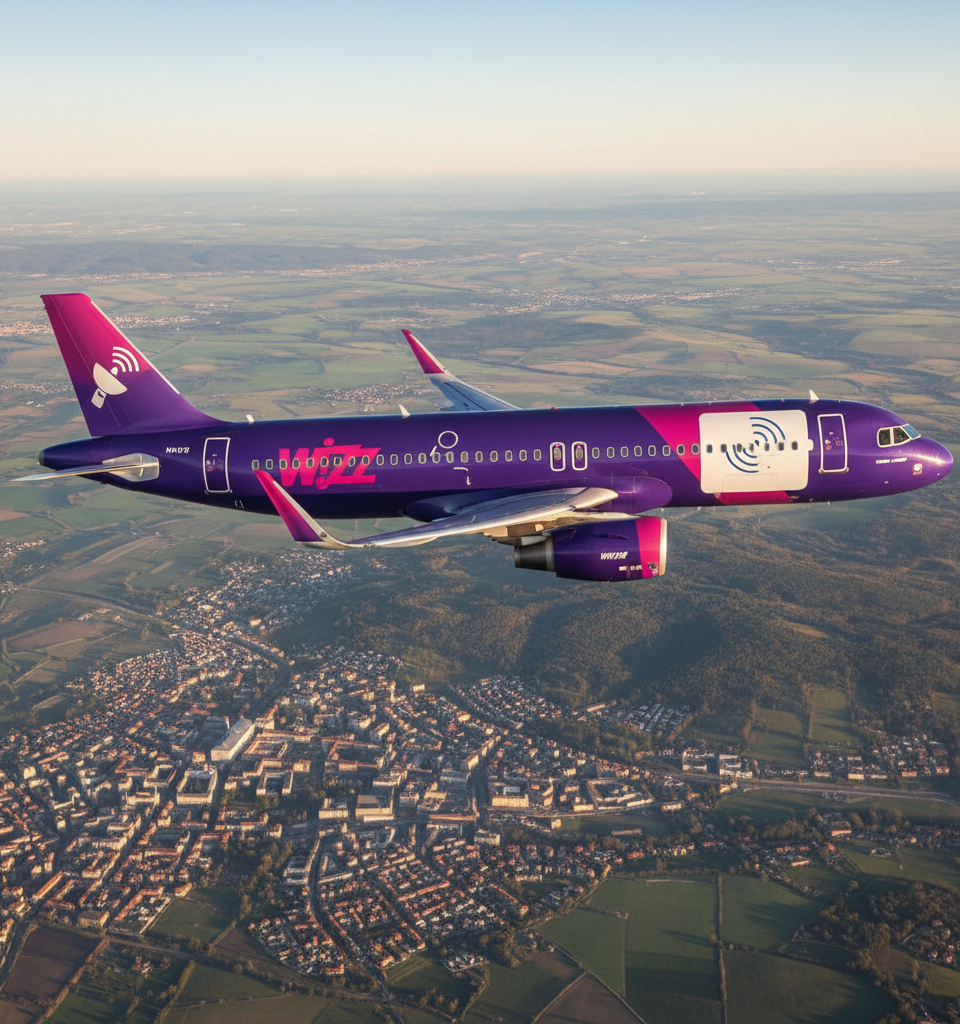
In a move that could redefine in-flight connectivity for the budget travel sector, Hungarian ultra-low-cost carrier Wizz Air announced Monday its intention to equip its entire fleet with Elon Musk’s Starlink satellite internet service from 2027. This initiative positions Wizz Air as the first European budget airline to commit to widespread Starlink integration, challenging conventional wisdom that high-quality, expedient Wi-Fi is economically unfeasible for low-cost operators.
A Historical Disconnect for Budget Carriers
Historically, the intersection of cheap flights and reliable, fast in-flight Wi-Fi has been elusive, particularly within Europe’s budget airline segment. The financial models of ultra-low-cost carriers have traditionally struggled to accommodate the substantial costs associated with installing and operating advanced satellite internet systems, often citing that the return on investment simply "has not added up." This left many budget travelers resigned to offline journeys, or to the limited, often slow, and expensive Wi-Fi options that occasionally surfaced.
The Starlink Bet
Wizz Air's decision represents a significant bet on Starlink's potential to alter this economic equation. The airline believes that advancements in satellite technology, specifically Starlink’s low-latency, high-bandwidth capabilities, will finally make premium in-flight connectivity viable for its operational model. By offering Starlink, Wizz Air aims to enhance the passenger experience significantly, potentially attracting a new segment of travelers or increasing loyalty among existing customers who prioritize staying connected while traveling. The specifics of the rollout, including the exact timeline for fleet-wide integration post-2027, and potential pricing structures for passengers, are expected to be detailed closer to the launch.
Broader Industry Implications
This strategic embrace of Starlink by a major European budget airline could trigger a ripple effect across the aviation industry. Should Wizz Air's implementation prove successful, other low-cost carriers, both in Europe and globally, may be pressured to re-evaluate their own in-flight connectivity strategies. The move could democratize access to high-speed internet in the skies, pushing what was once a premium offering into the realm of standard expectation, even on the most affordable flights. Furthermore, it could intensify competition among satellite internet providers vying for aviation contracts, potentially driving innovation and lowering costs across the board.
The Path Forward
The airline industry will be closely watching Wizz Air's progress with this ambitious undertaking. While the 2027 timeline provides ample time for planning and technical integration, the actual user experience and the financial impact on Wizz Air will be critical indicators of Starlink's broader adoption potential in the low-cost sector. The success of this partnership could pave the way for a new era in air travel, where the trade-off between affordability and digital access becomes a relic of the past, transforming passenger expectations for connectivity on even the cheapest flights.